
So, you’re thinking about starting an embroidery machine for home business? That’s fantastic. It’s an amazing way to turn something you love into a real source of income. But the very first—and most important—decision you'll make is picking the right machine. Seriously, this machine is going to be the heart and soul of your business. It sets the pace for how much you can produce, what kinds of projects you can take on, and the quality of your final stitch-out.
Think of it like choosing the engine for a brand-new car. The performance of that engine is going to determine how far and how fast you can go.
Your Starting Point for a Home Embroidery Business
Turning a hobby into a business is an incredible feeling, but it all starts with laying a solid foundation. The choices you make right now—from your machine to your business setup—will pave the way for your future success. Before you even think about stitching your first paid order, you need a clear game plan.
This guide is that game plan. We'll walk you through the absolute essentials, starting with the biggest investment you'll make: your embroidery machine. We'll dig into why a high-quality single-head machine is usually the perfect launchpad for a home business, giving you a great mix of power, flexibility, and affordability. Everything else flows from this one big decision.
For a deeper dive into the nitty-gritty of getting your business off the ground, check out our complete guide on how to start an embroidery business.
Building Your Business Foundation
Your machine is just one piece of the puzzle. You’ll also need top-notch software to bring your creative vision to life, whether you're creating designs from scratch or tweaking client files. And don't forget professional-grade supplies like stabilizers, threads, and needles—these are non-negotiable for creating the kind of crisp, durable embroidery that people are happy to pay a premium for. Here at B-Sew Inn, we’re not just about selling you the tools; we're committed to empowering you through our custom designs, online classes, and extensive resources, helping you master your craft with tangible examples you can replicate.
One critical, non-creative step is getting your finances in order. From day one, it’s vital to understand the importance of separating business and personal finances. This simple habit makes taxes less of a headache and keeps your accounting crystal clear. It's just as important as your stitching skills!
Our goal is to take the mystery out of the startup process and give you a clear path from hobbyist to business owner. With the right machine, the right support, and a solid plan, you can build a successful business you're proud of, right from home.
To help you visualize these core components, here’s a quick-glance checklist of what you'll need to get started.
Home Embroidery Business Launchpad
| Component | Key Consideration | Why It Matters for Growth |
|---|---|---|
| Embroidery Machine | Single-head, commercial-style | Balances cost, power, and versatility for diverse projects. |
| Digitizing Software | User-friendly with robust features | Gives you creative control to design and edit for clients. |
| Quality Supplies | Thread, stabilizer, needles, hoops | Professional results build a reputation and justify pricing. |
| Business Setup | Legal structure & separate bank account | Ensures legal compliance and simplifies financial tracking. |
| Education & Support | Classes, tutorials, community | Speeds up the learning curve and helps you troubleshoot. |
We truly believe that every big success starts with a few smart first steps. By focusing on these fundamentals, you’re not just buying equipment—you’re building a system designed for growth. B-Sew Inn is committed to empowering your journey with hands-on examples, extensive resources, and expert training to back you up every step of the way.
How to Select the Right Embroidery Machine
Your embroidery machine is the heart and soul of your new business. It’s not just a tool; it's your most important employee. It needs to be reliable, efficient, and ready to tackle any job you throw at it. Picking the right one from the get-go sets the entire stage for your future success.
Let's break down the key features that really matter when you're choosing an embroidery machine for your home business.
This is the classic fork-in-the-road moment for so many talented crafters—deciding to turn that passion into a real paycheck.
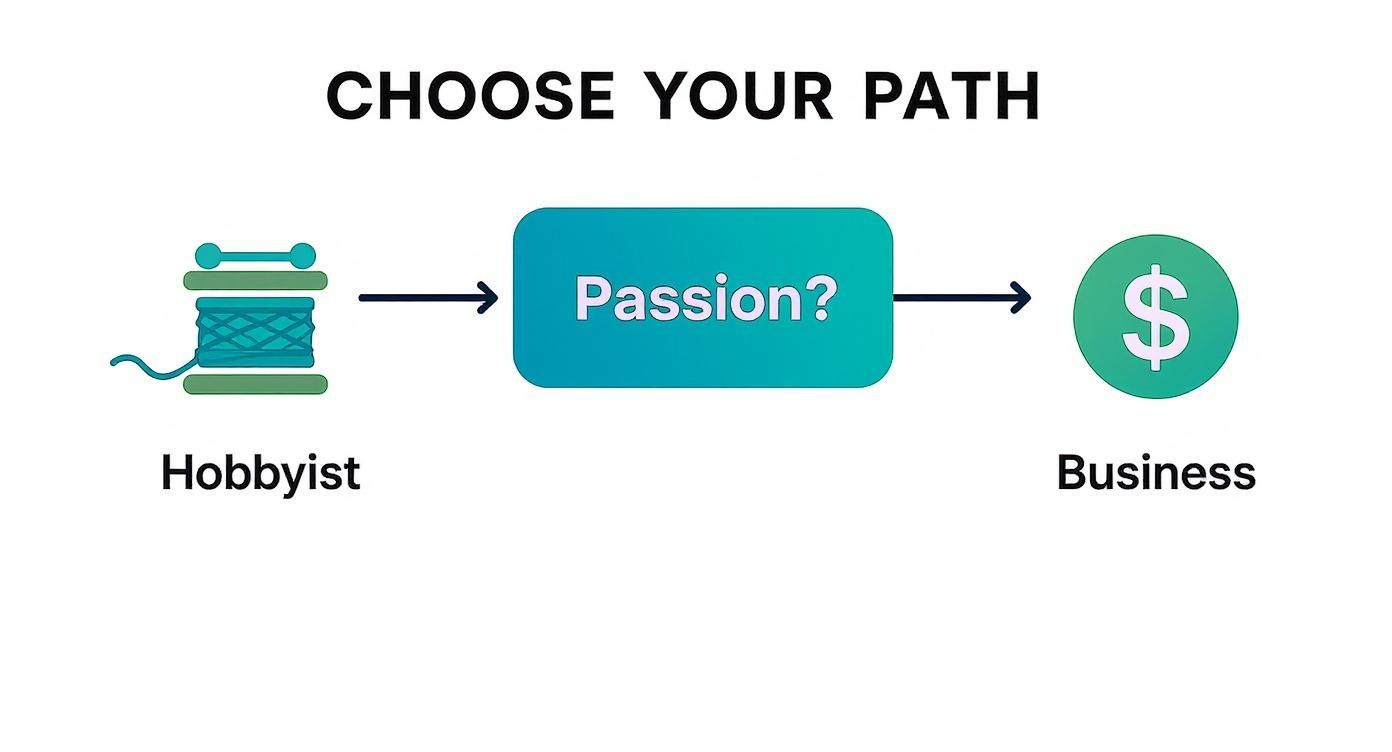
The path you take will absolutely shape the kind of machine and the specific features you'll need to focus on to grow.
Single Head Versus Multi Head Machines
As you start your search, you'll immediately run into two big categories: single-head and multi-head machines. The multi-head machines are production beasts, with several embroidery heads all stitching the same design on multiple items at once. They're amazing, but they also come with a serious price tag and demand a lot of space.
For a home-based business, a versatile single-head machine is almost always the perfect place to start. It stitches one item at a time, but its magic lies in its flexibility. You can do everything from a one-off custom hat to a small run of company polos. It's the ideal sweet spot between capability and cost for a new entrepreneur.
The embroidery machine market has exploded, especially for home businesses. And there's a good reason single-head machines are so popular with the work-from-home crowd—they're affordable and don't take over your entire guest room. In fact, this segment is expected to jump from USD 0.38 billion in 2025 to USD 0.59 billion by 2030, which is a huge 8.7% CAGR. If you want to dive into the numbers, you can learn more about embroidery machine growth projections.
Hoop Size: The Gateway to Larger Profits
If there's one feature to obsess over, it's the maximum hoop size. The hoop is simply the frame that holds your fabric tight while the machine does its thing. A bigger hoop literally opens your business up to bigger, more profitable projects. It's that simple.
A small 4x4-inch hoop is fine for monogramming baby clothes or adding a little logo to a shirt pocket. But a larger hoop—say, 8x12 inches or more—is what lets you take on the high-dollar jobs:
- Jacket Backs: Think big, detailed designs for teams, clubs, or company outerwear.
- Large Home Decor: This is where you can create custom pillows, wall art, and table runners that command a premium.
- Full-Front Designs: Imagine stitching bold, beautiful graphics across the entire front of a sweatshirt or a canvas tote bag.
Think of your hoop size as your canvas. A bigger canvas lets you create more impressive art, and you can charge a lot more for it. Investing in a machine with a generous hoop area from the start is a direct investment in your future earning potential.
Speed and Efficiency: Stitches Per Minute
The next big number to look at is stitches per minute (SPM). This is exactly what it sounds like: how fast the machine can sew. When embroidery is a hobby, speed is an afterthought. But when it's a business, time is money. A machine humming along at 1,000 SPM will finish a design in a fraction of the time it takes a machine that maxes out at 400 SPM.
This speed directly affects your turnaround time and your ability to handle bigger orders without pulling all-nighters. Got an order for 20 hats with the same logo? A high SPM means you can knock that out in an afternoon, not over a few days.
Essential Modern Features
Finally, you want a machine that works with you, not against you. Look for modern features that make your life easier. A user-friendly, full-color touchscreen is a must for previewing designs and making quick edits. Good connectivity, like USB ports or even Wi-Fi, means you can get designs from your computer to your machine without any drama.
This is where the team at B-Sew Inn can be your guide. We can help you match a machine to exactly what you want to create. Whether you're dreaming of a custom hat business or a shop filled with personalized baby gifts, our experts will make sure you get a machine that not only fits your needs today but has the power to grow with you for years to come.
Using Essential Software and Supplies for Pro Results
Choosing the right embroidery machine for a home business is a huge first step, but the machine itself is just the engine. Think of it this way: a great machine with subpar supplies is like a race car with cheap tires. You’ll never reach its full potential.
Professional, high-quality results—the kind that build a loyal customer base—come from mastering the entire toolkit. Your choice of threads, stabilizers, and design software will make or break the final look and feel of every single item you sell. This comprehensive how-to approach is how you avoid common frustrations like puckered fabric and sloppy designs, and it's where you transform from a hobbyist into a pro.
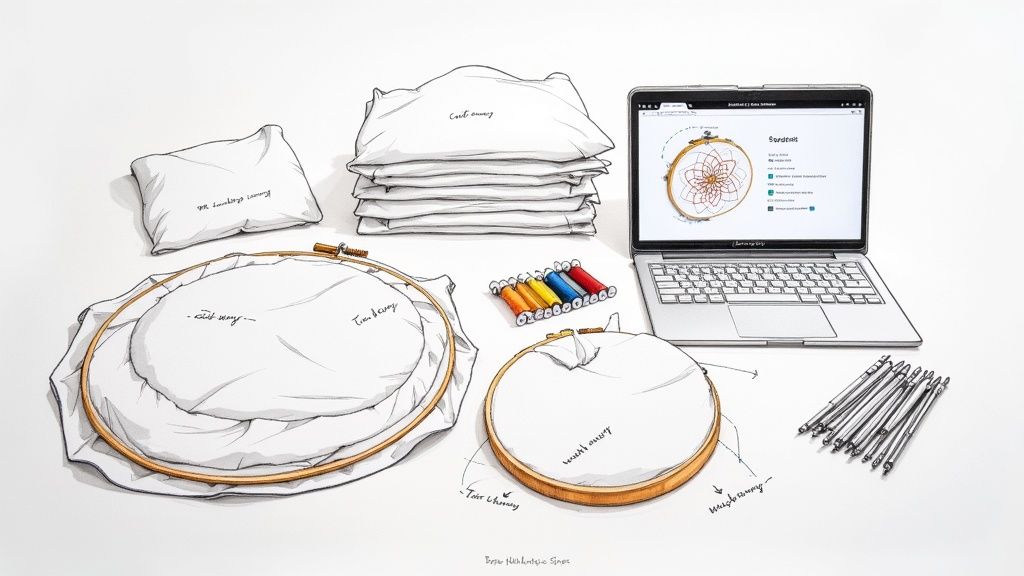
Stabilizers: The Unsung Hero of Embroidery
If your embroidery design is the artwork, stabilizer is the canvas frame holding it taut. It’s a special material you place under or on top of your fabric to keep it perfectly still during stitching, preventing all that nasty stretching and puckering. Without the right stabilizer, even the best machine will produce mediocre results.
There are three main types, and knowing when to use each is a game-changer:
- Cut-Away Stabilizer: This is your heavy-hitter. It stays on the back of the fabric permanently, giving lasting support to dense designs on stretchy stuff like sweatshirts and polo shirts. A tangible example is using a medium-weight cut-away for a company logo on a knit polo.
- Tear-Away Stabilizer: Just like it sounds, you can tear this away when the stitching is done. It’s perfect for stable, woven fabrics like denim, canvas, or quilting cotton that don't need that long-term support. You might replicate this by using a tear-away for a monogram on a canvas tote bag.
- Wash-Away Stabilizer: This type magically dissolves in water, leaving nothing behind. It's a lifesaver for delicate fabrics like organza or for using as a "topper" on towels and fleece to keep your stitches from sinking into the pile. Crafters often use this when embroidering lace-like designs.
Figuring out the perfect stabilizer-fabric pairing is a skill, but it’s one you can nail. B-Sew Inn's online classes are a great place to perfect this, ensuring every design you stitch out is crisp and clean.
Choosing Your Threads and Needles
Beyond stabilizers, your thread and needles are your bread and butter. Using high-quality embroidery thread, like a good polyester or rayon, gives you vibrant colors that won't fade or snap mid-stitch. Honestly, cheap thread is one of the biggest causes of frustration—it leads to constant machine stops and flawed designs. It's just not worth the headache.
The same goes for needles. A sharp needle is best for slicing through woven fabrics, while a ballpoint needle is designed to gently push between the fibers of knit fabrics without causing holes or runs. One of the best habits you can develop is changing your needle regularly, ideally after every 8-10 hours of stitching. It’s a simple trick that keeps your stitch quality top-notch.
From Basic Edits to Custom Designs
Your embroidery machine needs instructions, and that’s where software comes in. It really boils down to two categories: editing and digitizing.
Editing software lets you make simple tweaks to existing designs. You can resize them, swap out colors, or add a customer's name. It’s the perfect starting point for offering personalization.
Digitizing software is where you unlock full creative control. This is what lets you turn any image—a logo, a piece of artwork—into a stitch file from scratch. It's a skill that lets you offer truly custom work for your clients.
Learning to digitize is a game-changer and can seriously increase your profitability. When you're ready to create completely original designs, a powerful tool like Floriani Total Control U Software opens up a whole new world of creative possibilities.
The demand for this kind of work is real and growing fast. The global embroidery market was valued at USD 1.63 billion in 2025 and is projected to hit USD 2.95 billion by 2035. With 68% of apparel manufacturers already using embroidery for branding, the business opportunities are clear. You can discover more insights about the embroidery market to see the trends for yourself. Here at B-Sew Inn, our commitment is to give you the tools and knowledge to tap into this market and create stunning work your customers will love.
Building an Efficient Workspace and Workflow
Let’s be honest: being profitable with your embroidery machine for a home business isn’t just about making beautiful things. It’s about pure efficiency. A smart, organized space and a solid workflow are your secret weapons for getting more done with way less stress. This has nothing to do with having a massive studio—it’s about making every square inch of your space work for you.
Think of your process like a little one-person assembly line. From the moment an order dings on your phone to the second you tape up the shipping box, every step should flow right into the next. This kind of system is what cuts down on mistakes, saves you precious time, and makes sure every customer gets the same fantastic quality product, every single time.
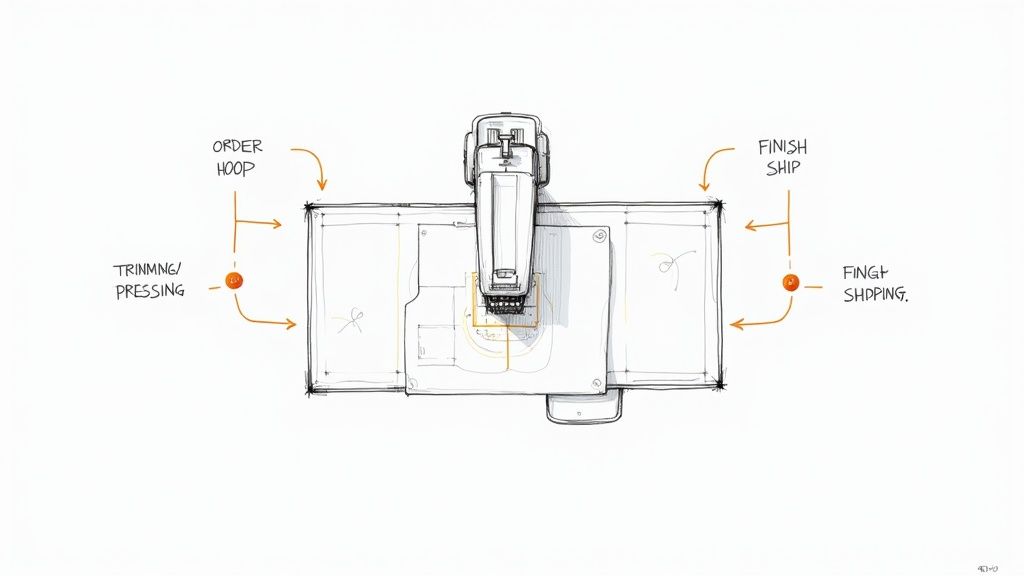
From Order to Shipped: A Four-Stage Process
Let's walk through the entire journey of an order, from start to finish, as a replicable how-to guide. Once you get this sequence down, it becomes second nature, and you'll find your rhythm. Each step is a skill, and just like anything else, practice makes you faster and more confident.
- Design Prep: This is where it all begins, on your computer. After you get an order, you'll open the design file. You might need to resize it for a hat versus a sweatshirt, pick the right thread colors to match the customer's request, and check that the stitch settings are right for the fabric you're using.
- Precise Hooping: This is probably the most critical hands-on step for quality. You’ll grab the right size hoop, pair your garment with the correct stabilizer, and then hoop it all together so the fabric is drum-tight and perfectly straight. A good hooping station can be a game-changer here.
- Machine Time: Now for the fun part! You'll lock the hoop onto the machine, thread up your colors, and hit the start button. The key to efficiency is what you do while the machine is stitching—this is the perfect time to get the next item hooped and ready to go.
- Finishing Touches: Once the last stitch is in, you’ll unhoop the item, trim away the extra stabilizer from the back, and snip any little jump-stitch threads. A quick press with an iron is the final touch that makes your work look polished and professional.
Setting Up Your Command Center
You don't need a dedicated room to be productive. The trick is to create zones for each part of your process, even if it's all on one big table. This keeps you organized and stops you from wasting time digging for scissors or the right stabilizer. A simple U-shaped setup is fantastic—you can just swivel in your chair from your computer to your machine to your finishing station.
If you need some inspiration, we've put together some great sewing room organization ideas that are perfect for an embroidery setup, too. Good lighting, smart storage, and a comfy chair really do make all the difference.
A common mistake I see beginners make is forgetting how much time goes into the non-stitching parts, like hooping and finishing. By setting up a dedicated, organized space for these tasks, you can seriously cut your total time per item, often by as much as 20-30%.
Nailing down these operational details is exactly what our B-Sew Inn classes and training are all about. Our instructors have been there, and they show you how to perfect your workflow with real, practical advice. Our commitment is to empower crafters by helping them skip those frustrating beginner mistakes and turn out beautiful, consistent work from day one.
Understanding Costs and Planning for Profitability
Let's talk numbers. Turning a craft you love into a business that actually pays the bills means getting real about the finances from day one. Before you even think about stitching your first paid project, you need a crystal-clear picture of what it's going to cost to get started and a solid plan for making that money back. Figuring this out upfront helps you price your work correctly and build a business that lasts.
Your machine will be the biggest line item on your startup budget, no doubt about it. But it's not the only one. You’ve also got to account for the essentials: digitizing software, a good starter stash of high-quality thread and stabilizer, and even some blank items like hats or tote bags to practice on and build your portfolio.
Calculating Your Startup Investment
The first step is simply making a list of everything you'll need to buy. This isn't just about avoiding surprises; it's about setting a clear financial target. Think of it like a recipe—you wouldn't start baking without knowing all your ingredients, right? Same goes for your business.
Here's what your initial shopping list will likely include:
- The Embroidery Machine: Your workhorse and your biggest asset.
- Software: You'll need this for editing designs or creating your own from scratch.
- Initial Supplies: A healthy stock of threads, various stabilizers for different fabrics, needles, and hoops.
- Blank Goods: Grab a small inventory of popular items like hats, t-shirts, and bags to start building your product line.
That initial number might look a little intimidating, but it’s an investment in your future. And the demand is there—the industrial embroidery machine market hit USD 2.20 billion and is growing, which shows just how much businesses rely on these services. While massive multi-head machines drove 68.7% of that revenue, the single-head market is the perfect, powerful entry point for a home setup. You can dig into embroidery machine market trends yourself to see the potential.
Smart Pricing Strategies for Profit
Okay, once you know your costs, you can figure out how to price your work. The biggest mistake new owners make is only charging for their materials. You have to factor in your time, the wear-and-tear on your machine, and, most importantly, your profit!
A great starting point is this simple formula:
(Material Cost + Value of Your Time + Overhead) x 2 = Your Price
Let’s break it down with a custom polo shirt order:
- Polo Shirt: $8.00
- Thread & Stabilizer: $1.50
- Your Time (20 mins @ $20/hr): $6.67
- Total Cost: $16.17
- Wholesale Price (x1.5): ~$24
- Retail Price (x2): ~$32
This kind of structure ensures every single sale isn't just covering your expenses, but is actively helping your business grow. You can always adjust that multiplier based on how complex a design is or what your local market looks like.
Your Path to a Positive Return on Investment
Seeing a return on your investment (ROI) is the moment it all starts to feel real. This calculation tells you exactly how many items you need to sell to pay off your initial startup costs. It makes your big goal feel much more manageable.
To give you a clearer idea, here's a sample plan breaking down the costs and potential profit.
Sample ROI Plan for a Home Embroidery Business
| Item | Estimated Cost or Price | Notes for Planning |
|---|---|---|
| Startup Costs | ||
| Semi-Pro Embroidery Machine | $5,000 | A quality machine is your biggest asset. Look for financing options to ease the upfront cost. |
| Digitizing Software | $500 | Essential for creating and editing designs. Some are subscription-based, others are a one-time purchase. |
| Initial Supplies (Thread, Stabilizer, etc.) | $300 | Start with a basic color palette and a few types of stabilizer. You can expand as you get client requests. |
| Blank Inventory (20 hats, 20 shirts) | $200 | Having items on hand is great for portfolio shots and quick-turnaround local orders. |
| Total Startup Investment | $6,000 | This is your break-even target. |
| Revenue Projections | ||
| Price per Custom Hat | $25 | Assuming a material cost of about $5 per hat. |
| Price per Custom Polo Shirt | $32 | Assuming a material cost of about $9.50 per shirt. |
| Average Profit Per Item | ~$18 | Blended average between hats and shirts. |
| Break-Even Point | ~334 Items | This is the number of items you need to sell to cover your initial $6,000 investment. |
So, using our example, you'd need to sell about 334 items to pay off that initial investment. I know, that might sound like a huge number, but when you break it down—that’s just 28 items a month for your first year. Totally doable.
At B-Sew Inn, we've seen countless makers face this exact challenge. It's why we offer flexible financing options on top-tier machines. We are committed to empowering you by providing the right equipment from the very beginning, so you can spend less time worrying about the money and more time doing what you love: creating beautiful embroidery.
Growing Your Business with Ongoing Support
Your journey with an embroidery machine for a home business doesn't end the day the box shows up at your door. In a lot of ways, it’s just getting started. The machine itself is just the first step—building a business that lasts is all about learning, adapting, and knowing who to call when you get stuck.
It’s a bit like learning to drive. Buying the car is the easy part, but becoming a confident driver who can handle any road takes practice, lessons, and maybe a refresher course now and then. This ongoing support system is what turns a one-time purchase into a powerful business tool, giving you the skills to tackle any project your customers dream up.
At B-Sew Inn, we don’t just sell machines. We are committed to empowering crafters by being your partner, offering a complete support system designed to help you succeed long after you've unboxed your new equipment.
Mastering Your Craft with Expert Training
One of the quickest ways to build your confidence and skills is through focused training. Our online classes are built to do just that, walking you from the basics of running the machine to more advanced creative techniques.
Maybe you’re trying to perfect your method for hooping tricky fabrics like fluffy towels, or you want to master creating gorgeous custom monograms. Our courses are structured as comprehensive how-to guides, packed with real-world, tangible examples you can follow along with and replicate in your own shop. It’s all about building practical skills that directly improve your quality and speed, helping you avoid those common rookie mistakes right from the start.
With access to a community and a wealth of knowledge from B-Sew Inn, you gain the confidence and skills needed to help your home embroidery business thrive. This is about more than just making products; it's about building a brand.
A Library of Resources at Your Fingertips
Creativity needs inspiration, but as a business owner, you’re always short on time. That’s where our huge library of resources and custom designs comes in handy. Instead of spending hours digitizing something from scratch, you can grab one of our professionally-made files as a starting point. It saves a ton of time and you know it will stitch out beautifully.
Using these resources helps you keep your quality high and your products consistent—two things that are absolutely critical for building a great reputation. As your business grows, you might even start looking into things like scaling up production and exploring smart manufacturing options like OEM and ODM. Having that solid foundation of quality designs and know-how gives you the confidence to take those bigger steps.
Ultimately, having ongoing support is what turns a solo hustle into a connected, successful journey. With B-Sew Inn, you're never on your own. You have the classes, designs, and community you need to not just start your business, but to watch it grow for years to come.
Got Questions? We've Got Answers
Stepping into the world of a home embroidery business is exciting, but it’s totally normal to have a million questions buzzing around. Let's tackle some of the most common ones I hear from people just like you, so you can move forward with confidence.
What’s the Best Machine for a Beginner?
When you’re just starting out, a single-head embroidery machine is your best friend. It’s the perfect blend of power and simplicity. These machines are much easier on the budget, fit comfortably in a home workspace, and won't overwhelm you like the bigger multi-head beasts can.
Look for a machine with at least a 5x7 inch hoop area—that gives you enough room to handle most of the projects people will ask for. Features like a simple touchscreen and an automatic thread cutter might seem like small things, but trust me, they make a huge difference in your day-to-day workflow. Here at B-Sew Inn, we are committed to empowering new owners by helping them find that perfect first machine and giving them the training and resources to succeed.
How Much Money Can I Actually Make?
This is the big question, isn't it? Your income really comes down to a few key things: how you price your work, what you sell, how fast you can complete orders, and of course, getting the word out. It’s very common for new business owners to start by making a few hundred dollars a month and then scale up to thousands once they've built up a loyal customer base.
The real secret to boosting profits? Find your niche. Instead of trying to be everything to everyone, focus on a specific area. Think corporate logos, one-of-a-kind wedding gifts, or adorable personalized gear for pets. When you become the go-to expert for something specific, your income potential can really take off.
Do I Have to Be a Digitizing Whiz to Succeed?
Absolutely not! You don't need to be a digitizing pro right out of the gate. So many successful embroidery businesses get their start using the fantastic custom designs that come built into their machines or by purchasing high-quality design files from B-Sew Inn's extensive resources. And if a client comes to you with a custom logo, you can easily hire a professional to digitize it for you.
Learning to digitize is an incredible skill that gives you total creative control and can lead to higher profits. But it's not a must-have on day one. Think of it as a skill you can add to your toolbox when the time is right.
When you're ready to start creating your own custom designs from scratch, B-Sew Inn has classes and training that make learning digitizing software feel totally doable. We’ll break it all down for you.
What Are the Most Profitable Things to Sell?
The items that make the most money are usually the ones that feel special and are perfect for personalization. This guide showcases several tangible examples you can replicate:
- Corporate Gear: Custom hats and polo shirts with company logos are always in high demand.
- Gifts & Keepsakes: Personalized baby blankets, monogrammed towels, and custom patches for jackets and bags are huge sellers.
- Special Occasions: Anything tied to weddings, graduations, holidays, and birthdays is a goldmine.
A great tip is to keep an eye on social media to see what personalized items are trending. It’s a fantastic way to get ideas and stay ahead of the curve.
Ready to find the perfect machine and the support you need to launch your dream business? Come explore our collection of embroidery machines and classes at B-Sew Inn. We're here to help you build something amazing, right from your own home. https://www.bsewinn.com

