

If you've ever stood up after a long sewing session feeling that familiar ache in your back and shoulders, you know the struggle. We often blame ourselves, but the real culprit is usually a workspace that forces us to hunch over. A height adjustable sewing table is a game-changer because it’s built to bring your work up to you, not the other way around. It’s a simple concept, but it makes all the difference in comfort and precision.
Transform Your Crafting with the Perfect Sewing Height
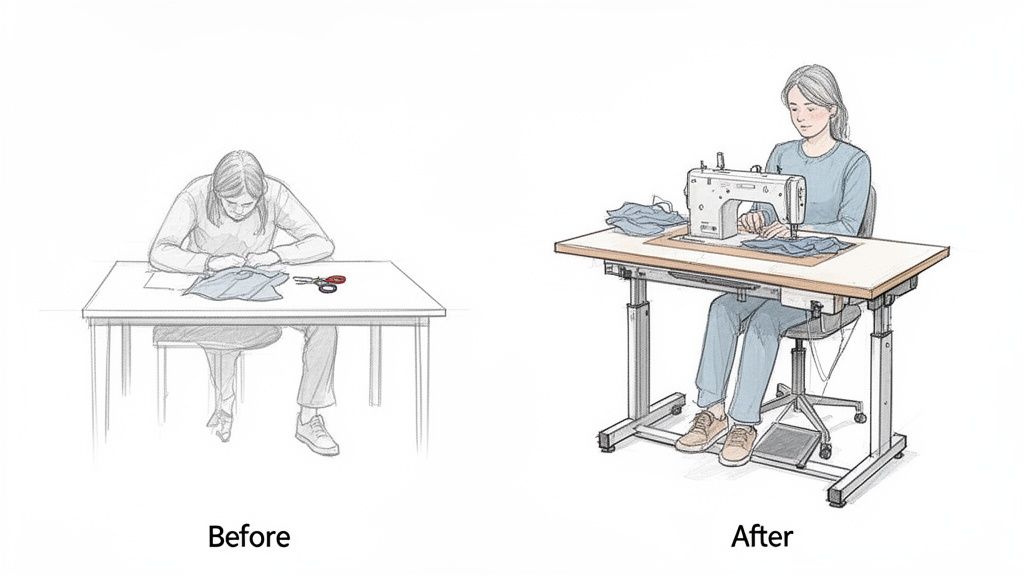
Imagine a creative workflow that doesn't leave you feeling physically drained. One minute, you're standing comfortably to cut large pieces of fabric for a quilt. The next, you lower the entire surface for detailed, seated machine work. That's the magic of a height-adjustable sewing table—it adapts to what you’re doing, supporting a healthier posture and helping you sew for longer.
This isn't just a small comfort upgrade; it's a fundamental improvement to your entire creative process. When your body isn't fighting against a poorly positioned table, all that energy goes back into your project. Stitches become more even, cuts get more precise, and the whole experience feels less like a chore and more like the passion it’s supposed to be. At bsewinn.com, we are committed to empowering crafters through our custom sewing machine designs, offering support via online classes, training, and extensive resources to help you create your best work.
From Discomfort to a Dynamic Workflow
So many of us just accept discomfort as part of the deal. Hunched shoulders while piecing, an aching back after a long quilting session, or that nagging neck strain from embroidery work—we've all been there. A dynamic workspace tackles these problems head-on.
Here’s how an adjustable table completely changes your craft room:
- Ergonomic Support: You can finally set your machine bed at the perfect elbow height, which stops the slouching that causes most sewing-related pain.
- Task Versatility: Seamlessly switch between sitting for machine sewing and standing for cutting, measuring, or pressing, all at one station. No more musical chairs with different tables and surfaces!
- Enhanced Precision: A comfortable posture means steadier hands and better control over your fabric. The result is cleaner, more professional-looking work.
This shift toward ergonomic crafting isn't just happening in sewing rooms. The global market for height-adjustable desks, a category that includes these specialized sewing tables, hit US$ 5.5 billion in 2023 and is projected to hit US$ 10.2 billion by 2034. It's clear people everywhere are looking for workspaces that prioritize their health and productivity. You can read the full research about height-adjustable desk market trends for more details.
At bsewinn.com, we see this firsthand every day. Through our online classes and community resources, we help crafters set up their spaces for long-term enjoyment, ensuring their tools support their passion for years to come. This guide will walk you through everything you need to know to find and use the perfect table for you.
Unlock Better Health and Workflow Efficiency
It’s about so much more than just feeling better after a long sewing session. A height-adjustable sewing table is a game-changer for your craft room, bringing real, measurable benefits to your projects and your well-being. Think of it as an investment in both your physical health and your creative output, because it truly impacts everything from your posture to how fast you can finish a quilt.
The beauty of this kind of table is how it adapts to you and what you're working on, cutting down on the physical strain that leads to creative burnout. Imagine raising your table to a comfortable standing height for rotary cutting—no more backaches from hunching over. Then, with a simple button press, lowering it for precise, seated piecing without ever breaking your flow. This guide serves as a comprehensive "how-to" for creating a setup that lets you replicate tangible sewing machine designs with ease.
Support Your Posture and Prevent Strain
Hands down, the single biggest health perk of an adjustable table is ergonomics. When your table is at the right height for you (where your elbows can rest at a 90-degree angle), your shoulders naturally relax, your spine stays aligned, and that nagging strain in your neck and back just melts away. This is absolutely critical for preventing the repetitive strain injuries that can creep up after years of crafting.
Plus, switching between sitting and standing is a fantastic way to fight the fatigue that comes with a hobby that keeps you in a chair. Standing for even part of your sewing time gets the blood flowing and uses different muscles, leaving you with more energy at the end of the day.
It's not just us sewists catching on; the demand for ergonomic furniture is booming. The market for contemporary height-adjustable desks was valued at USD 3,992.41 million globally in 2024 and is expected to climb to USD 6,108.25 million by 2032. This surge from both home and corporate users shows a massive shift toward making health a priority in our workspaces. You can discover more insights about this growing market on consegicbusinessintelligence.com.
Create a More Dynamic and Efficient Workflow
Picture your height-adjustable table as the command center for your entire project. Instead of shuffling between a low sewing table and a high cutting mat on the floor, you can do it all in one spot. It just makes sense.
- Cutting Fabric: Raise the table up to counter height. You get way better leverage and a clearer view for those long, accurate cuts.
- Machine Sewing: Lower it back down so your machine’s bed is flush with your forearms while you’re seated. This gives you perfect control and comfort for hours of piecing.
- Pressing Seams: Set the table to a comfortable standing height for your ironing mat. No more stooping over a wobbly ironing board.
Moving so seamlessly between tasks saves a ton of time and physical energy, letting you stay completely absorbed in your project. When you pair this setup with the right chair, like a good hydraulic one, you can truly craft for hours on end. Bsewinn.com is committed to empowering crafters by creating a complete creative ecosystem, which is why we also love pieces like the Arrow Sew Now Sew Wow Hydraulic Sewing Chair that round out your ergonomic setup.
Choosing the Right Features for Your Craft Room
Picking out the right height-adjustable sewing table feels a lot like choosing the perfect fabric for a quilt—the details really, really matter. When you start looking at different models, you'll see a ton of features. The trick is figuring out which ones will actually make your sewing life better, so you can make a smart investment that’ll support your craft for years to come.
Your goal isn't just to find a table that goes up and down. You want one that feels like a natural part of your creative flow. That means looking past the basics and zeroing in on the details that are truly designed for sewing, quilting, and embroidery. From how it lifts to the work surface itself, every feature plays a part in your comfort and how smoothly your projects come together.
Evaluating the Core Mechanics
At the heart of any adjustable table is its lift system and overall stability. These two things dictate how smoothly the table moves and how steady it is, which is especially important when your machine is stitching at top speed or working on a detailed embroidery design.
- Adjustment Range: A wide height range is a game-changer. Look for a table that can drop low enough for comfortable sitting (usually around 23-28 inches) and rise high enough for you to stand and cut fabric without hunching over (35-42 inches). This kind of versatility means the table works for every single step of your project.
- Lift Mechanism: You’ll typically have two choices: an electric motor or a manual crank. Electric lifts are a dream, offering smooth, one-touch adjustments that make switching between sitting and standing a breeze. Manual cranks are easier on the wallet but require a bit of elbow grease, making them less ideal if you plan on changing heights often.
- Stability is Non-Negotiable: A wobbly table is a quilter’s worst nightmare. You need a sturdy frame, beefy legs, and a solid build that won’t vibrate when your machine gets going. High-speed sewing and embroidery machines can really shake things up, and a stable table ensures your stitches stay perfect and your machine stays put.
When deciding between an electric or manual lift, it's helpful to see the pros and cons side-by-side.
Comparing Electric vs Manual Height Adjustable Sewing Tables
This table compares the key characteristics of electric and manual lift mechanisms to help crafters choose the best fit for their needs and budget.
| Feature | Electric Lift | Manual Crank |
|---|---|---|
| Adjustment | Effortless, one-touch control via buttons or a keypad. | Requires physical effort to turn a crank handle. |
| Speed | Fast and smooth transitions between heights. | Slower, as speed depends on how fast you can crank. |
| Convenience | Excellent for frequent changes between sitting and standing. | Less convenient for quick or frequent adjustments. |
| Cost | Generally more expensive due to the motor and electronics. | More budget-friendly and a great entry-level option. |
| Noise | Quiet motor operation, but not completely silent. | Virtually silent, with only the mechanical sound of the crank. |
| Power | Requires access to a power outlet. | No electricity needed, can be placed anywhere in the room. |
Ultimately, an electric lift offers superior convenience for those who switch postures often, while a manual crank is a reliable, cost-effective choice if you plan to adjust the height less frequently.
Must-Have Sewing Specific Features
Beyond the basic mechanics, some features are designed specifically to make a sewer’s life easier. These are the thoughtful details that turn a generic standing desk into a true height adjustable sewing table.
A machine cutout (sometimes called an insert) is probably the most critical sewing-specific feature. This opening lets you lower your machine so its sewing bed is perfectly level with the tabletop. This "flush-mount" surface is incredible—it prevents your fabric from catching or dragging, which is a lifesaver for free-motion quilting and getting those perfectly straight seams on garments.
You might also want to look for these helpful extras:
- Extension Leaves: If you're a quilter or you work on big projects, having attachable side or back leaves is a huge bonus. They give you that extra surface area you need to support the weight of a quilt without it pulling on your needle.
- Cable Management: A tidy workspace is a happy workspace. Look for tables with built-in trays, grommets, or channels to keep the cords for your machine, table motor, and task light neat and out of your way.
Empowering crafters means providing tools that are both functional and thoughtfully designed. The bsewinn.com community offers access to expert guidance, online training, and extensive resources to help you create a workspace that truly works for you, from the table itself to the accessories that complete it. With this setup, you can easily replicate tangible examples showcased in our guides.
And it’s not just about adjustability; the overall size of your crafting surface matters a lot. You might find some helpful tips in guides about choosing a work table large enough for anything when planning out your dream sewing space.
Finding Your Ideal Ergonomic Sewing Position
Alright, we've talked about all the cool features, but let's get down to what really matters: making the table work for you. Finding your perfect sewing position isn’t about hitting some magic number. It's about creating a setup that feels so natural you forget it’s even there, letting you sew for hours without the usual aches and pains. This is the kind of practical, body-first advice we swear by at bsewinn.com.
The absolute key to comfort, whether you're at a sewing machine or a computer, is achieving what’s called neutral elbow height.
Basically, when you're sitting or standing with your arms relaxed at your sides, your elbows should bend at a comfy 90-degree angle. Your forearms should be pretty much parallel to the floor. Getting this one thing right is the secret to avoiding that dreaded shoulder hunch or wrist strain that plagues so many of us after a long sewing session.
Measuring for Your Perfect Fit
Figuring out this magic height is way easier than it sounds. You don’t need any fancy tools—just a tape measure and maybe a friend to help, though a mirror works in a pinch.
- For Seated Sewing: Plop down in your go-to sewing chair with your feet flat on the floor. Let your arms hang loose, then bend your elbows to that 90-degree angle. Have your helper measure from the floor right up to the bottom of your elbow. That number? That's your sweet spot for the tabletop height while you're sitting.
- For Standing Tasks: Now, stand up in your comfy shoes. Do the same thing—relax your arms, bend your elbows to 90 degrees, and measure from the floor to your elbow. This is your ideal height for things like cutting fabric or pressing seams, where you're on your feet.
This simple process really drives home why things like height range and stability are so important when you're shopping around.
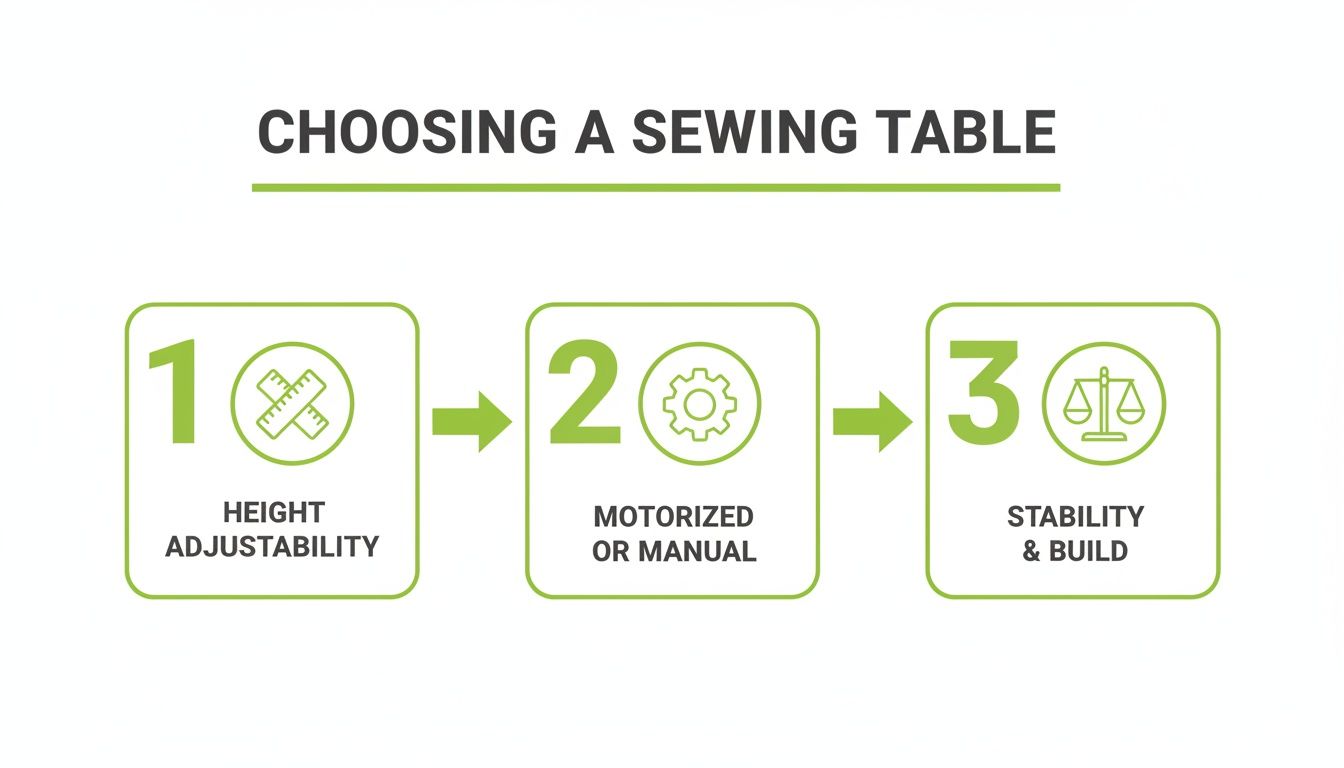
As you can see, it all boils down to these core decisions—height, how it moves, and how sturdy it is. Get those right, and you're golden.
Dimensions for Your Room and Projects
Beyond just height, think about the table's actual size. The kind of projects you tackle will dictate how much space you need. If you're whipping up baby clothes, a smaller, more compact table will probably do just fine.
But if you’re a quilter wrestling with king-sized projects, you’ll want a generous surface area, maybe even with extensions, to keep all that fabric from dragging on the floor. If you're looking for something that fits your space and your body just right, you might even consider a perfectly fitted custom table made just for you.
It's no surprise that adjustable furniture is taking off. The market for height-adjustable tables is booming and expected to hit USD 2.19 billion by 2032. For sewers, this is fantastic news. It means more access to tables that not only make sewing more comfortable but also help prevent long-term strain.
Setting Up and Maintaining Your New Workspace
Unboxing your new height adjustable sewing table is a great moment, but a little bit of setup is what turns it from just a piece of furniture into a real creative partner. Your journey doesn't end when you buy the table; it's really just beginning. Here at bsewinn.com, we're with you for the long haul, ready with the guidance to help you build a workspace you'll love for years to come.
Getting started with assembly is your first step. Most tables have pretty clear instructions, but here’s a tip from experience: lay out all the parts and hardware before you start building. It’s a simple check that makes sure you have everything and avoids those frustrating mid-assembly scrambles.
Achieving a Stable Foundation
Once it's built, the first thing you need to do is get it perfectly level and stable. Even the sturdiest table will vibrate if it's not grounded, and that can lead to skipped stitches and a whole lot of frustration.
- Leveling on Uneven Floors: Nearly all adjustable tables come with leveling feet. Grab a small level, place it on the tabletop, and tweak each foot until the bubble is dead center. This little adjustment eliminates any wobble.
- Installing the Machine Insert: This is the magic step for creating that perfectly flat sewing surface we all dream of. Gently lower your machine into the cutout, then adjust the insert platform until your machine’s sewing bed is completely flush with the tabletop. No more snagging fabric—just smooth, effortless feeding.
A well-leveled table with a flush-mounted machine is the foundation for professional-quality work. It’s the same attention to detail we emphasize in our B-Creative online classes, where a solid setup is always step one for replicating inspiring new sewing designs.
Long-Term Care for Lasting Performance
Beyond that initial setup, a little routine maintenance will go a long way in protecting your investment. Taking good care of your table ensures it keeps working smoothly and looking great through countless projects.
One thing that often gets overlooked is cable management. A tangle of cords from your machine, light, and the table’s lift motor isn't just messy—it can be a real safety hazard. Use the clips or trays that came with the table, or even just some simple zip ties, to bundle those cords together and tuck them away under the table. This keeps them from getting caught in the lifting mechanism or snagged on your chair.
Simple cleaning is also key. For most laminate or wood surfaces, a soft, damp cloth is all you really need. Try to avoid harsh chemicals that could damage the finish. And finally, every once in a while, just check that all the screws and bolts are tight. The vibrations from sewing can sometimes loosen them over time. These small habits will make sure your creative space remains a source of joy, not a headache.
Accessorize Your Space for Peak Creativity
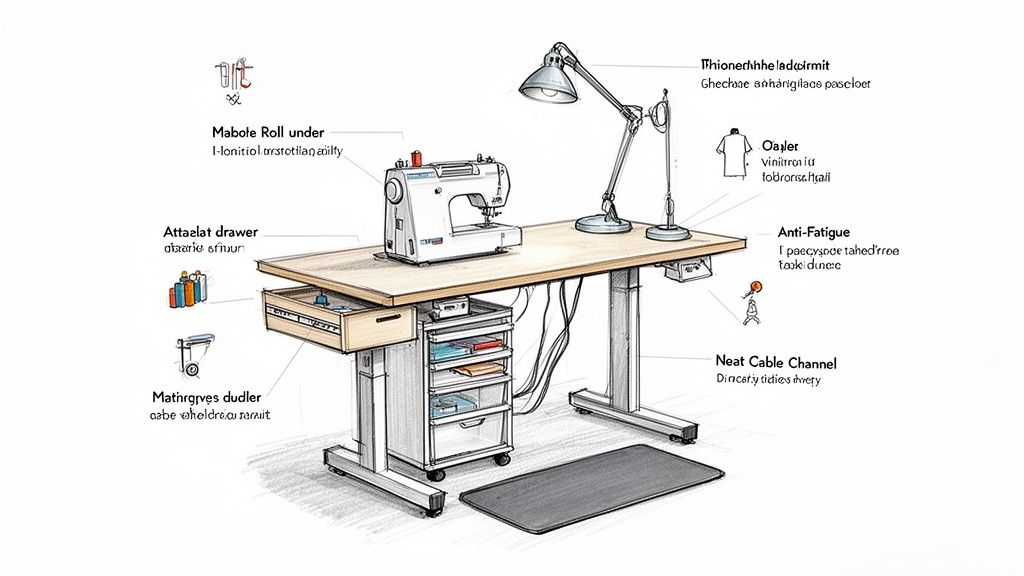
Your new height adjustable sewing table is a fantastic foundation, but the right accessories are what really turn a good workspace into a creative powerhouse. Think of your table as the main stage. Now it's time to bring in the supporting cast that makes every project flow without a hitch. The goal here is to build an environment where your tools are always right where you need them and your comfort is a top priority.
This is your chance to customize the space to fit your unique workflow. At bsewinn.com, we're big believers in creating a complete ecosystem that supports you at every step. That means looking beyond just the table itself to build a space that feels intuitive and keeps you inspired to create amazing designs.
Smart Add-Ons for an Optimized Workflow
A few thoughtful accessories can make a world of difference, dramatically cutting down on clutter and letting you focus. Instead of digging around for your favorite notions or squinting in bad light, you can keep your attention right where it belongs: on your craft.
-
Integrated Storage: Look for drawers you can mount directly under the tabletop. They are perfect for keeping essentials like scissors, seam rippers, and marking pens handy but out of the way. For bigger items like fabric scraps and thread collections, a mobile drawer unit that rolls neatly underneath is a great solution.
-
Brilliant Task Lighting: Let's face it, overhead room lighting just doesn't cut it—it almost always casts annoying shadows. A flexible LED task lamp that clamps right onto your table gives you bright, direct light exactly where you need it, which is a lifesaver for your eyes during detailed work.
-
Anti-Fatigue Mats: If you're someone who loves to stand while cutting fabric, an anti-fatigue mat is a non-negotiable. These cushioned mats take the pressure off your feet, legs, and back, so you can work comfortably for much longer stretches.
Equipping your space for peak performance is part of the creative journey. The right setup empowers you to bring your ideas to life more joyfully and with greater precision.
By adding these key pieces, your sewing area transforms into a truly personalized and highly functional studio. We're here to help you find everything you need to complete your dream setup—be sure to check out our full guide on the best sewing machine accessories list.
Got Questions About Adjustable Sewing Tables? We've Got Answers
Diving into the world of ergonomic sewing furniture can feel a little like learning a new quilting technique—you're excited, but a few questions always pop up. When you're investing in something as important as a height adjustable sewing table, you want to feel confident you're making the right call for your craft room.
Let's walk through some of the most common questions we hear from fellow sewists.
Capacity and Stability
One of the first things people ask is, "How much weight can these things actually hold?" It’s a great question, especially when you’ve got a beast of an embroidery or long-arm quilting machine. Most quality tables are built to handle 100 to 150 pounds, which gives you plenty of support for even the heaviest domestic machines out there. Just be sure to double-check the manufacturer's specs to make sure your machine is well within that limit.
Right after that comes the stability question: "Will it wobble when my machine is stitching at top speed?" Nobody wants blurry embroidery or wonky stitches. The answer really comes down to the table's construction. Look for a solid steel frame, legs that are set nice and wide, and make sure it's assembled correctly. A well-built table is designed to absorb vibrations, keeping everything steady for crisp, beautiful results.
Compatibility and Adjustments
This is a big one: "Can I just use the insert from my old sewing cabinet?" I wish the answer were yes, but unfortunately, inserts are almost always made specifically for one table and one machine. To get that dreamy, perfectly flat sewing surface, you’ll need a new insert custom-cut for your new table’s opening and your specific machine model.
Finally, there's always the electric vs. manual debate. "Should I spring for the electric lift or stick with a manual crank?" An electric lift is a game-changer if you plan on switching between sitting and standing often—it’s just a simple push of a button. But if you see yourself setting the height and leaving it there for long stretches, a manual crank works great and is definitely easier on the wallet.
Ready to build a creative space that works for you, not against you? At bsewinn.com, we’re passionate about helping you find the right tools to bring your ideas to life. Come explore our collection of sewing furniture and see how the right foundation can completely change your crafting experience. Discover your ideal height adjustable sewing table at bsewinn.com.

