
Welcome! If you've ever felt a little lost staring at a wall of sewing machine accessories, you're in the right place. This isn't just another sewing machine accessories list; it's a complete guide to help you figure out what all those little gadgets do and which ones you actually need to replicate beautiful sewing machine designs. From your first presser foot to specialized embroidery hoops, having the right tools makes all the difference in bringing your ideas to life.
Your Complete Reference to Sewing Machine Accessories
Let's be honest, the world of sewing accessories can feel like a maze. But once you understand what each piece is for, you'll see it's less about collecting things and more about solving problems. Think of your sewing machine as the amazing foundation, and accessories are the specialized tools that let it tackle hundreds of different tasks—from a perfectly gathered skirt to intricate custom embroidery—with professional polish.
Here at B-Sew Inn, our entire commitment is to empower crafters like you. We believe in providing the tools, support, and custom sewing machine designs to help you succeed. A well-equipped sewist is a happy one, and this guide is designed to be your go-to reference. We'll break everything down, explaining each key accessory so you can build your toolkit with intention and create tangible, beautiful projects.
Why the Right Accessories Matter
Have you ever had a project fight you every step of the way? Skipped stitches, puckered fabric, wonky seams? More often than not, the culprit is a simple mismatch between your tool and your task. Using the right needle can prevent fabric damage, and swapping out for the correct presser foot can turn a nightmare hem on silky fabric into a five-minute job. It's not just about convenience; it's about the final quality of your work.
Investing in the right tools from the start saves a ton of time, cuts down on frustration, and really elevates your finished projects.
To make things easy, we’ve organized this guide into a few key areas:
- Essential Tools: The absolute must-haves for every sewing basket, no matter what you make.
- Specialty Items: Fun accessories for when you dive into quilting, embroidery, and other advanced techniques.
- Maintenance Supplies: Everything you need to keep your machine humming along happily for years.
As you explore the list, remember that knowing what to buy is only half the battle. At B-Sew Inn, our online classes and training sessions are designed to give you the hands-on skills to master every tool you own.
Quick Reference Guide To Must-Have Sewing Accessories
For those just starting out, it helps to see the essentials laid out simply. This table breaks down the core accessories, what they do, and what kind of projects they're best for. Think of it as your cheat sheet for building a foundational toolkit.
| Accessory Type | Primary Use | Essential For Beginners? | Best For Projects Like |
|---|---|---|---|
| Standard Presser Foot | General sewing, straight and zigzag stitches. | Yes - The default foot for most tasks. | Garment construction, basic repairs, piecing. |
| Zipper Foot | Sewing close to zipper teeth without hitting them. | Yes - A must for clean zipper installs. | Bags, pouches, pillows, dresses with zippers. |
| Buttonhole Foot | Creating perfectly sized, consistent buttonholes. | Yes - If you plan to make any clothing. | Shirts, blouses, pants, children's clothes. |
| Extra Bobbins | Holding bottom thread; having extras saves time. | Yes - You'll need more than the one that came with your machine! | All sewing projects. |
| Universal Needles | General-purpose needles for woven fabrics. | Yes - Your go-to needle for most materials. | Cotton quilts, linen garments, home decor. |
| Walking Foot | Evenly feeding multiple layers of fabric. | Recommended - Essential for quilting. | Quilting, sewing with knits, matching plaids. |
Having these basics on hand will set you up for success on a huge range of projects. As you grow, you can add more specialized feet and tools to your collection, but this is the perfect place to start.
Choosing the Right Needles and Thread
It’s easy to get excited about fancy presser feet and high-tech gadgets, but let's be honest: the needle and thread are the heart and soul of every single stitch. Get this combination wrong, and you're in for a world of frustration. We're talking skipped stitches, shredded thread, and maybe even permanent holes in that beautiful fabric you were so excited to use.
Think about it. Would you try to sew delicate silk with a beefy denim needle? Of course not. You’d end up with a trail of unsightly snags instead of a clean, professional seam. On the flip side, that tiny, fine needle you use for chiffon would snap in a heartbeat against a heavy piece of canvas. That's why knowing your needles is non-negotiable for getting great results.
Understanding Needle Types and Sizes
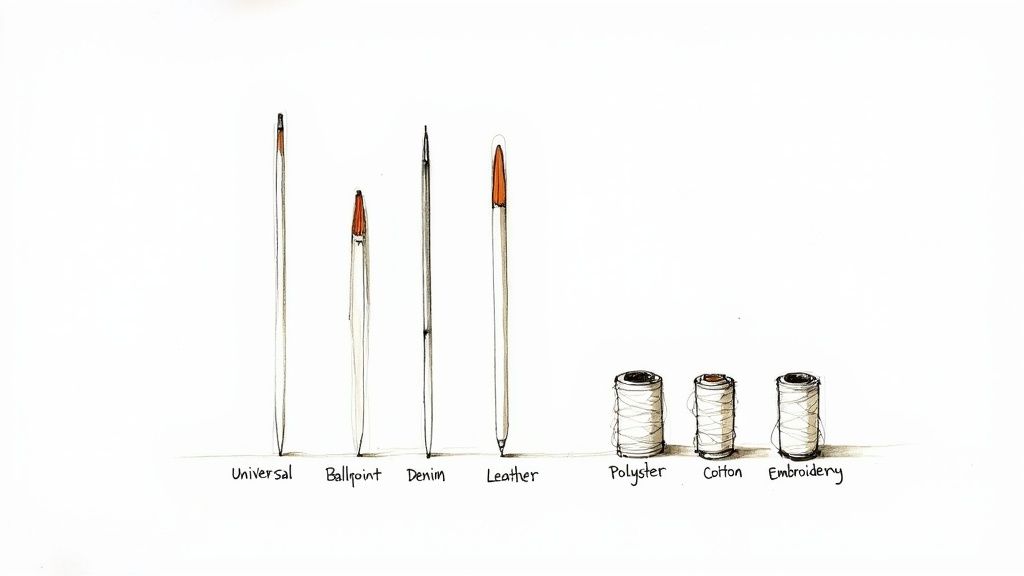
Getting familiar with the most common needles is the perfect place to start. A Universal needle is the workhorse of the sewing world, designed with a slightly rounded point that handles a huge range of woven fabrics and even some knits without any fuss. But when you’re working with stretchy stuff like jersey or spandex, a Ballpoint needle is your best friend. Its rounded tip is designed to gently push the fabric fibers apart instead of piercing them, which prevents those annoying little holes and runs.
For tougher jobs, you’ll need to bring in the specialists:
- Denim (or Jeans) Needles: These have an extra-sharp, reinforced point built to power through dense fabrics like denim, canvas, and heavy twill without bending or breaking.
- Leather Needles: With a unique wedge-shaped point, these needles slice cleanly through leather, vinyl, and other non-woven materials, creating the perfect opening for the thread to pass through.
You'll also see sizes like 80/12 or 90/14 on the package. It's simple: the bigger the number, the thicker the needle and the heavier the fabric it's meant for. If your projects lean toward heavy-duty materials, it's worth exploring specialty options like these Groz-Beckert industrial machine needles to really elevate your stitch quality.
Pairing Needles With the Right Thread
Once you have the right needle, matching it with the right thread is the final piece of the puzzle. The golden rule is that the thread should pass through the eye of the needle without a struggle. For most everyday projects, you can't go wrong with an all-purpose polyester thread. If you're a quilter working with natural fibers, cotton thread is usually the way to go. And for that beautiful, decorative touch, nothing beats the sheen of specialized embroidery threads.
Here's a pro tip that will save you countless headaches: change your needle after every 8-10 hours of sewing. A dull or slightly bent needle is the number one culprit behind most common sewing machine problems. Making this a regular habit is one of the easiest ways to keep your stitches looking flawless.
This tiny tool might seem small, but it’s a powerhouse in your sewing kit. Needles are the single most dominant accessory in the sewing world, and for good reason—with millions of machines in use, the demand for quality needles is always there. At B-Sew Inn, we're committed to giving you the knowledge and tools you need, so you can always pick the perfect accessories for your next creation.
A Practical Guide to Presser Feet
If you think of needles and thread as the heart of your sewing machine, then presser feet are its incredibly talented hands. Each foot is a specialized tool, designed to do one specific job with absolute precision. Knowing your way around even a few key feet from your sewing machine accessories list is one of the quickest ways I've seen people level up their sewing projects.
Honestly, it's what separates a good project from a great one. At B-Sew Inn, we're all about empowering you with that kind of knowledge. Our classes and online training aren't just about theory; we show you exactly how each foot works on real-world projects, whether you're tackling custom embroidery or tailoring a perfect-fitting jacket.
The Essential Presser Feet Everyone Should Know
Your sewing machine probably came with a handful of these right in the box. They are the absolute must-haves that you'll be grabbing for nearly every single project. Think of them as the foundation of your collection.
- Standard Zig-Zag Foot: This is your go-to, the workhorse of the group. It has a wide opening so the needle can swing side-to-side, which is why it's perfect for both straight stitching and zig-zag seams.
- Zipper Foot: This skinny little foot is a lifesaver. It lets you stitch right up against the teeth of a zipper or alongside bulky trim like piping without hitting anything. It’s the secret to getting that clean, professional look on bags and clothes.
- Buttonhole Foot: What a clever invention! This foot makes creating perfectly sized, consistent buttonholes a breeze. Most modern machines have a one-step version that does all the measuring and stitching for you.
- Blind Hem Foot: Trying to sew a nearly invisible hem by hand can take forever. This foot guides the fabric just right, letting your machine create a professional-looking blind hem in a fraction of the time.
The demand for these kinds of accessories keeps growing, especially with the boom in apparel and home textile markets where specialized finishes are everything. You can read more about these sewing machine market trends to see just how big it's getting.
Unlocking Creativity With Advanced Presser Feet
Once you've got the basics down, this is where the real fun starts. Specialty feet open up a whole new world of techniques and professional finishes that can feel like magic. These are the tools that make tricky fabrics and complicated tasks surprisingly simple.
A walking foot is an absolute game-changer, especially for quilters or anyone wrestling with difficult fabrics. It has its own set of feed dogs built right in, and they work with your machine's feed dogs to pull multiple layers through evenly. This is how you stop shifting and puckering on quilts, velvets, and slippery knits.
Other specialty feet that can really expand your skills include:
- Ruffler/Gathering Foot: This foot is amazing. It creates perfect, evenly spaced gathers or pleats automatically as you sew—so great for adding ruffles to skirts, pillows, you name it.
- Darning/Embroidery Foot: If you're into free-motion quilting or embroidery, you need this foot. It hovers just above the fabric, giving you the freedom to move it in any direction and basically "draw" with your stitches.
Getting comfortable with these advanced tools is a skill, and that's what we're here for. In our B-Sew Inn classes, we give you hands-on training to show you exactly how to use these accessories so you can bring your most ambitious creative ideas to life.
Achieving Precision with Cutting and Measuring Tools
A flawless sewing project doesn’t just happen at the machine. It actually starts long before you ever sit down to sew—it begins with a precise cut and accurate measurements. Think about it: every single item on your sewing machine accessories list performs its best when the fabric pieces are perfectly sized right from the get-go. This is where your cutting and measuring tools become your best friends.
Investing in a good set of these foundational accessories is one of the smartest moves any sewer can make, especially if you're aiming for that professional, polished look in your finished work.
Rotary Cutters vs. Fabric Shears
So, which should you choose: a rotary cutter or a good old-fashioned pair of fabric shears? The honest answer is that it really depends on what you're making. For quilters, a rotary cutter paired with a self-healing mat is an absolute game-changer. It’s hands-down the best way to get long, perfectly straight lines, which is non-negotiable for patchwork where even a tiny wobble can throw off an entire block.
On the other hand, a high-quality pair of fabric shears gives you incredible control when you’re cutting curves and tricky shapes, like armholes on a garment or delicate appliqué pieces. I’ve found that most experienced sewists keep both on hand. That way, you’re ready to tackle any cutting task with total confidence.
Essential Measuring Instruments
Accurate measurements are the blueprint for your project. While you might be able to get by with a basic ruler for a little while, specialized sewing tools are designed to handle the unique challenges that fabric presents.
- Clear Acrylic Rulers: If you’re into quilting or pattern drafting, these are a must. Being able to see the fabric underneath through the grid lines is critical for lining things up perfectly and getting clean, accurate cuts every time. If you want to dive deeper, we have a detailed guide on selecting the best ruler for fabric.
- Flexible Tape Measure: You simply can't make clothes without one. A flexible tape measure is the only way to get accurate body measurements or measure curved pattern pieces. A rigid ruler just won’t, well, cut it.
- Seam Gauge: This little ruler is small but mighty! It has a sliding marker that makes it super easy to check small measurements quickly and consistently. I use mine all the time for setting hem allowances, marking out buttonhole placements, and double-checking my seam widths as I go.
Just as the right cutting tool is key for precision, so is the right presser foot. This little chart is a great starting point for figuring out which foot you need for the job.
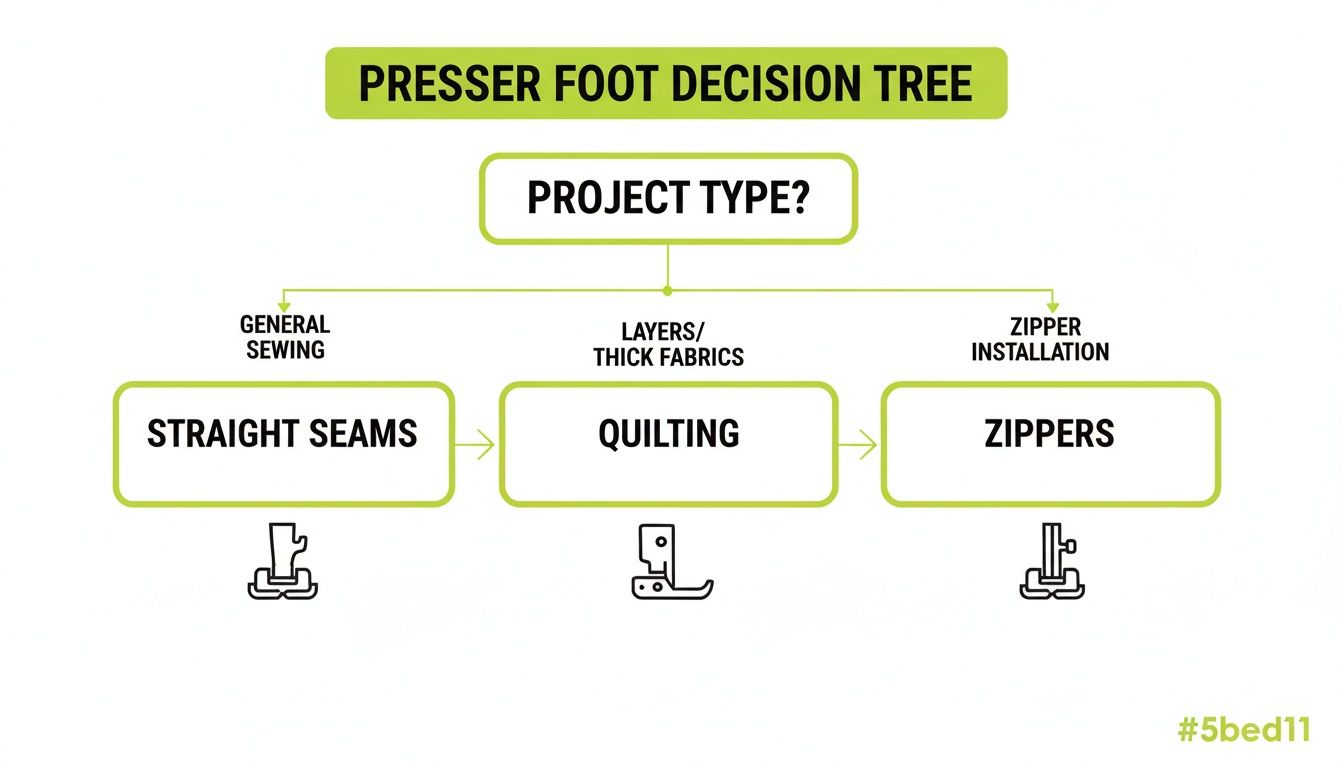
This decision tree makes it simple by connecting common sewing tasks to the best foot for the job, reinforcing how having the right tool can make all the difference in your results.
What Every Sewer Should Know About Bobbins and Machine Care
Hidden away beneath the needle plate is a tiny component that’s the unsung hero of every single stitch: the bobbin. This little spool holds the bottom thread, and without it working perfectly, you just can't get a good, balanced stitch. When that top thread and bottom thread lock together just right, you get a beautiful, strong seam. When they don't? Well, that's when you get those frustrating bird's nests and loops we all hate.
Honestly, a surprising number of sewing headaches that people blame on tension or needle issues are actually caused by an improperly wound or just plain wrong bobbin. That’s why really getting to know this little part is a huge step in mastering your machine and going beyond a basic sewing machine accessories list.
Finding and Winding the Perfect Bobbin
Bobbins aren't one-size-fits-all, and using the wrong one is asking for trouble. If you try to force an incompatible bobbin into your machine, you're setting yourself up for poor stitch quality, constant thread jams, and you could even cause serious damage to the bobbin case. Your machine's manual is your best friend here—always check it to find the specific bobbin style and class you need.
Generally, you'll run into two main types of bobbins:
- Plastic Bobbins: These are super lightweight and let you see at a glance how much thread you have left. They’re pretty much standard on most of today's computerized machines.
- Metal Bobbins: You'll usually find these heavier, more durable bobbins in older mechanical workhorses or industrial machines. Never use a metal bobbin in a machine designed for plastic ones. It can seriously mess with the magnetic sensors in modern computerized models.
Winding the bobbin correctly is just as crucial as picking the right one. You're aiming for a smooth, even wind—not too tight, not too loose. A wobbly, unevenly wound bobbin will feed the thread inconsistently, throwing your tension out of whack and ruining your stitches. Take a moment to make sure the thread fills the spool in a nice, level way. It's worth it for flawless sewing.
Here at B-Sew Inn, we know that a happy machine makes a happy sewer. We are here to support you with resources, online classes, and training so your machine always performs at its best, helping you create stunning designs.
The Essentials of Machine Care and Maintenance
Your sewing machine is an investment, and protecting it means more than just using the right bobbins. A little regular cleaning and maintenance will keep it humming along for years. Lint and dust are public enemy number one; they love to build up in the bobbin area and under the feed dogs, where they soak up oil and can cause parts to grind together.
Every sewer should have a basic maintenance kit. Use a small lint brush to gently clear out the bobbin case and the area around it after every few projects. A soft cloth is all you need to wipe down the outside of your machine. When it comes to oiling, only use a high-quality sewing machine oil and apply just a tiny drop where your manual tells you to. A little goes a long way!
This is what we're all about at B-Sew Inn—keeping your machine healthy. Our expert technicians offer top-notch servicing and support so that your machine, and your creativity, never has to skip a beat.
Expanding Your Skills With Specialty Accessories
Once you’ve got the basics down, a whole new world of creative sewing really starts to open up. This is the fun part, where you can venture beyond simple seams and into specialized crafts like quilting, machine embroidery, and serging. Adding just a few key items to your sewing machine accessories list can take your machine from a trusty workhorse to a powerhouse for creating stunning, professional-looking projects.
At B-Sew Inn, we've seen it time and time again: the right tool can completely unlock a sewist's potential. Our custom sewing machine designs and extensive resources are meant to grow with you. Let's look at how advanced accessories can help you replicate tangible examples and tackle those ambitious projects you’ve been dreaming of.
Essential Accessories For Quilting
Any quilter will tell you that the biggest challenge is wrangling all that fabric! The secret to success lies in accessories designed specifically to make managing those bulky layers smooth and precise. This way, you can focus on your beautiful stitching instead of fighting with your quilt.
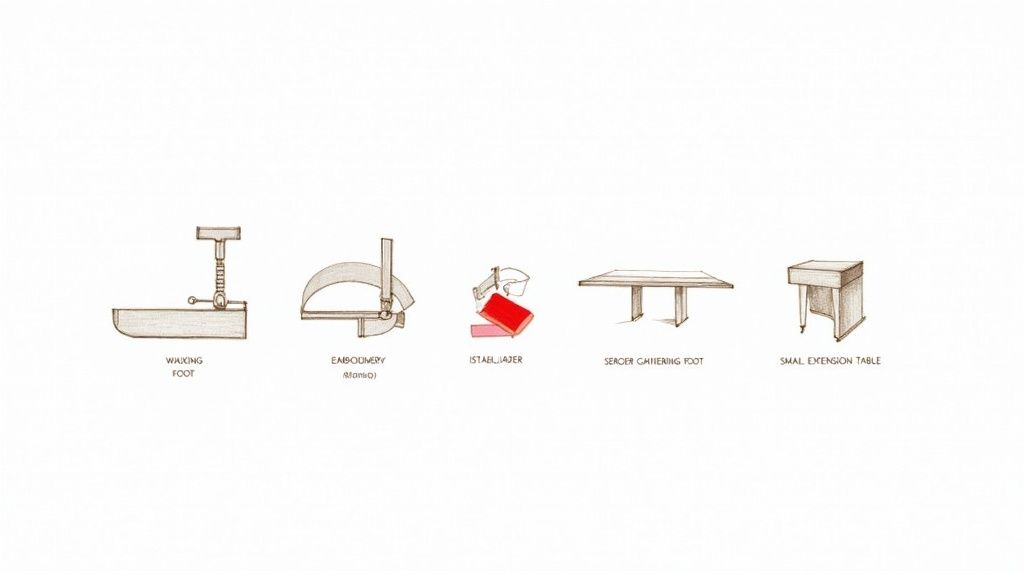
- Extension Table: This is a game-changer. An extension table simply slides onto your machine and dramatically increases your flat workspace. It’s essential for supporting the weight of a quilt, which prevents the fabric from dragging on the needle and causing wonky, distorted stitches.
- Free-Motion Quilting Foot: Often called a darning foot, this little accessory is what makes those gorgeous, free-form quilting designs possible. It hovers just above the fabric, giving you total freedom to “draw” with your needle and move your project in any direction.
- Walking Foot: As we covered in our presser foot guide, a walking foot is absolutely non-negotiable for quilters. It has its own set of feed dogs that work with your machine's to grip the top layer of fabric, ensuring your quilt top, batting, and backing all feed through evenly. No more puckers or shifting!
These three tools are fundamental for getting the flat, even results that define a high-quality quilt. If you're serious about quilting, they are the first specialty accessories you should own.
Stepping Into Machine Embroidery
There's something magical about machine embroidery—it lets you add intricate, professional-looking designs to almost any fabric. To get started, you'll need a few specialized items that work together to keep your fabric perfectly stable for flawless stitches.
The most critical accessory is the embroidery hoop. It holds the fabric drum-tight, creating the perfect, stable canvas for the needle to do its work. It's so important to use the right hoop size for your design. If the hoop is too big, you risk gapping and shifting. If it's too small, the design will get distorted.
Other essentials for your embroidery toolkit include:
- Stabilizers: Think of stabilizer as the foundation for your embroidery. This material goes behind your fabric to prevent it from stretching or puckering while the machine stitches. They come in different types—like tear-away, cut-away, and wash-away—and you'll choose one based on your fabric type and project.
- Embroidery Thread: This isn't the same as your regular sewing thread. Embroidery thread is specifically designed for high sheen and excellent coverage. Using a quality rayon or polyester embroidery thread is what makes your designs pop with vibrant, durable color.
Getting the hang of these tools is easy with B-Sew Inn's hands-on online classes. Our experts will walk you through setting up your machine and completing your first project with confidence.
Exploring Serger Attachments
A serger (or overlocker) is a fantastic machine for creating fast, clean, and durable seams. But its capabilities go way beyond just finishing edges! With a few specialized attachments, you can unlock all kinds of creative techniques for garment construction and decorative finishes.
For instance, attachments like gathering feet can create perfect, even ruffles automatically as you stitch, saving you tons of time on a tiered skirt project. An elasticator foot is another lifesaver, guiding and stretching elastic evenly for flawless waistbands and cuffs on activewear. These tools make quick work of tasks that can be tedious on a standard sewing machine, helping you create professional-quality garments much more efficiently.
Thinking about which specialty to dive into? Sometimes seeing the key tools side-by-side can help you decide where you want your creative journey to go next.
Accessories For Advanced Sewing Techniques
| Technique | Essential Accessory | Primary Function | Recommended B-Sew Inn Class |
|---|---|---|---|
| Quilting | Walking Foot | Evenly feeds multiple layers of fabric to prevent puckering. | Quilting Basics & Beyond |
| Machine Embroidery | Embroidery Hoop & Stabilizer | Holds fabric taut and prevents distortion during stitching. | Embroidery Machine Mastery |
| Serging | Gathering Foot | Creates automatic, even gathers and ruffles as you serge. | Intro to Your Serger |
Whether you feel drawn to the artistry of quilting, the detail of embroidery, or the speed of serging, the right accessories are your ticket to taking your skills to the next level. Each path offers a rewarding new way to express your creativity.
Common Questions About Sewing Machine Accessories
Diving into the world of sewing accessories can feel a little overwhelming. It brings up a lot of questions, especially when you're trying to figure out which foot or needle works with your machine for a specific project. It’s totally normal to wonder about compatibility or question when it’s the right time to invest in a more specialized tool. We've heard them all, so we put together this section to answer those common queries with clear, practical advice.
At B-Sew Inn, we truly believe that confidence comes from knowledge. Our commitment to empowering crafters means our support goes way beyond the sale. Through our extensive resources, custom sewing machine designs, and online classes and expert training, we want to be your creative partner, ready to help you get the most out of every single accessory you add to your sewing space.
How Do I Know Which Accessories Are Compatible With My Machine?
This is probably the most important question of all. Getting compatibility right is absolutely crucial for your machine's health and performance. The best place to start is always your sewing machine's manual. It will list compatible part numbers and specify the types of accessories it's designed for—like snap-on versus high-shank presser feet, or which bobbin class to use.
If you’ve misplaced your manual or you’re still not 100% sure, please don’t guess. The experts at B-Sew Inn are trained on all the models we carry. We can help you identify the exact presser feet, bobbins, needles, and other attachments that will work perfectly with your specific machine, making sure you get the right fit every single time.
What Are The Top Three Must-Have Accessories For A Beginner?
When you’re just starting your sewing journey, it's easy to get distracted by all the fancy gadgets out there. My advice? Focus on a few versatile tools that will cover a wide range of basic projects. Building that solid foundation is what really matters.
Here are our top three recommendations for any beginner's sewing machine accessories list:
- A Set of High-Quality Universal Needles: Start with a multi-pack of universal needles in common sizes like 80/12 and 90/14. This will have you covered for sewing a huge variety of woven fabrics like cotton, linen, and poplin.
- A Clear Zipper Foot: Even if you don't plan on sewing zippers right away, this foot's narrow design is a secret weapon for topstitching close to an edge or sewing on trim like piping. The clear view makes it so much easier to see what you're doing.
- Extra Bobbins: Trust me on this one. Having several bobbins that are compatible with your machine is a massive time-saver. You can pre-wind them with different colors of thread so you don’t have to stop, unthread your machine, and wind a new one right in the middle of a project.
Many of our B-Sew Inn starter classes often include kits with these essentials to help new sewists get started on the right foot.
When Should I Upgrade to Specialty Accessories?
The right time to upgrade is when you feel like your current tools are holding you back. It's that moment when you realize you're fighting with your machine to get the results you want. Sewing should be fun, not a constant struggle!
Think about upgrading when a specific task becomes a recurring point of frustration. For instance, if you’re trying to quilt and constantly battling fabric shifts and puckers, that’s a clear sign it's time to invest in a walking foot. It’s not just another purchase; it’s a solution that will dramatically improve your project quality and take away so much stress.
Or maybe you want to add beautiful decorative finishes, but your standard foot just isn't cutting it. Exploring a satin stitch foot would be the perfect next step. B-Sew Inn offers tons of project-based workshops designed to introduce you to these specialty accessories in a fun, supportive, hands-on way.
What Is The Best Way to Organize Sewing Accessories?
I've learned over the years that an organized sewing space is an efficient and inspiring one. As your collection of feet, needles, and bobbins grows, keeping everything tidy and accessible becomes a game-changer. You don't want to waste your precious creative time digging through a jumbled drawer for the right foot.
Clear, multi-compartment containers are fantastic for storing presser feet and bobbins, letting you see everything at a glance. For pins and needles, a magnetic bowl or a good old-fashioned pincushion is perfect. Many sewers also find a dedicated thread rack is invaluable for keeping spools untangled and all their beautiful colors visible. As your needs evolve, B-Sew Inn can recommend specialized storage furniture and solutions to help you design a craft room that is both functional and a joy to create in.
At B-Sew Inn, our commitment is to empower your creativity every step of the way. From providing the perfect machine to offering the training and resources you need to master it, we're here to support your passion. Explore our extensive selection of machines, accessories, and online classes to start your next project with confidence. https://www.bsewinn.com

