
Ever found yourself wishing you could sew a perfect seam and then, without missing a beat, add a gorgeous, custom embroidery design to your project? That's the magic of a sewing and embroidery combo machine. These amazing tools are the ultimate creative partner, blending the utility of a high-quality sewing machine with the artistry of an embroidery machine, all in one compact package.
Think of it like having a master tailor and a detailed artist sharing the same workspace—except that workspace is on your craft table.
Your All-In-One Creative Hub
The journey from a spark of an idea to a finished piece is what crafting is all about. Combo machines make that journey smoother and more exciting. They open up a whole universe of project possibilities without cluttering up your sewing room with multiple machines.
This guide will walk you through everything you need to know about these versatile workhorses, serving as a "how-to" for bringing your creative ideas to life. We'll explore tangible examples you can replicate and show you how to find the machine that feels like it was made just for you. With the right machine, you can piece a beautiful quilt top and then add intricate, personalized embroidered blocks, all without ever getting up from your chair.
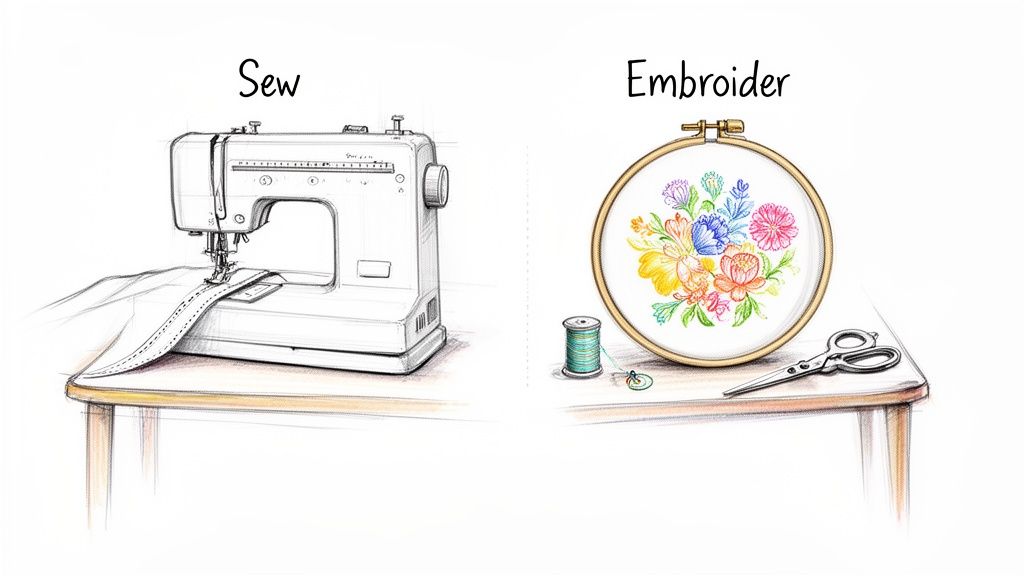
So, Why Choose a Combo Machine?
Getting a combination machine is about so much more than just saving space. It's a real investment in your creative growth. These machines are designed to grow with you. You can start by mastering the fundamentals of sewing and then, when you're ready, dive headfirst into the incredible world of embroidery.
Here’s what makes them such a game-changer for crafters:
- Seamless Project Flow: Go from sewing a dress to adding a custom embroidered monogram in minutes. The whole process is integrated, so you never lose that creative momentum.
- Space Saver: If your craft room is more of a craft corner, a combo machine is a lifesaver. You get two powerful functions in a single unit, freeing up precious table space.
- Smart Investment: Buying one dual-purpose machine is often much friendlier on the wallet than buying a separate sewing machine and an embroidery machine, especially when you're just starting out.
Here at bsewinn.com, we truly believe the right machine should feel like an extension of your own two hands. We are committed to empowering crafters by not just providing the tools, but also the support, training, and extensive resources to use them with confidence and joy.
More Than a Machine—It’s a Partnership
Getting a powerful new machine is just the first step. The real fun begins when you understand everything it can do and have the support to explore all its features. That's why bsewinn.com is dedicated to empowering you through our custom sewing machine designs and comprehensive support system.
With our online classes and training, hands-on guidance from experts, and a welcoming community of fellow makers, you’ll build the confidence to tackle any project you can dream up. From simple mending jobs to elaborate embroidered art, we're with you every stitch of the way. And if you're looking for a little creative spark, check out our guide on embroidery machine project ideas to get you started.
Getting to Know Your Combo Machine's Features
Shopping for a new machine can feel like trying to read a foreign language. The spec sheets are jam-packed with numbers, acronyms, and technical terms that don’t really tell you what it’s like to sit down and create with it. Let's translate that jargon into real-world possibilities.
Instead of getting bogged down in the numbers, I want you to start seeing the potential behind them. A high stitch count isn't just a number—it's the power to create stronger seams and add gorgeous, custom embellishments. A big hoop size isn't just a measurement—it's the canvas for your next show-stopping embroidery design.
First Things First: The Sewing Essentials
Before any embroidery magic can happen, a combo machine has to be a top-notch sewing machine. The quality of its sewing functions is the foundation for every single thing you make. Think of these features as your construction toolkit—the must-haves for building everything from garments to quilts with a professional touch.
Two of the most critical features are a strong motor and a versatile stitch library. A powerful motor means your machine won't struggle, whether you're working with delicate chiffon or punching through multiple layers of heavy denim. That power is what gives you clean, consistent stitches every single time.
The stitch library is your creative palette, full of both functional and decorative options. Here’s what you should be looking for:
- Utility Stitches: These are the workhorses. We're talking about the basic straight stitch for seams, the zigzag for finishing raw edges, and a reliable buttonhole stitch for perfect, one-step buttonholes.
- Stretch Stitches: If you have any plans to sew with knits (like jersey or spandex), these are a must-have. They're designed to flex with the fabric, so your seams won't pop on comfy leggings or t-shirts.
- Decorative Stitches: This is where you get to have some fun! Built-in scallops, vines, or geometric patterns can add a beautiful, custom finish to a hem or neckline, turning a simple project into something truly special.
Now for the Fun Part: The Embroidery Side
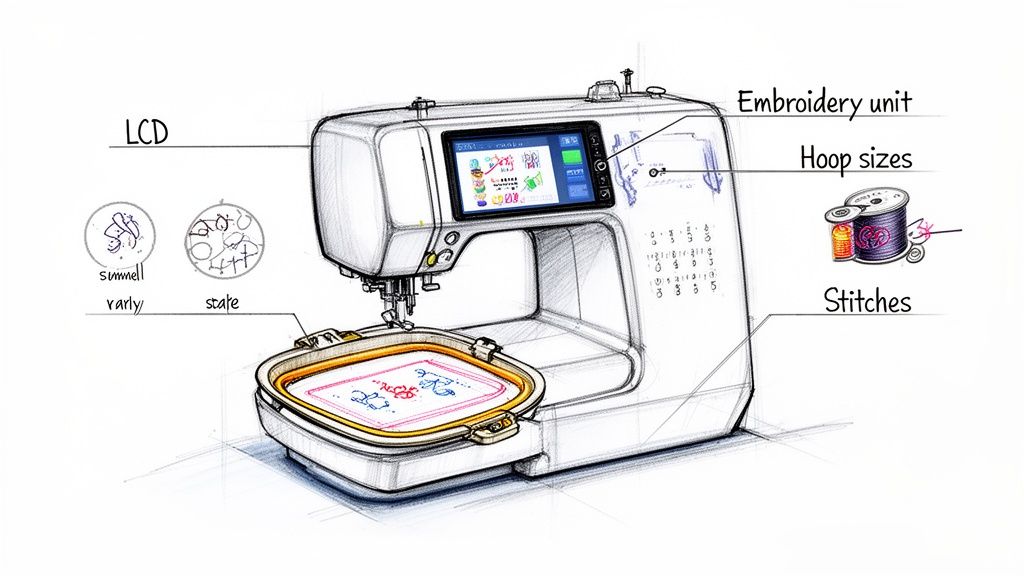
Once your project is sewn, the embroidery unit is what transforms your machine from a construction tool into an artist’s brush. This is where personalization and creativity really come alive. The embroidery features are what will define the size, complexity, and overall ease of bringing your designs to life on fabric.
The most important feature on the embroidery side is, without a doubt, the hoop size. The hoop is the frame that holds your fabric tight and stable while the machine does its work. A machine's maximum hoop size directly limits the largest single design you can stitch out.
A larger hoop, like a 5"x7" or bigger, really opens up a world of possibilities. It lets you create big, bold florals on the back of a jacket or stitch intricate quilt blocks without the headache of re-hooping your fabric over and over.
Modern sewing and embroidery combo machines have come a long, long way, and it's because so many people are discovering the craft. The global market was valued at USD 6.17 billion in 2026 and is expected to soar to USD 9.21 billion by 2032. That boom means that powerful, user-friendly features are becoming more and more common.
The Brains of the Operation: LCD Screens and Software
The digital screen is your command center. It's where you'll interact with all of your machine's incredible capabilities, so a clear, intuitive LCD touchscreen can make a huge difference in your creative flow.
A good interface should let you:
- Preview Designs: See your embroidery design in full color before you even thread the needle.
- Make On-Screen Edits: Quickly resize, rotate, mirror, or even combine different designs right on the machine. This saves so much time running back to your computer for small tweaks.
- Access Built-In Goodies: Most machines come loaded with a library of ready-to-stitch designs and lettering fonts, giving you instant creative fuel for monograms and small embellishments.
Beyond what’s built-in, think about how you'll get new designs onto the machine. Almost all modern machines use a USB port, which lets you import thousands of designs you find, buy, or download online. This is absolutely key to growing your library.
And for those who want to take it a step further and create their own patterns, learning how to digitize embroidery designs is an amazing skill to pick up. Here at bsewinn.com, we offer extensive resources and classes to guide you through that exciting process.
Combo Machine vs. Separate Machines
It’s one of the biggest questions you’ll face when setting up or upgrading your craft space: do you go for an all-in-one sewing and embroidery combo machine, or is it better to buy two separate, dedicated machines? This is the classic "jack-of-all-trades versus a master of one" dilemma. There’s no single right answer—it all comes down to your space, your budget, and how you like to create.
Think about your sewing room for a second. Is it a sprawling studio with dedicated tables, or are you carving out a little corner of the dining room? The most obvious win for a combo machine is its smaller footprint. You’re getting two powerful functions packed into one body, which is a lifesaver for anyone tight on space. Plus, it’s often a friendlier upfront investment than buying two separate machines of comparable quality.
The Case for an All-in-One Combo Machine
For a lot of us, the real magic of a combo machine is the seamless flow. You can piece a quilt block with a perfect quarter-inch seam, then slide on the embroidery unit and start stitching a beautiful design right onto that same block. No moving your project, no switching machines, no breaking your creative stride.
This setup is also a fantastic on-ramp into the world of machine embroidery. It lets you get comfortable with the sewing side of things on a machine you already know and trust before you dive into its more artistic features.
A combo machine’s superpower is its unified experience. You're not learning the quirks of two different interfaces. You master one machine, and that knowledge applies to both sewing and embroidery, which really flattens the learning curve.
You don't have to take my word for it; the market is showing a clear preference for these versatile workhorses. The European sewing and embroidery combo market was valued at US$ 1.5 billion in 2026 and is expected to climb to US$ 2.4 billion by 2033. That kind of growth tells you people love the convenience of having everything in one place. If you're curious, you can read more about these market trends and their implications for crafters.
The Power of Two Separate Machines
But what if you're running a small business or you’re just an incredibly prolific crafter? This is where having two separate machines really shines, and it comes down to one massive advantage: parallel production. You can have a complex, multi-hour embroidery design running on one machine while you’re busy sewing seams, hemming pants, or piecing another quilt on your dedicated sewing machine.
This ability to multitask is a game-changer for efficiency. If you’re juggling Etsy orders or working against a deadline for a craft fair, you’re essentially doubling your productive time. It means less waiting around and more making.
Here’s a quick look at how they stack up side-by-side:
| Factor | Sewing and Embroidery Combo Machine | Separate Sewing & Embroidery Machines |
|---|---|---|
| Space | Perfect for small craft rooms or multi-use areas. | Needs a lot more table real estate and storage. |
| Budget | Usually a lower initial cost for similar quality. | A higher upfront investment for two specialized machines. |
| Workflow | A smooth, integrated process for one project at a time. | Lets you work on two things at once, boosting output. |
| Best For | Hobbyists, beginners, and anyone with limited space. | Small business owners, high-volume makers, and specialists. |
In the end, this decision is all about what works for your creative process. There’s no wrong choice, only the one that feels right for you. At bsewinn.com, our job is to help you figure that out and provide the training and support you need to feel amazing about whichever path you take.
How to Choose the Right Machine for Your Projects
Figuring out how to translate your creative daydreams into an actual machine sitting in your sewing room can feel like the hardest part of the whole process. The real secret is to start with what you love to do—whether that’s quilting, making clothes, or creating custom gifts—and match that passion to a machine that can keep up.
This way, the machine you choose won't just be a tool for today's projects. It'll be a partner that grows with you.
Are you a quilter who dreams of stitching beautiful, edge-to-edge designs across a king-size quilt? If that's you, you’ll want to look for a combo machine with a generous throat space and a really big embroidery hoop. That extra room lets you easily wrangle all that fabric and stitch out large, impressive designs without having to constantly stop and re-hoop everything.
Or maybe you’re all about fashion and want to add tiny, perfect monograms to a shirt cuff or a delicate trail of flowers along a dress hem. For that kind of detailed work, you’d want a machine with a free arm to get into those tight spots, plus a good variety of smaller hoops for precise design placement.
Aligning Features With Your Craft
Every sewist is different, and your machine should feel like it was made just for you and your workflow. The best way to find the right one is to think through the projects you actually make (or want to make!). This gets you past the flashy brand names and focused on what really matters: function.
Let’s walk through a few common scenarios:
- For the Avid Quilter: You’ll want a machine with a large throat (that’s the open space to the right of the needle), a zippy stitches-per-minute speed for piecing, and a nice, big maximum hoop area. Look for something 8"x12" or larger for quilting in the hoop or adding custom labels.
- For the Garment Sewer: A solid library of utility and stretch stitches is a must. Also, look for a one-step buttonhole function and a free arm. For the embroidery part, on-screen editing is your best friend for getting those designs placed exactly where you want them.
- For the Small Business Owner: Here, it’s all about durability and efficiency. Multi-needle capability is a huge plus if it’s in the budget. Otherwise, prioritize a fast embroidery speed and seamless software connectivity for loading custom logos and handling batch orders.
Choosing a machine is about finding a creative partner you can rely on for years. At bsewinn.com, our experts love hearing about your goals. We'll help you find that perfect fit from top brands like Baby Lock, making sure you walk away with a machine that empowers you, not frustrates you.
This little decision tree can help you see at a glance whether a combo machine or two separate units makes more sense for your space, budget, and creative flow.
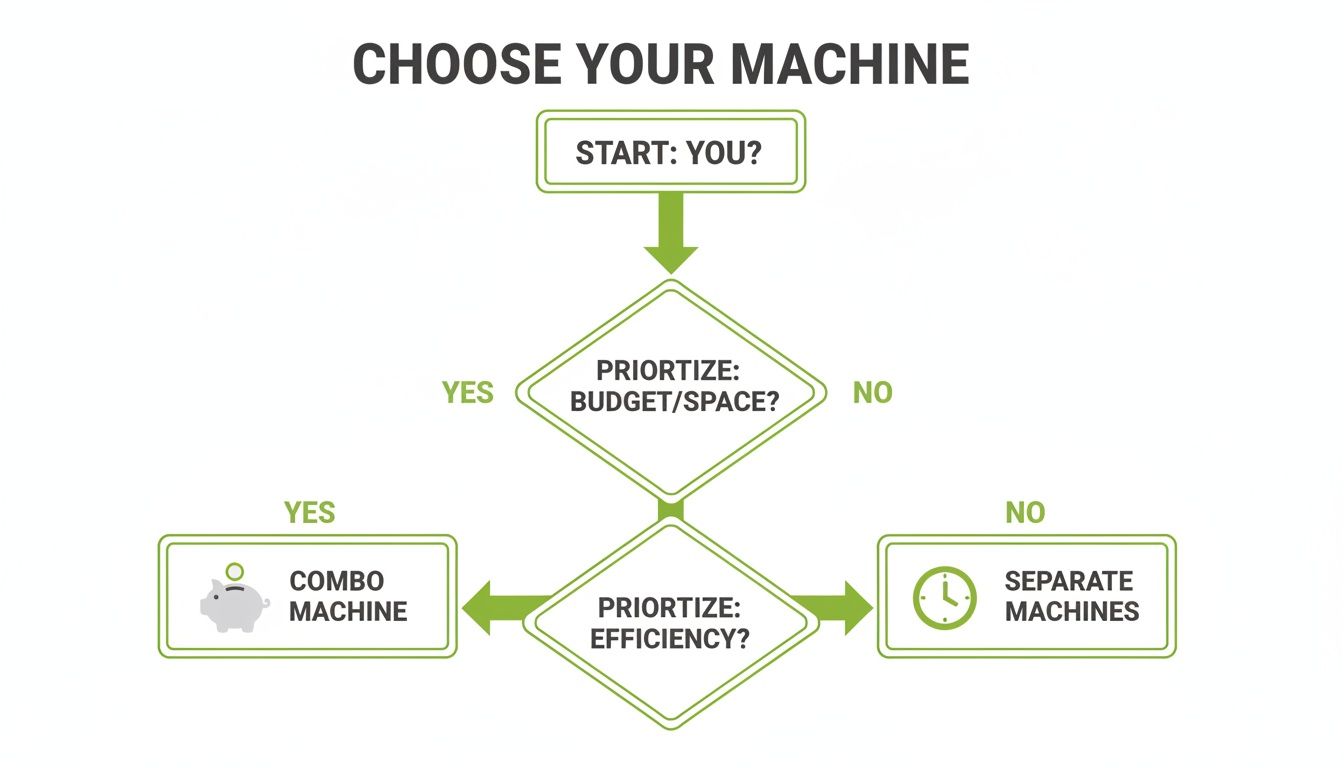
As the chart shows, sewing and embroidery combo machines are often that sweet-spot solution for makers who need to balance their budget and their available space, giving you incredible versatility in one machine.
Investing in Long-Term Support
Buying a machine isn’t just a one-and-done purchase. Think of it as an investment in your creative journey. The help and support you get after you bring it home are just as critical as the features it has.
Warranty and Service: A solid manufacturer's warranty gives you peace of mind right out of the box. But just as important is having access to authorized technicians who actually know your machine inside and out. bsewinn.com offers expert, reliable support to keep your machine humming along happily.
Financing Options: Let's be real—high-quality sewing and embroidery combo machines are a big purchase. Flexible financing can put that dream machine within reach, letting you spread out the cost so you can start creating right away.
Training and Education: The best machine in the world won’t do you any good if you’re intimidated by it. We are all about empowering you to use your machine with confidence. That’s why we offer extensive resources, from our online classes and training to hands-on support, to help you master every button, stitch, and setting.
Bringing Your First Project to Life
There's nothing quite like the excitement of a new machine arriving at your door. Let's channel that thrill and walk through setting up your new combo machine and finishing your very first project. This "how-to" section will show you how to turn that "new machine" energy into a tangible, beautiful creation you can be proud of.
Think of this first project as a friendly handshake with your machine. You'll learn its language—how it threads, the way it switches from sewing to embroidery, and how it translates a design on a screen into actual, beautiful stitches. The goal here is to make that first "hello" a fun and rewarding one.
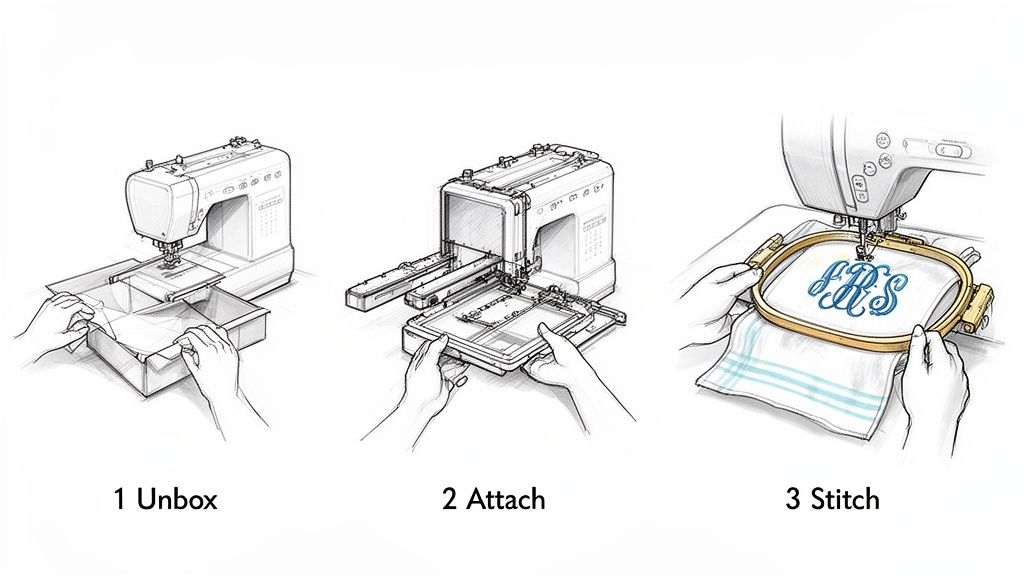
From Box to First Stitch
Getting started is probably easier than you think. Most modern machines are designed to be user-friendly, but breaking it down into a few clear steps will help you feel comfortable right away.
- Unbox and Set Up: Carefully pull your machine and all its goodies out of the box. Find a sturdy, flat table for it, plug it in, and take a moment to get acquainted with the accessories—things like the presser feet, bobbins, and hoops.
- Attach the Embroidery Unit: This is the key transformation. To switch from sewing to embroidery, you'll usually slide off the accessory tray from the front of the machine. The embroidery unit then clicks securely into place, typically on the back or side. Your machine’s screen will immediately recognize the change and switch itself over to embroidery mode.
- Learn to Thread: Threading is a skill you'll use constantly. For sewing, you just follow the numbered guides on the machine's body down to the needle. The path for embroidery is often identical, but you'll want to use specialized embroidery thread. It has a different sheen and is designed to handle high-speed stitching without snapping.
Your First Project: A Monogrammed Tea Towel
Okay, let's put those steps into practice with a project that’s simple but gives you a big, satisfying payoff. A monogrammed tea towel is the perfect tangible example to replicate. It’s small, flat, and easy to hoop, which lets you focus entirely on the embroidery process without wrestling with bulky fabric.
This little project is a fantastic how-to for seeing the magic of your sewing and embroidery combo machine firsthand.
Here’s what you’ll need:
- A plain cotton or linen tea towel
- Embroidery thread in a color you love
- A pre-wound bobbin with embroidery bobbin thread
- A piece of tear-away stabilizer
- Your machine’s medium-sized hoop (a 5"x7" is great for this)
This first hands-on experience is where everything clicks. You're not just reading a manual; you're creating something beautiful and learning the core functions of your machine in a practical, low-pressure way.
Step by Step to Success
With your materials gathered, you're ready to bring your design to life. Just follow these steps, and you’ll go from a blank towel to a personalized piece you can be proud of.
- Prep Your Fabric: Give the tea towel a good press with an iron to get rid of any wrinkles. A smooth surface is key for clean stitches.
- Hoop It Up: Lay your stabilizer on a flat surface, place the towel on top, and then press the inner ring of the hoop down into the outer ring. The fabric should feel taut, almost like a little drum. Getting this right is so important for stitch quality! For a deep dive, you can learn more about how to use embroidery stabilizer in our guide.
- Choose Your Design: On your machine's screen, find the built-in fonts and pick a letter for your monogram. You can adjust the size to fit your hoop and drag it to position it exactly where you want it on the towel.
- Hit "Start" and Watch the Magic: Attach the hoop to the embroidery unit, lower the presser foot, and press the start button. Now comes the fun part! Your machine will take over and stitch out the design perfectly. It will even pause automatically if you need to change thread colors.
- Add the Finishing Touches: Once the stitching is done, remove the hoop from the machine. Gently tear away the excess stabilizer from the back of the design. A final press with the iron, and you're all done!
Congratulations! You’ve just completed your first embroidery project. This simple exercise is the foundation for countless creative adventures ahead. At bsewinn.com, we offer tons of online classes and video tutorials to help you build on this success and feel empowered to tackle even bigger and bolder designs.
Got Questions? We've Got Answers.
Jumping into the world of sewing and embroidery combo machines always brings up a few questions. I get it—it’s a big step for your craft room, and you want to feel completely confident before you decide. So, let's talk through some of the things we hear most often from crafters just like you.
Think of this as that last chat over a cup of coffee to make sure you have all the details. My goal is to give you clear, straight-up answers so you can feel excited, not uncertain, about your choice.
Can a Combo Machine Really Handle Heavy Fabrics?
This is one of the first and most important questions I hear, especially from people who love making durable goods. Can these machines really muscle through denim or canvas? The short answer: you bet. Many high-quality combo machines are absolute workhorses built for the tough stuff.
They’re engineered with powerful motors and solid metal frames that can plow through multiple layers of denim, canvas, and even thin leather without skipping a beat. When you're looking at different models, keep an eye out for motor power, a full metal frame, and adjustable presser foot pressure. Those are the features that give a machine the strength and stability to push through thick materials while keeping your stitches flawless. Here at bsewinn.com, we can point you to the specific models that are famous for their robust performance, making sure your machine is ready for whatever you throw at it.
How Hard Is It to Switch Between Sewing and Embroidery?
The thought of converting a machine from one job to another sounds like it could be a hassle, right? Thankfully, modern machines have made this process incredibly simple. Designers have worked hard to make the switch between sewing and embroidery feel totally seamless, so you don't lose that creative spark.
It’s a quick, tool-free process that honestly takes less than a minute. Here’s how it usually goes:
- Slide off the accessory tray. This is the flat part that gives you a nice big surface for sewing.
- Attach the embroidery unit. The embroidery module just slides on and clicks into place. It’s a pretty satisfying sound.
- The machine does the rest. The machine’s brain instantly recognizes that the embroidery unit is attached, and the LCD screen switches right over to embroidery mode. You’re ready to load a design.
This easy-breezy design is a huge perk of today's sewing and embroidery combo machines, making them feel approachable even if you're just starting out.
Do I Need Special Thread for Embroidery?
Yes, and this is a big one! Using thread made specifically for machine embroidery is the secret to getting those beautiful, professional-looking results. It might seem like a tiny detail, but the thread you choose makes a massive difference in how your project turns out.
Think about it this way: your standard sewing thread is built for strength and construction, usually with a matte finish. Embroidery thread is different. It’s typically rayon or polyester with a gorgeous high sheen designed to catch the light. More importantly, it’s engineered to handle the intense friction of stitching at incredible speeds—sometimes up to 1,000 stitches per minute.
Using the right embroidery thread is what saves you from the headaches of thread breaking, shredding, or bunching up under your fabric. It’s a simple swap that elevates a project from looking homemade to looking absolutely stunning.
Can I Use Designs I Find Online?
Absolutely! This is where the real fun begins. You are definitely not stuck with just the designs that come pre-loaded on your machine. The internet is a treasure trove of incredible embroidery designs—some free, some for purchase—that you can use to make every project uniquely yours.
You just need to check two things before you hit "download":
- File Format: Every machine brand has its favorite file format (.PES for Brother/Baby Lock, .JEF for Janome, etc.). Most modern machines are multilingual and can read several formats, but it's always smart to double-check.
- Design Size: The design you fall in love with has to fit inside your machine’s largest hoop. You can’t stitch out an 8"x10" design if your machine's max hoop size is 5"x7".
Once you have a compatible design, getting it onto your machine is as simple as saving it to a USB stick, plugging it in, and selecting it on the screen. This opens up a nearly limitless world of creativity. And with resources like bsewinn.com's online classes and training, we'll make sure you feel confident finding, loading, and stitching out any design that catches your eye.
At bsewinn.com, we’re not just here to sell you a machine. We are your creative partners, committed to empowering you with the support, education, and extensive resources you need to bring your ideas to life. Come explore our collection of custom sewing and embroidery combo machine designs and let's get you started on your next project.

