

At its core, knowing how to store sewing patterns is all about one thing: protecting your investment so you can make sewing easier. When you have a good system in place, you’ll prevent damage, save precious time, and stop yourself from re-buying patterns you already own. It’s about building a clear, accessible library for both your physical tissue patterns and digital PDF files, turning your collection into a launchpad for your next great sewing machine design.
Why Organized Pattern Storage Is a Game Changer
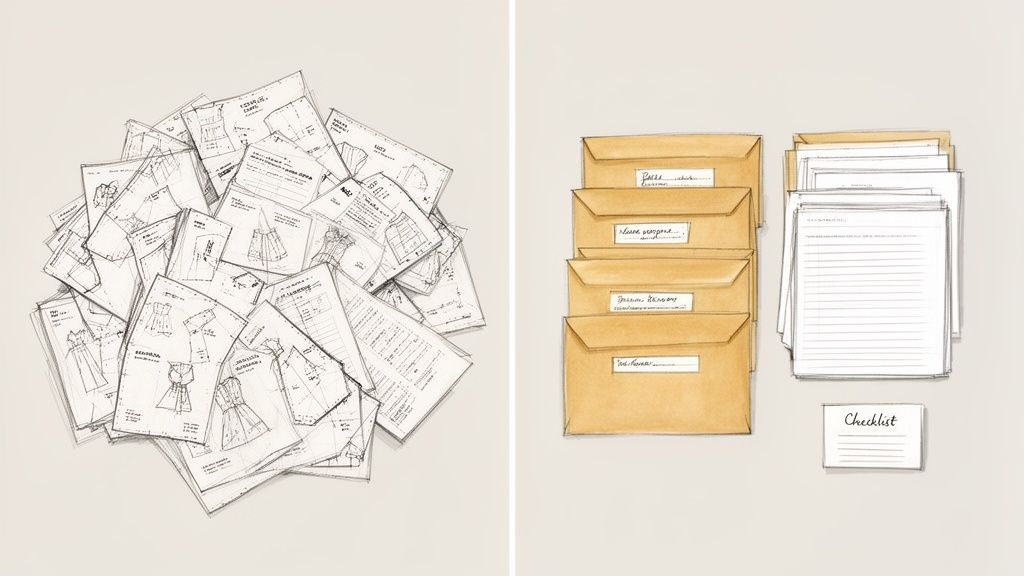
Let's be real—a messy pile of patterns can kill your creative momentum before you even thread your machine. You end up spending more time digging through crinkled tissue and mysterious envelopes than you do actually sewing. A solid storage system is your secret weapon against that kind of creative chaos, empowering you to bring your tangible design ideas to life.
The frustration is real, and it costs you more than just time. A lost instruction sheet, a tear in a delicate vintage pattern, or an accidentally deleted PDF file can bring a whole project to a screeching halt. A little organization saves you money, stress, and the headache of hunting for that one piece you know you have somewhere.
The Unique Challenges of Each Format
Paper patterns and digital PDFs each have their own quirks when it comes to storage. That delicate tissue paper is so prone to tearing, moisture, and yellowing over time if you don't store it properly. They can also get surprisingly bulky and quickly overwhelm a small sewing space.
Digital files, on the other hand, create a different kind of mess: digital clutter. Without a logical folder system, your hard drive can turn into a graveyard of cryptically named files, making it almost impossible to find the right pattern when inspiration strikes.
A well-organized collection isn't just tidy—it's an inspiring library of possibilities. At B-Sew Inn, we believe in empowering crafters, and that starts with an organized space that lets you move from idea to creation without friction.
Your Quick-Start Preparation Checklist
Before you can even think about organizing, you have to do a little prep work. These foundational steps are the key to making any system actually work for you, a principle we champion in our B-Sew Inn creative classes. Getting your patterns ready ensures they're set for long-term storage and easy use down the road.
- Press and Fold: Gently press any crinkled tissue patterns on a low, dry heat setting to get them flat. Then, fold them neatly to either fit back in their original envelopes or into whatever new storage you've chosen.
- Trace Your Masters: For those multi-size or irreplaceable vintage patterns, do yourself a favor and trace a working copy onto durable pattern paper. This keeps the original in pristine condition.
- Reinforce and Repair: Grab some acid-free archival tape and mend any small tears in pattern envelopes or tissue pieces. You'll thank yourself later.
- Gather All Pieces: Make sure the instruction sheets and all the pattern pieces are actually together before you file anything away. It’s a simple step that’s easy to forget.
Taking a few minutes for these initial steps transforms your collection from a jumble of papers into a functional, ready-to-use resource. It's the foundation for building a storage system that truly supports your craft—a core part of the creative empowerment we love to offer at B-Sew Inn.
Ready to finally conquer that pile of paper patterns? Let's be real: there's no single "best" way to store them. The perfect system is the one that fits your collection, your space, and the way you like to work. It's all about finding a solution that makes your creative process smoother, not more complicated. We can skip the generic advice and get right into the systems I've seen work time and time again.
If you're just starting out and your collection is still manageable, keep it simple. You don't need some massive, complicated piece of furniture to stay organized. In fact, some of the most effective solutions are the most straightforward.
- Large Manila Envelopes: I love these for grouping similar patterns. You can toss all your dress patterns in one, or keep all the patterns from a specific designer together. Just label the outside and you can stand them up in a basket or a simple box.
- Magazine Files: These are fantastic for keeping pattern envelopes standing neatly on a bookshelf. They stop the patterns from slumping over and getting wrecked, and you can just pull one file down to browse a whole category at once.
These simple tools get the job done without a huge investment, letting you focus on what really matters—sewing.
Scaling Up for Serious Collectors
There comes a point where your little pile of patterns turns into a full-blown library. When that happens, those simple methods can start to feel a bit strained. This is where dedicated furniture and more robust systems become an absolute lifesaver. The goal is to handle a large volume of patterns while making sure every single one is easy to find and protected from damage.
This became a huge issue for a lot of us during the lockdowns. Home sewing exploded, and between 2020 and 2021, sewing pattern use shot up by an incredible 125%. Suddenly, thousands of new sewists were facing the "how do I store all this?" dilemma. For collections that have grown that fast, you need bulk storage. Think vertical filing cabinets or multi-drawer units like the IKEA Alex drawers. Many of these can hold 200+ patterns without you having to fold them into oblivion.
Let's look at some of the most popular options for larger collections.
Here’s a quick rundown of the most common methods I recommend, so you can see how they stack up against each other.
Comparing Physical Pattern Storage Methods
| Storage Method | Best For | Approximate Capacity | Space Requirement | Pros and Cons |
|---|---|---|---|---|
| Filing Cabinet | Large, uniform collections of standard-sized pattern envelopes. | 150-250+ patterns per drawer | Medium to Large | Pro: Fantastic organization with dividers; easy to flip through. Con: Can be bulky, heavy, and a bit of an eyesore. |
| Binders with Sheet Protectors | Traced patterns, delicate vintage finds, and PDF printouts. | 20-40 patterns per binder | Small to Medium | Pro: Excellent protection, especially for fragile items; very portable. Con: Can get pricey, especially with archival-quality protectors. |
| Comic Book Boxes | Uniformly sized patterns, particularly vintage ones that need extra support. | 50-100 patterns per box | Small | Pro: They're acid-free, sturdy, and affordable. Con: If you stack them, getting to the bottom box is a pain. |
| Multi-Drawer Flat Files | Professional studios, archivists, and anyone storing uncut master patterns. | Varies greatly | Large | Pro: The absolute gold standard for flat, protected storage. Con: Very expensive and takes up a significant amount of floor space. |
Choosing the right container is the first step, but how you use it makes all the difference.
Insider Tips for Smarter Storage
Beyond just picking a box or a cabinet, a few clever tricks can make a world of difference.
For those precious vintage patterns that feel like they might disintegrate if you look at them wrong, slip an acid-free comic book board into the envelope. It gives the pattern some much-needed rigidity and prevents creases and tears.
And for your current work-in-progress? My favorite hack is using pants hangers with clips to hang all the pattern pieces for a single project together. It gets them off your cutting table but keeps them visible and ready to go.
A great storage system isn't just about being tidy. It's about creating a space where your tools support your creativity instead of getting in the way. At B-Sew Inn, we're committed to empowering crafters by providing the notions and storage fundamental to a happy sewing life.
By thoughtfully choosing a system that fits your collection now but also has room to grow, you’re setting yourself up for a more functional and inspiring sewing space. For more creative ways to get your whole craft room in order, check out our guide on sewing room storage ideas. Taming the paper pattern beast is a huge step toward a more enjoyable and productive sewing journey.
Tame Your Digital PDF Pattern Library
PDF patterns are a modern sewist’s dream, but let's be honest—they can turn your computer into a digital mess in a heartbeat. That innocent "Downloads" folder quickly becomes a junk drawer filled with cryptic file names, half-printed A0 files, and maybe even a few patterns you forgot you bought. The only way to stop the chaos is to have a system from the moment you click 'download'.
A logical folder structure is your best friend here. Think of it like a physical filing cabinet; you need clear categories to find anything. A great place to start is with top-level folders for garment types.
- Dresses
- Tops
- Pants
- Outerwear
Inside each of those, you could create subfolders for specific designers. This simple setup means you don't have to remember the exact, quirky name of a pattern. Instead of searching your entire hard drive for "TheAwesomeBlouse_Final_V2," you can just navigate to Tops > DesignerName and spot it instantly.
Creating a Consistent File-Naming System
Once your folders are in place, the next step is a solid file-naming system. This is what makes your digital library truly searchable and easy to browse. A simple, effective formula I've used for years is:
[Designer][PatternName][GarmentType]
For example, a file might be named HelensCloset_CameronButtonUp_Shirt.pdf. This little bit of effort upfront means that even if a file accidentally gets moved, you know exactly what it is at a glance. It also neatly groups all patterns from the same designer together alphabetically within a folder.
By standardizing your file names, you're not just organizing—you're creating a personal, searchable database of your patterns. At B-Sew Inn, we believe this simple habit saves frustration and makes browsing your collection feel inspiring, which is a key part of empowering every crafter's journey.
Not sure where to start with your digital or physical patterns? It really depends on how big your collection is and what kind of space you're working with. This decision tree can help point you in the right direction.
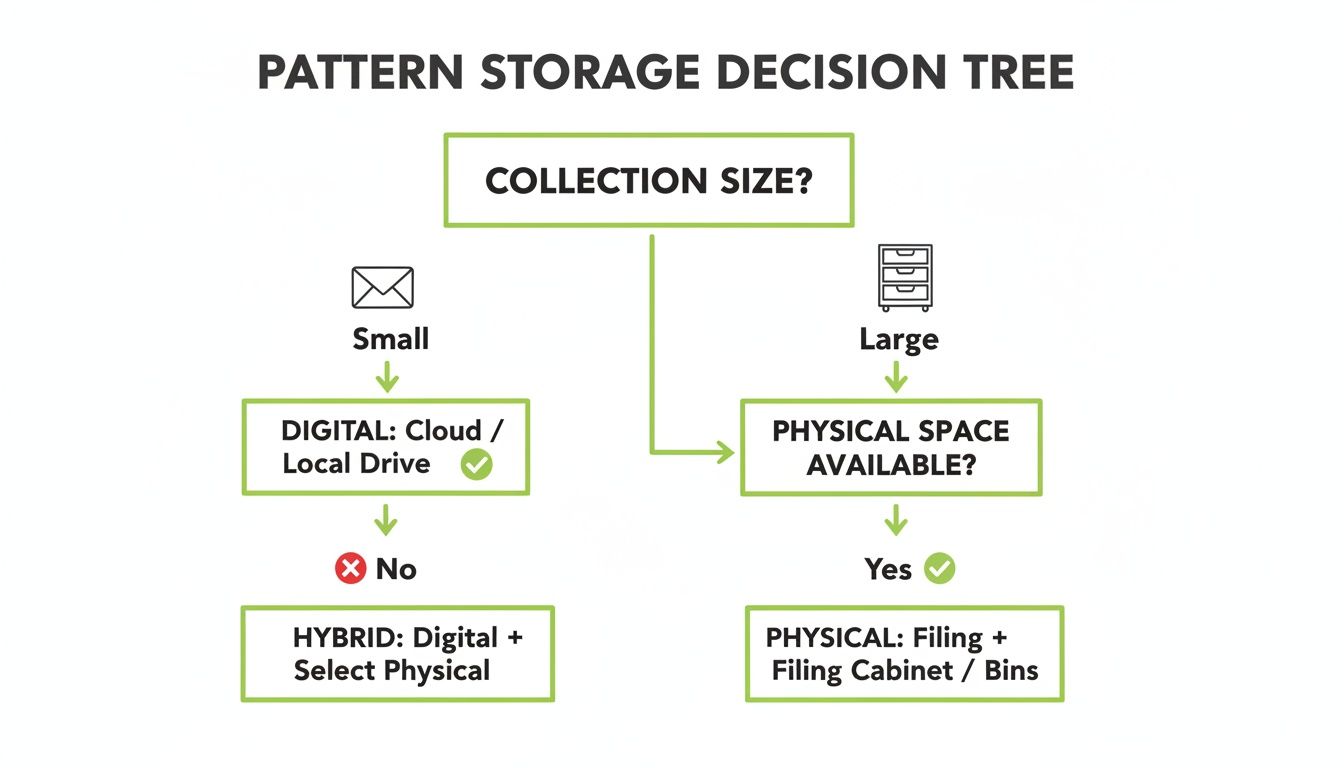
As you can see, sometimes the simplest methods are perfect for smaller stashes, while bigger libraries really benefit from more structured, scalable systems.
Leveraging Cloud Storage and Apps
Relying only on your computer's hard drive is a risky game. I’ve heard too many horror stories of a system crash wiping out an entire, lovingly curated pattern collection in an instant. This is where cloud storage services like Google Drive, Dropbox, or OneDrive are absolute lifesavers.
Syncing your main pattern folder to the cloud does two critical things:
- It creates an automatic backup. Your files are safely stored off-site, protecting them from computer meltdowns, theft, or accidental deletion.
- It makes them accessible everywhere. You can pull up a pattern on your phone at the fabric store, on a tablet in your sewing room, or on a different computer.
Beyond just storage, some apps are designed to help you visually catalog everything. Imagine software where you can add photos of your finished garment, notes about sizing adjustments, and even digital fabric swatches. This turns your simple folders into a rich, visual library. At B-Sew Inn, we're big fans of integrating these modern tools into the creative process and even offer software training to help our customers get the most out of them.
Build a Smart Cataloging System That Actually Works
Let's be honest, a great storage solution is only half the battle. If you can’t quickly find that specific pattern you know you have somewhere, your system just isn't working. A smart cataloging system is the index to your entire library, saving you from that frustrating (and expensive) moment you realize you've bought the same pattern twice.
The best part? Your catalog can be as simple or as detailed as you need it to be. Whether you're a pen-and-paper person or love a good spreadsheet, the goal is to get a bird's-eye view of your entire collection.
Designing Your Perfect Index
For a more hands-on approach, you can’t go wrong with a simple three-ring binder with index tabs or even a dedicated journal. I've seen some beautiful catalogs where people create a page for each pattern, tape a little picture from the envelope right onto the page, and jot down the key details. It's a wonderfully tactile method, perfect if you're a visual person who loves a hands-on approach to just about everything.
If you prefer going digital, a spreadsheet in Google Sheets or Excel is an incredibly powerful tool. You can create columns for every little piece of information you want to track, which makes filtering your entire collection a matter of seconds.
Here are a few ideas for what to track:
- Pattern Number and Name: This is the absolute essential.
- Designer or Brand: Really helpful for grouping patterns from designers you love.
- Garment Type: Think broad categories like "dresses," "tops," or "children's wear."
- Size Range: This is crucial! It tells you at a glance if a pattern will work for your next project.
- Notes: Your personal space for alteration ideas, fabric pairings you've been dreaming up, or the status of a current project.
This kind of tracking becomes more and more vital as your collection grows. The sewing supplies market is booming—it's projected to jump from $5.77 billion in 2026 to $7.81 billion by 2032—and printed patterns are a huge part of that. Without a good system, it's easy to lose track, which can lead to a 15-20% annual loss for hobbyists just from re-buying things. That's why keeping an inventory is so important!
Think of your catalog as your personal sewing search engine. When you invest a little time setting it up, you empower yourself to shop your own stash first, saving both time and money.
To make sure your system not only works for you now but also preserves your patterns for years to come, it’s worth looking into some document archiving best practices. This will help protect your precious paper patterns from degrading over time. A well-organized catalog and proper storage go hand-in-hand, a principle that applies to your entire creative space.
Finally, dedicated apps can really offer the best of both worlds. They give you a structured database with fields for all your pattern info, plus the ability to add photos of the envelope, your finished garment, and even your fabric pairings. Here at B-Sew Inn, we believe in using the right tools for the job, and a well-built catalog is one of the most powerful tools a sewist can have in their arsenal.
Preserve Your Patterns for Decades of Sewing
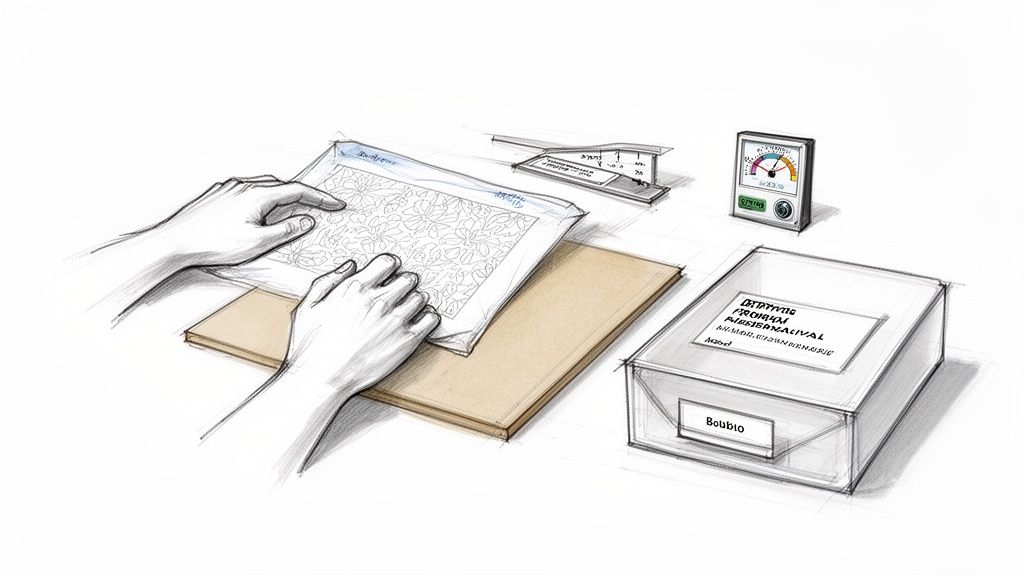
Your sewing patterns are so much more than just pieces of paper—they’re an investment in your creativity. Some of those vintage finds are truly irreplaceable, and even your go-to modern patterns deserve the right care to see you through countless projects.
The biggest enemies of paper patterns are often the ones you can't see: heat and humidity. An attic or basement might feel like a convenient spot to stash them, but those wild temperature swings and dampness can make paper brittle, yellow, and even grow mold. Yikes. Getting the climate right is non-negotiable for long-term pattern health.
Creating the Ideal Storage Environment
The secret to keeping your patterns in pristine condition is a stable environment. We’re talking a temperature between 65-70°F and a relative humidity of about 40-50%. This sweet spot helps prevent the 30% shrinkage that tissue paper can suffer over just five years in a bad spot.
It's a sobering thought, but poor storage contributes to a staggering $200 million wasted globally each year on reprinted patterns. In fact, 25% of sewists admit to rebuying patterns they already owned but just couldn't find (we’ve all been there!). You can dig into more market trends on Factmr.com.
Your sewing room isn't just a creative space; it's an archive. Our goal at B-Sew Inn is to provide the support and resources you need to treat it like one, ensuring every pattern stays in perfect condition for your next project.
This mindset extends to all your supplies, of course. For more ideas on getting your creative space in order, check out our expert quilt fabric storage ideas.
Archival-Quality Materials Are a Must
What you store your patterns in matters just as much as where you store them. Those standard paper envelopes, plastic page protectors from the office supply store, and cardboard boxes? They contain acids that will literally leach into your patterns over time, causing that dreaded yellowing and decay.
You have to opt for archival-quality, acid-free materials. This is absolutely critical for your irreplaceable vintage patterns, but honestly, it’s a smart move for your entire collection.
- Acid-Free Envelopes and Boxes: These create a safe, neutral home for your patterns that won't cause them to degrade over time.
- Archival Sheet Protectors: Perfect for tucking traced copies or fragile originals into a binder. They offer great protection from accidental tears and spills.
- Acid-Free Backing Boards: For those flimsy or delicate vintage patterns, slipping one of these into the envelope adds much-needed rigidity and stops them from getting creased and crunched.
Handling Delicate and Vintage Patterns
Vintage patterns need an extra-gentle touch. If a pattern is particularly fragile or has sentimental value, your best bet is to trace a working copy onto more durable pattern paper. This way, you can cut, pin, and adjust the copy to your heart's content while the original stays safely tucked away.
For any small tears, only use archival mending tape. Regular tape will yellow, become brittle, and can cause more damage in the long run. Taking these careful steps, with a little help from quality tools from B-Sew Inn, ensures your heirloom patterns can inspire makers for generations to come.
Common Sewing Pattern Storage Questions, Answered
Even with a killer organization system, you're bound to run into some tricky situations. Let's dig into some of the most common questions that pop up when you're trying to wrangle your pattern collection.
What’s the Best Way to Store Those Huge, Printed-at-Home PDF Patterns?
When it comes to those big A0 or copy shop prints, the name of the game is avoiding creases. A bent pattern piece can throw off your whole project.
The absolute best way I've found is to gently roll them up and stand them upright. A tall basket, a poster tube, or even a cute umbrella stand works perfectly for this. No folds, no fuss.
Hanging them is another great option. Just clip them onto pants or skirt hangers and pop them in a closet. What about those tiled A4/Letter patterns you painstakingly taped together? For those, I swear by large 11x17 inch envelopes or those oversized sheet protectors you can find for artist portfolios. Slip them into a big binder, and you're golden.
Should I Cut My Original Tissue Patterns or Trace Them?
This is a big one, and my answer is always the same: trace, trace, trace. Especially for any multi-size pattern.
Taking the time to trace the size you need onto sturdier pattern paper or even some lightweight interfacing preserves the original. It might seem like an extra step, but it’s a total game-changer.
- Future-Proofing Your Makes: It means you can always go back and make a different size later, whether for yourself or for a gift.
- Fearless Alterations: You can slash, spread, and scribble all over your traced copy to nail the fit without a single worry about ruining the master pattern.
- Making It Last: Cutting into that delicate tissue paper not only locks you into one size but makes the pattern fragile and way more likely to tear over time.
Think of it this way: preserving the original turns a one-time purchase into a reusable master template. This philosophy of empowering crafters for long-term success is central to our mission at B-Sew Inn.
How Can I Keep Track of All the Pattern Alterations I’ve Made?
The key here is to keep your notes with your traced copy, not the original. This way, you know exactly which version of the pattern those adjustments apply to.
My favorite low-tech method is to just slip an index card into the envelope with the traced pattern pieces. Be specific! Don't just write "made it longer." Write, "Added 1.5 inches to torso length," or "Performed a full bust adjustment based on a C cup." Future you will be so grateful.
If you're working with digital patterns, create a simple text file with your notes and save it in the same folder as the pattern PDF. You can also use PDF software that lets you add comments directly to the file. This keeps all that hard-won fitting knowledge right where you need it for your next go-around.
At B-Sew Inn, we know that an organized sewing space is an inspired one. From our commitment to empowering crafters through custom sewing machine setups to the extensive resources, training, and support we offer, we're here to help bring your ideas to life. Explore our resources and find your perfect machine today!

