

Walking into a sewing machine shop can feel a little daunting, especially when you know you've outgrown your current machine. The truth is, the best sewing machine for quilting isn't a single "it" model—it's the one that feels like a natural extension of your hands, matching your creative goals, skill level, and budget.
Starting Your Journey to the Perfect Quilting Machine
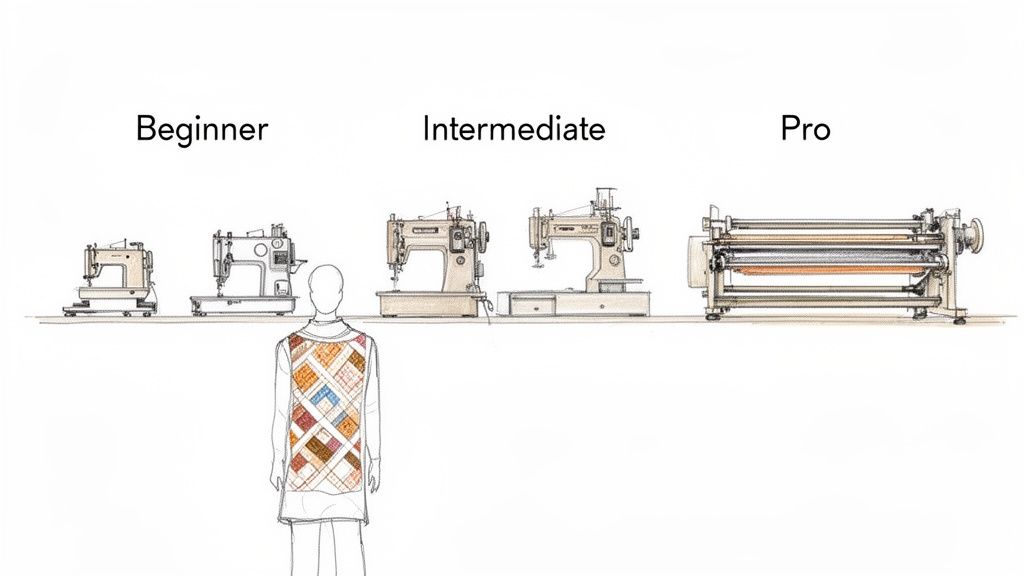
Think of finding the right machine less like a purchase and more like finding a creative partner. You need a machine that can keep up with you, whether you're meticulously piecing tiny blocks or wrestling a king-sized quilt under the needle. This guide is here to cut through the confusing jargon and get straight to the features that actually matter to a quilter.
We're going to break down what turns a standard sewing machine into a quilting powerhouse. Instead of just throwing a list of specs at you, we’ll dig into why these features make a real difference in your day-to-day quilting life, showcasing how they can help you create beautiful designs you can replicate at home.
Key Aspects We Will Explore
- Throat Space: We'll talk about why that gap between the needle and the machine's body is the most valuable real estate you have, and how it can make or break your experience with large quilts.
- Stitch Regulation: Ever heard of this? It’s like cruise control for your stitches, giving you that perfectly even, professional look in your free-motion work. It’s a game-changer.
- Feed Systems: We'll unravel the mystery behind a walking foot versus a dual-feed system and show you how they keep your quilt layers from shifting and puckering.
- Machine Types: From reliable domestic machines to the dream-worthy long-arms, we’ll lay out the pros and cons to help you figure out when (and if) it’s time to level up.
The quilting world is buzzing right now, and the demand for machines that can handle our ambitions is growing. In fact, the global quilting machine market hit an impressive $850 million in 2023. This isn't just a number; it shows how technology—like automated stitching and those gloriously wide throat spaces—is empowering quilters like us to tackle bigger, more complex projects with confidence. You can explore more about these market trends and their impact on quilters.
At B-Sew Inn, we believe in empowering your creativity, not just selling you a box. Our commitment is to provide not just the custom sewing machine designs you love, but also the support and education you need to succeed with tangible, beautiful projects.
Our goal is to arm you with the knowledge to choose wisely. With resources like our B-Creative membership, we make sure you have the community, online classes, and extensive training to truly master your new machine long after it's out of the box. Let’s get started on finding your perfect creative partner.
So, What Kind of Machine Do I Actually Need for Quilting?
Walking into a sewing machine shop can feel a bit overwhelming. The sheer number of options is enough to make anyone's head spin, but it really boils down to finding the right tool for the job you want to do. Think of it like a chef's kitchen—you don't use a paring knife to carve a turkey. The same principle applies here.
At the end of the day, any machine that can reliably sew a straight line can be used to piece a quilt top. But if you want to move beyond just piecing and actually quilt your projects, you'll want a sewing machine for quilting with features that can handle the bulk and precision quilting demands. Let's walk through the main types of machines you'll find, starting with the ones most of us are familiar with.
Domestic Sewing Machines
This is where most of our quilting journeys begin. Your standard home sewing machine is the family sedan of the sewing world—it's versatile and great for all sorts of projects, including piecing quilt tops and even quilting smaller things like baby blankets or placemats.
- Mechanical Machines: These are the trusty workhorses. No fancy screens here—just sturdy knobs and dials for selecting stitches. They are built to last and their simplicity is a huge plus for beginners who just need to master a perfect quarter-inch seam.
- Computerized Machines: This is where things really open up for quilters. A computerized machine is a serious upgrade, giving you push-button controls, loads of stitch options, and game-changing features like a needle up/down setting and speed control. That extra precision makes them fantastic for both piecing and quilting small-to-medium projects.
High-End Domestic and Sit-Down Long-Arm Machines
There comes a point where your quilts get bigger and your ambition grows right along with them. Suddenly, you feel like you're wrestling an octopus under the needle of your standard machine. This is the moment to look at high-end domestic models or their cousin, the sit-down long-arm. They perfectly bridge the gap between a hobby machine and a full-blown professional setup.
These machines are the luxury SUVs of quilting. They’ve got more power under the hood, a ton more space, and features specifically for quilters, but they still fit neatly in your sewing room. Brands like Baby Lock offer custom sewing machine designs with huge throat spaces (that’s the open area to the right of your needle) so you can manage a big quilt without a fight. A sit-down long-arm gives you all the power and stitch quality of a giant long-arm, but you move the fabric yourself, just like on your home machine.
Every quilter eventually hits a wall where wrangling the quilt sandwich is more exhausting than the actual quilting. Upgrading to a machine with more throat space and a beefier motor isn't just a luxury—it transforms the entire experience from a physical battle back into a creative joy.
Stand-Up Long-Arm Quilting Machines
If a domestic machine is a car, the stand-up long-arm is the semi-truck of the quilting world. This is a highly specialized, powerful tool built for one main purpose: to finish large quilts with professional speed and artistry.
With a long-arm, the whole process is flipped. Instead of pushing your quilt through the machine, the quilt is stretched out on a large frame, and you move the machine's head over the fabric. This gives you incredible freedom for detailed, flowing designs and makes quilting a king-sized beast feel completely manageable. They almost always come with built-in stitch regulators that keep your stitches perfectly even, no matter how you move the machine.
And if you dream of adding monograms or intricate embroidery to your work, many high-end machines blend these quilting powerhouses with embroidery functions. To see what's possible, check out our guide on sewing machines for quilting and embroidery. For anyone serious about finishing lots of quilts or even starting a quilting business, a long-arm is the ultimate investment.
So, what takes a sewing machine from just "good" to being your absolute best quilting partner? It's not one magic bullet, but a whole collection of features working together. Getting to know them helps you see past the flashy marketing and find a true quilting workhorse.
Making the leap from a basic household machine is a big deal, but it's a path many serious quilters take. The global sewing machine market, which hit $4.71 billion in 2025, is seeing huge growth in machines built just for us. In fact, surveys show 68% of experienced quilters eventually switch to a dedicated quilting machine after fighting with their starter models. They talk about less frustration and finishing quilts up to 40% faster. If you’re a numbers person, you can read the full research on sewing machine market trends and see how this is changing the industry.
Throat Space: Your Creative Workspace
If there’s one feature quilters talk about more than any other, it’s throat space (sometimes called the harp). This is the open area to the right of your needle, and it pretty much determines how big of a project you can handle without wanting to pull your hair out. Think of it as your main workbench—more space means less chaos.
Your average sewing machine might have 5-7 inches of throat space. That's fine for piecing blocks or quilting a small table runner. But the second you start wrestling a queen-sized quilt through that tiny opening, you'll feel the struggle. You end up bunching and squishing the quilt, which leads to wonky stitches, fabric drag, and an aching back. A proper quilting machine will often boast 11 inches or more, giving you the room to breathe and guide your quilt smoothly.
The Power of a Perfect Feed System
The real secret to flat, pucker-free quilting is getting all those layers—your quilt top, batting, and backing—to move as one. This is where the machine’s feed system becomes your best friend. You'll generally hear about two options: a walking foot and a dual-feed system.
- Walking Foot: This is an attachment that clicks on in place of your regular presser foot. It has its own set of feed dogs on top that work with the machine's bottom feed dogs to pull everything through at the same time. No more shifting!
- Dual-Feed System: This is the built-in, upgraded version. It usually engages from the back of the presser foot and offers even more power and control than a clip-on walking foot.
Both are fantastic for straight-line quilting, but a built-in dual-feed is definitely a premium feature that gives you an edge, especially with thick, lofty quilt sandwiches.
A great feed system is like having an extra set of hands. It eliminates the tiny shifts and puckers that can ruin a beautiful quilt top, giving you the confidence to stitch through even the thickest layers with perfect results.
Cruise Control for Your Stitches
If you have any interest at all in free-motion quilting, stitch regulation is a total game-changer. Seriously, it's non-negotiable. Imagine trying to drive your car at a perfectly steady speed using only your foot—it's nearly impossible. Stitch regulation is the cruise control for your machine, making sure every single stitch is the exact same length, no matter how fast or slow you move the fabric.
A little sensor tracks your hands' movement and tells the machine to speed up or slow down instantly. This is the magic that gives free-motion quilting that clean, professional look. It flattens the learning curve, letting you create beautiful, flowing designs right from the start without years of practice.
Essential Bells and Whistles for Quilters
Beyond the big-ticket items, a few smaller features can make a massive difference in your day-to-day quilting life. When you’re comparing models, keep an eye out for these little luxuries:
- Needle Up/Down Function: This lets you decide if the needle stops in the fabric or out of it. For quilting, setting it to "needle down" is a lifesaver. It acts like a third hand, holding your quilt perfectly still whenever you stop to pivot or adjust your grip.
- Speed Control Slider: Quilting is all about control, not flooring it. A speed control slider lets you set a max speed, so you can put the pedal to the metal without the machine running away from you. Perfect for detailed work!
- Automatic Thread Cutter: One push of a button snips both your top and bobbin threads. It saves a surprising amount of time and stops you from having a nest of thread tails to clean up later. You’ll wonder how you ever lived without it.
And of course, don't forget about presser feet! The right foot can open up a whole new world of techniques. To get a better handle on what's out there, check out our in-depth guide to sewing machine presser feet.
Before we move on, it can be helpful to see these features compared side-by-side. While domestic machines have come a long way, dedicated long-arms are in a class of their own for certain tasks.
Feature Comparison Domestic vs Long-Arm Quilting Machine
| Feature | Domestic Quilting Machine | Long-Arm Quilting Machine |
|---|---|---|
| Throat Space | Typically 8-12 inches. Good for small to queen-sized quilts. | 18-30+ inches. Designed for king-sized quilts and large projects. |
| Stitch Regulation | Available on high-end models as a built-in or add-on feature. | Standard on nearly all models; essential for professional results. |
| Machine Orientation | Stationary machine; quilter moves the fabric under the needle. | Stationary fabric; quilter moves the machine head over the quilt. |
| Speed Control | Manual slider or foot pedal pressure. | Handlebar controls and stitch regulation manage speed automatically. |
| Feed System | Walking foot or integrated dual-feed for moving layers together. | Not applicable; layers are basted on a frame, eliminating shifting. |
| Frame System | Requires an extension table for support; no frame. | Mounted on a large frame (10-14 feet) that holds the quilt taut. |
This table highlights the fundamental difference in how you work. With a domestic machine, you move the quilt. With a long-arm, you move the machine. This distinction is key to understanding which setup will best suit your quilting style and the space you have available.
Choosing a Machine for Your Skill Level and Budget
Finding the "perfect" sewing machine for quilting is a bit of a myth—it’s not a one-size-fits-all kind of deal. The right machine for you really depends on where you are in your quilting journey, how complex your dream projects are, and, of course, what your budget looks like.
Let's walk through a practical path to finding your ideal match. A beginner doesn't need a machine with a thousand bells and whistles; in fact, that's often more overwhelming than helpful. On the flip side, a seasoned quilter will quickly feel boxed in by a basic model. It's all about finding that sweet spot between your ambition and practicality.
Getting Started: The Beginner Quilter
If you're just dipping your toes into the world of quilting, the main goal is to build confidence with a machine that’s capable but not intimidating. A user-friendly, computerized domestic machine is an absolutely fantastic place to start.
Look for models that give you the essential quilting features without a massive learning curve. The things you’ll want to prioritize are a reliable quarter-inch seam guide (this is non-negotiable!), a needle up/down function to make pivoting corners a breeze, and a speed control slider. These simple features help you nail the fundamentals of piecing and basic quilting without getting lost in a sea of complicated settings.
Many new quilters find their groove with machines in the $500 to $1,500 range. This price point gets you a durable, solid machine with enough features to grow with you as your skills blossom. For a deeper dive, check out our detailed guide on picking the best quilting machine for beginners.
Leveling Up: The Intermediate Quilter
Okay, so you've mastered the basics. You know your way around a quilt top, but you're starting to feel the limitations of your first machine. Your quilts are getting bigger, your designs are more ambitious, and the struggle of stuffing a large project through a tiny throat space is becoming a genuine creative roadblock. Sound familiar?
This is the perfect time to start looking at high-end domestic machines or even a sit-down long-arm. These machines are a huge leap in capability, often boasting 11+ inches of throat space, beefy motors that punch through thick layers, and advanced features like built-in stitch regulation. They empower you to tackle queen and king-sized quilts with so much more ease and precision.
Budget-wise, you’re looking at a range of $2,000 to $7,000. It's a significant step up, but think of it as an investment in your craft that pays off big time in less frustration and more beautiful results.
Don't let a big price tag deter you from your dream machine. At B-Sew Inn, we understand this is a significant investment. That's why we offer flexible financing options and a fantastic selection of certified pre-owned machines to make these powerful tools more accessible.
This decision tree can help you visualize which features are most critical based on the type of quilting you plan to do.
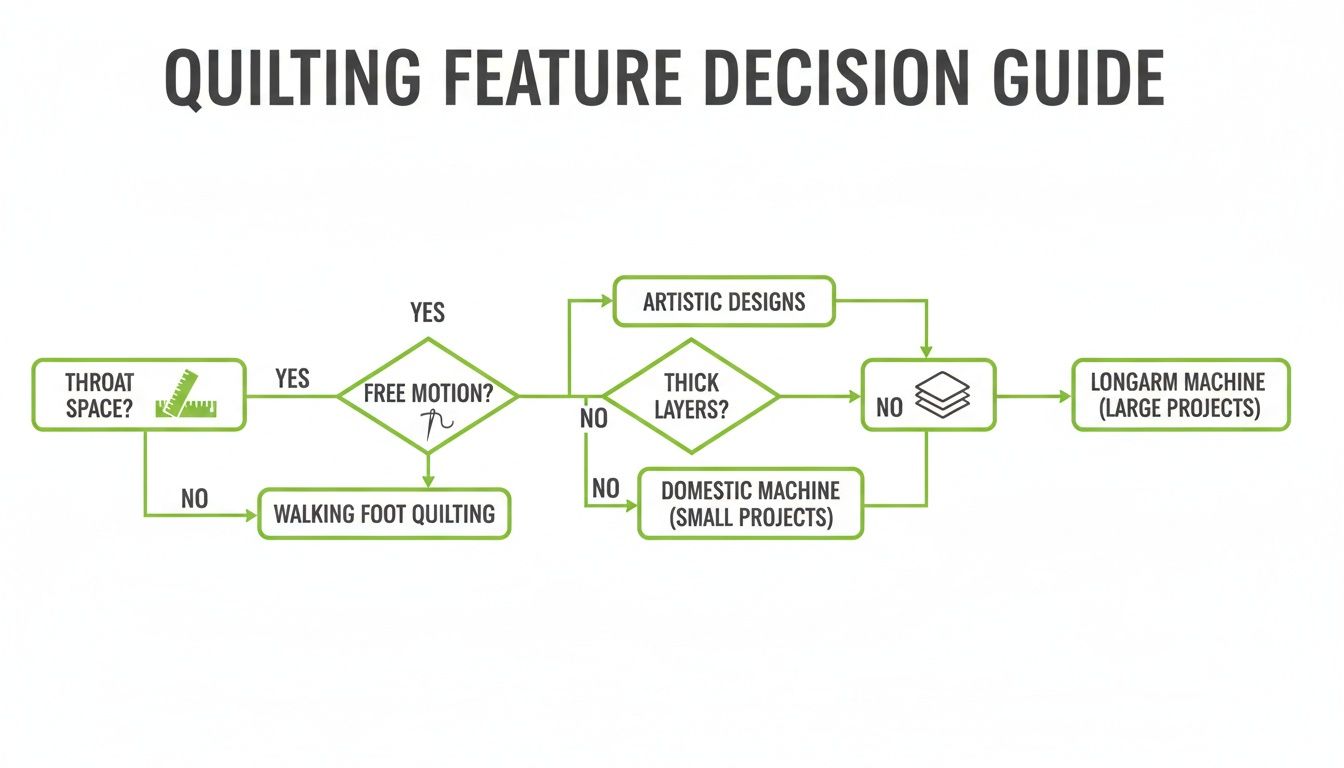
As you can see, needs like having ample room to work and the power to handle thick quilt sandwiches will naturally guide you toward more specialized machines.
Mastering the Craft: The Serious Hobbyist or Pro
For the dedicated quilter who is churning out multiple projects a year—or even thinking about starting a quilting business—a stand-up long-arm system is the ultimate goal. This isn't just a machine; it's a complete quilting setup designed for maximum efficiency and artistry.
With a long-arm, the quilt is mounted on a frame, and you move the machine's head over the fabric. This completely changes the game, giving you unparalleled control and the freedom to create intricate, flowing, all-over designs. You'll need to think about the frame size, which typically ranges from 10 to 14 feet, and make sure you have the dedicated space in your home.
Many long-arm systems can also be outfitted with computerized software that automates patterns, turning incredibly complex designs into a push-button process. This is the absolute top tier of quilting technology, with systems often starting at $10,000 and climbing well past $30,000. It’s a professional-grade investment for those who are truly passionate about the craft. And don't worry, at B-Sew Inn, our team provides extensive training and online classes to ensure you can master every single function of your amazing new machine.
Setting Up Your Quilting Space for Success
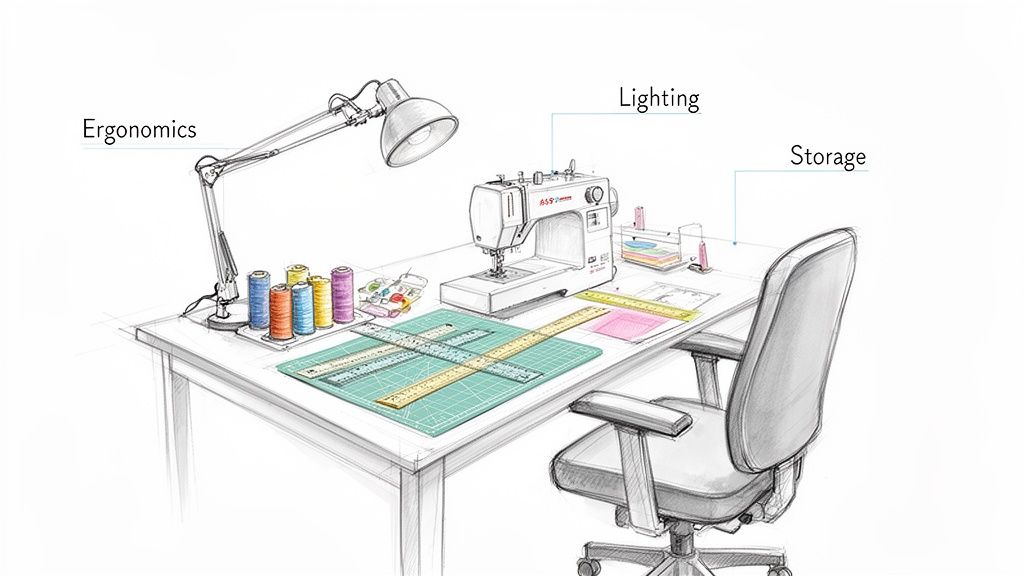
Bringing home your new sewing machine for quilting is a huge thrill, but the real fun begins when you create a space that actually lets you create comfortably. A great setup can make the difference between a frustrating afternoon and losing yourself in a project for hours, preventing aches and pains while improving your stitches.
First things first: your machine needs a stable, flat surface to live on. If you don't have a dedicated sewing cabinet, a sturdy extension table is an absolute must-have. This creates a large, even workspace that stops your quilt from dragging—a common culprit behind broken needles and wonky stitches.
Creating an Ergonomic Quilting Station
Believe it or not, quilting can be a full-body workout, and a bad setup will leave you with a sore neck, shoulders, and back. The goal is to get comfortable so you can focus on your beautiful stitches, not your aching muscles.
Start with your chair. Adjust the height so your arms are bent at a 90-degree angle (or slightly more) when your hands rest on the quilt. You want to sit over your work, not hunched down like you're peering into a cave. This simple adjustment gives you way better visibility and control.
Also, make sure your table setup can support the entire weight of your quilt. The less you have to fight gravity pulling your project to the floor, the smoother your quilting will be. Trust me, your body will thank you.
Essential Maintenance for a Healthy Machine
Think of your sewing machine like a car—it needs regular tune-ups to run its best. A few simple habits will protect your investment and keep it humming along for years. Skip these, and you're inviting frustrating problems like skipped stitches, thread nests, and tension headaches.
Here’s a quick checklist to keep your machine in top shape:
- Change Your Needle: This is non-negotiable. A fresh needle is your best friend! For quilting, a good rule of thumb is to swap it out after every 8-10 hours of sewing. A dull needle is a recipe for skipped stitches and damaged fabric.
- Clean the Bobbin Area: Lint is the enemy. After each project, take a small brush and gently clear out the fuzz from around the bobbin case and feed dogs. And please, don't use compressed air—it just pushes lint deeper into the machine's guts where it can cause real trouble.
- Oil When Recommended: Check your manual on this one. Some newer machines are self-lubricating, but many others need a drop of oil in specific spots to keep everything moving freely.
Your sewing machine is a precision instrument. Treating it with care through regular cleaning and timely needle changes is the single most effective way to ensure it delivers perfect stitches every single time you sit down to create.
Must-Have Accessories to Enhance Your Workflow
Beyond the machine itself, a few key tools can make a massive difference in your quilting. This isn't about collecting gadgets for the sake of it; it's about investing in things that solve common problems and make your life easier. At B-Sew Inn, we've found a few accessories that truly help quilters get the most out of their machines.
Think about adding these to your toolkit:
- Specialty Rulers: If you love precision, acrylic rulers made for machine quilting are a game-changer. They open up a whole world of design possibilities, from perfectly straight lines to graceful curves, all on your domestic machine.
- High-Quality Thread: Don't skimp here. Using a quality 100% cotton or polyester thread will save you from the headache of constant thread breaks and will also reduce lint buildup inside your machine.
- The Right Batting: The batting you choose really shapes the final look and feel of your quilt. Low-loft cotton gives you a flat, traditional look, while wool adds extra warmth and makes your quilting stitches pop with definition. Choosing the right one is like picking the perfect frame for a picture.
We're Here For You Beyond the Machine
Buying a sewing machine for quilting from B-Sew Inn isn't the end of our relationship—it’s just the beginning. A great machine is an incredible tool, but let's be honest, the real magic comes from the support, education, and community you build around your craft. Our custom sewing machine designs empower you, and this how-to guide is just one of many resources we offer to help you create tangible, beautiful projects.
That’s exactly why we’ve built a whole world of support for you, ready and waiting long after you unbox your new machine. We truly believe that the right guidance is just as important as the right equipment for turning your quilting dreams into finished projects you can’t wait to show off.
From Newbie to Know-How with B-Creative
Think of our B-Creative membership as your all-access pass to exclusive online classes, super-detailed tutorials, and a buzzing community of fellow quilters. It’s the perfect place to ask those "Is this right?" questions, share your latest finish, and get inspired when you're not sure what to make next.
- Exclusive Classes: Learn new tricks from expert instructors on everything from your first nine-patch to mind-blowing free-motion techniques.
- On-Demand Tutorials: Our library of resources is there for you anytime you need a quick refresher or want to tackle a new challenge on your own schedule.
- Community Connection: Join a friendly network of crafters who get just as excited about quilting as you do and are always ready to cheer you on.
Master Your Machine, Master Your Craft
Ready to really push your skills? Our expert-led training events are designed to help you conquer the more advanced stuff, from intricate free-motion feathers to automated edge-to-edge quilting. And let's face it, technology is a huge part of quilting now. Computerized quilting machines are leading the charge, with the market expected to jump from $1,036.6 million in 2021 to $1,260 million by 2025. These systems can slash errors by up to 85% compared to quilting by hand, which is why quilters are embracing them so quickly. You can discover more insights about computerized quilting machine trends if you want to geek out on the numbers.
At B-Sew Inn, we’re more than just a store. We're your go-to resource for a dose of inspiration and a helping hand. Our promise is to give you the training and support you need to unlock everything your machine—and your own creativity—can do.
Whether you're getting the hang of a pantograph design on a brand-new longarm or just trying to perfect your stippling on your domestic machine, we're here to support every single stitch. Let’s turn those creative ideas into quilts you'll treasure.
Questions I Hear All the Time
When you're shopping for a new sewing machine for quilting, the specs and features can feel a little overwhelming. Let's clear up some of the most common questions I get from fellow quilters, so you can feel totally confident in your choice.
Can I Really Quilt with My Regular Sewing Machine?
You sure can! In fact, most of us started out on a standard domestic machine. It’s perfect for piecing your quilt tops and even quilting smaller projects like table runners or baby quilts. No problem at all.
Where you'll start to feel the pinch is when your quilts get bigger. That limited throat space (the area to the right of your needle) makes it a real wrestle to manage all that fabric. The key is grabbing the right accessories—a walking foot is a non-negotiable for keeping your layers from shifting, and a fresh, sharp needle will make a world of difference.
How Much Throat Space Do I Actually Need?
This one's easy—it all comes down to the size of the quilts you dream of making.
- 5-7 inches: Great for piecing and quilting those smaller projects.
- 8-11 inches: This is the sweet spot for quilters tackling lap or twin-sized quilts. You'll have more room to breathe and maneuver without feeling totally cramped.
- 11+ inches: If you have your sights set on queen or king-sized quilts, this is what you want. The generous space seriously cuts down on the physical struggle of bunching and rolling your quilt, which makes the whole process more fun and your stitches look better.
Is a Stitch Regulator a Must-Have for a Beginner?
It's not strictly necessary, but wow, does stitch regulation make a difference. It dramatically shortens the learning curve for free-motion quilting. Think of it like cruise control for your stitches; it keeps them beautifully consistent, no matter how fast or slow your hands are moving.
Stitch regulation takes the pressure off. You can stop worrying about coordinating your foot pedal and hand speed and just focus on creating smooth, flowing designs right from the get-go.
You can absolutely learn to make even stitches through good old-fashioned practice, but a stitch regulator is a huge confidence booster that delivers pro-level results much, much faster.
What Kind of Maintenance Does a Quilting Machine Need?
Keeping your machine happy is all about a few simple, consistent habits. Think of it as protecting your investment. The big three are: change your needle often (after every 8-10 hours of sewing), use a little brush to clear lint out of the bobbin area after every project, and check your manual for any oiling instructions. These tiny steps prevent the most common headaches like skipped stitches and tension problems, ensuring your machine runs like a dream for years to come.
At B-Sew Inn, we know that the perfect machine is just the start of your adventure. We've got a ton of resources, online classes, and a fantastic community ready to help you master every feature and bring your biggest, boldest quilt ideas to life. Come explore our collection and find the perfect partner for your craft today.

