

You're standing in the quilt shop with a stack of pretty cottons in one hand and a spool rack in the other, trying to decide whether the thread you grab matters at all. It does, and not just because of color. Machine quilting thread changes how your stitches look, how your machine sounds, how much lint you clean out later, and whether your quilt feels smooth or fussy by the time you're done.
Quilters often spend ages matching prints and backgrounds, then treat thread like an afterthought. That's where frustration starts. The right thread can make quilting feel steady and predictable, while the wrong one can leave you chasing tension issues, breaking thread, and cleaning lint from places you didn't know existed.
Why Machine Quilting Thread Deserves Your Attention
A quilt can be pieced with care and still look awkward if the thread works against the design. Stitches sit on the surface of the quilt, so they are part of what people see first, not a detail hidden underneath. Thread choice affects the look of the quilt and the way the machine feeds, which means it affects both finish and performance.
The history explains why quilters still feel those effects at the machine. Manufactured cotton thread was available to hand sewers in the U.S. and Europe by 1800, thread came on wooden spools beginning in 1820, and the sewing machine boom in the 1840s increased demand for stronger, more uniform thread that could keep up with machine speed, according to this history of thread development. Later, mercerization, polyester thread in 1942, and cotton-wrapped polyester in the late 1960s pushed thread toward smoother finishes, better durability, and lower lint. Those changes matter even more in quilting, because the stitches are visible and the machine is asked to run for long stretches.
The part beginners miss
A spool can look fine on the rack and still behave badly in a machine. Some thread sheds lint, some drags through the tension path unevenly, and some forces you to stop and re-thread more often than you should. That is where the hidden maintenance cost shows up, not on the price tag, but in the time spent cleaning, adjusting, and trying to figure out why the machine no longer sounds right.
Practical rule: If a thread makes your machine need more cleaning, more tension tweaks, or more re-threading, it is costing you more than the price tag suggests.
The bigger point is that thread is not just a supply you use up. It is a design choice and a machine compatibility choice, and the best thread for one machine may be a poor fit for another because each machine behaves a little differently as it feeds, forms stitches, and handles lint.
Understanding Thread Fiber Types and Their Properties
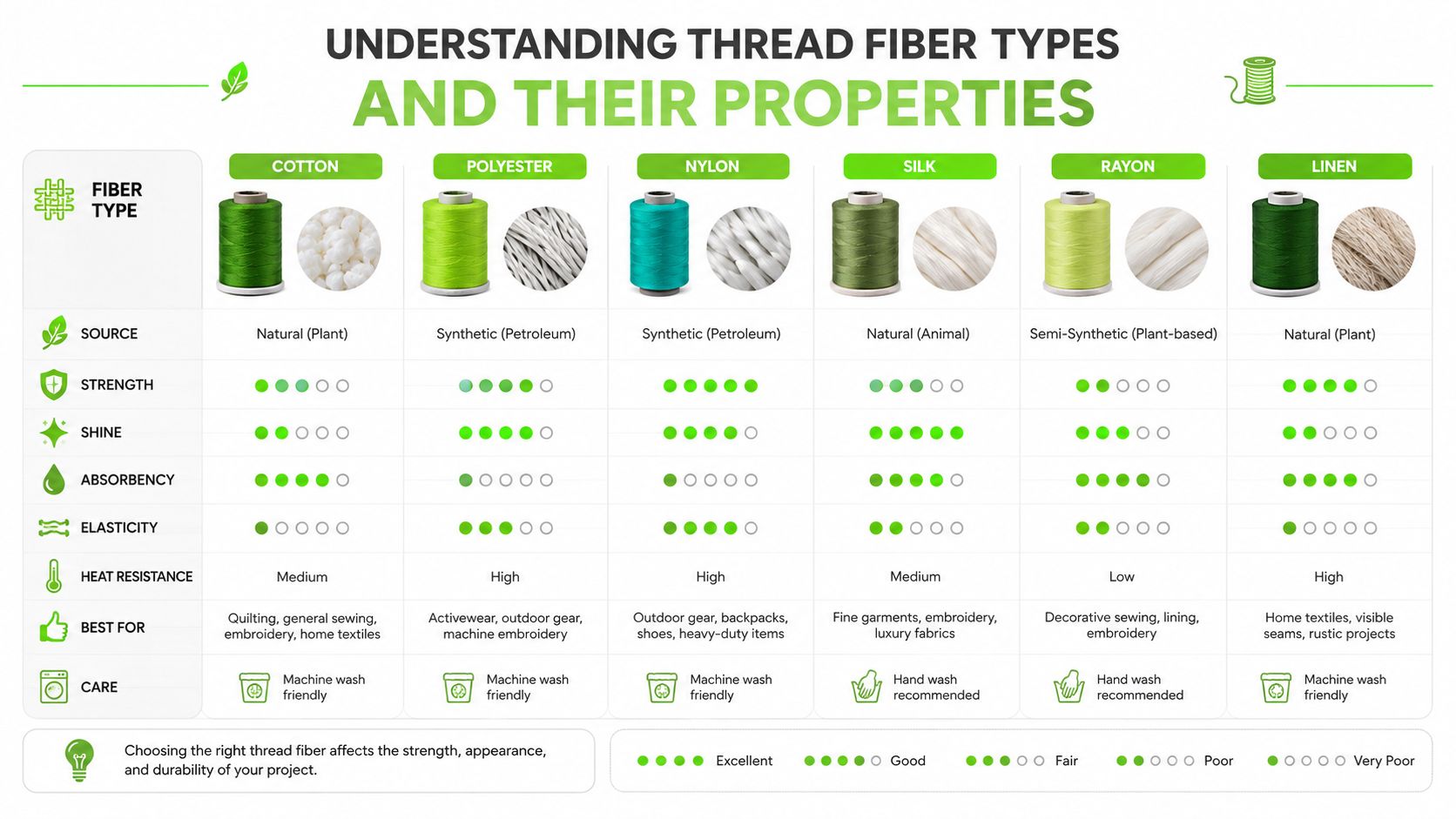
Cotton and polyester do different jobs
Cotton is the classic quilting choice because it blends naturally with cotton fabric and gives a matte, traditional look. Extra-long-staple cotton is often preferred because it can produce less lint and a smoother stitch line, which helps keep tension systems cleaner over long sessions. Mercerized cotton, like the type noted in professional quilting thread examples, is processed for strength, smoothness, and better dye absorption, so it's a solid choice when you want crisp, visible stitches.
Polyester brings a different feel. It's typically smoother, stronger for its size, and less likely to shed lint than lower-grade cotton thread, which makes it appealing for long quilting sessions and machines that dislike buildup. Cottonized polyester sits between the two, giving you a thread that behaves more like cotton in the needle while keeping polyester's smooth feeding and resilience.
Silk, rayon, and metallic each have a specific purpose
Silk is usually chosen for its luster and fine hand. It shines in decorative work where the thread should look elegant rather than purely practical. I'd use it when the quilt calls for a refined surface and the maker is willing to pay attention to needle, tension, and test stitching.
Rayon is attractive and glossy, but it's more decorative than workhorse. It suits accent quilting, not the kind of all-day use where low lint and machine ease matter most. Metallic thread gives strong visual impact, but it needs careful handling, a larger eye, and slower stitching because it can shred if pushed too hard.
Use this filter: choose cotton for blend-in quilting, polyester or cottonized polyester for smoother feeding, silk or rayon for shine, and metallic only when the design truly needs that finish.
The best thread fiber is the one that matches your project, your machine, and your patience for maintenance. That's more useful than chasing a single “universal” answer.
Decoding Thread Weight Numbers and Conversions
Thread weight confuses a lot of quilters because the scale works backward from what people expect. In machine quilting, a lower weight number means a thicker, more visible thread, while a higher number means a finer, less visible thread. That's why a 40 wt thread stands out more than a 50 wt thread, and why 100 wt behaves almost like an invisible background helper.
A useful reference is the thread weight chart from B-Sew Inn, which makes the same practical point many instructors teach at the machine. The weight number is standardized enough to compare thread families, but not so precise that two brands will feel identical in use. A 50 wt thread from one maker can feed differently from another, so the label is only the starting point.
| Thread Weight | Visibility | Best Uses | Recommended Needle Size |
|---|---|---|---|
| 40 wt | Medium-visible | Decorative quilting, visible texture | 90/14 |
| 50 wt | Versatile | Piecing, general quilting | 80/12 |
| 60 wt | Fine | Ditch quilting, bobbin use | 70/10 |
| 100 wt | Ultra-fine | Background fill, nearly invisible work | 70/10 |
Why the same weight can still feel different
Brand differences show up in how thread feeds, how much lint it leaves, and how smoothly it passes through the tension path. That's why a quilter who says “50 wt works for me” might be talking about one specific brand, one specific machine, and one specific batting. The number gives you a lane, not a guarantee.
If you want visible quilting, start around 40 wt. If you want thread that does a lot of jobs well, 50 wt is the classic middle ground. For subtle fills and bobbin work, 60 wt and 100 wt make sense because they're finer and easier to hide.
Matching Needles to Thread for Optimal Performance
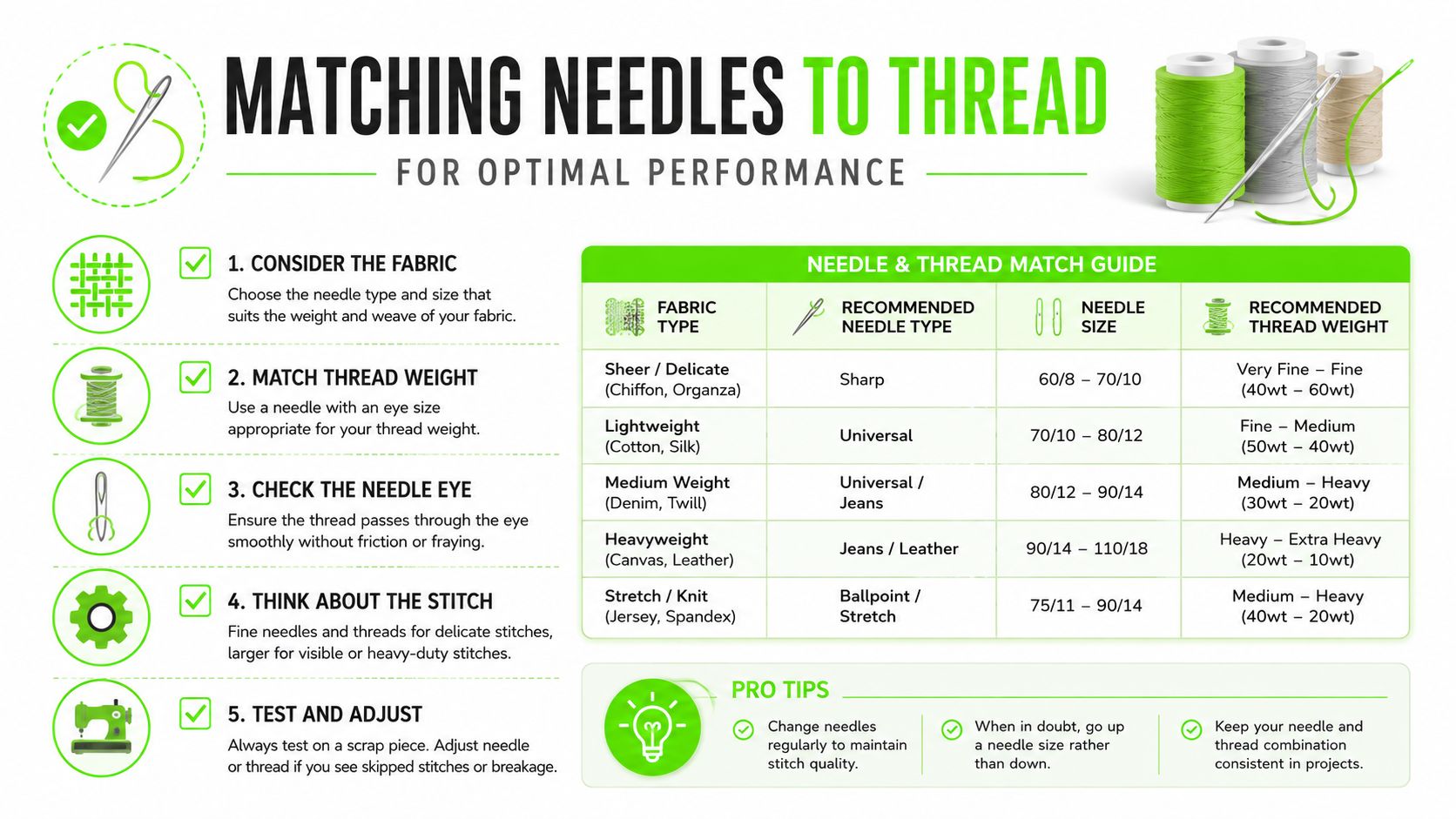
A thread and needle pairing can look fine at first, then start causing trouble as soon as the machine is under load. The needle has one job, but it has to do that job cleanly. If the eye is too small for the thread, the thread rubs, heats, and eventually breaks. If the needle is too large for the fabric and thread combination, the stitch can look loose or the fabric can get damaged.
A practical starting point is straightforward. A 90/14 works well with 40 wt thread, 80/12 pairs neatly with 50 wt, and 70/10 suits 60 wt and 100 wt/monofilament according to needle and thread guidance from Snuggles Quilts. The same guide also points out that a universal 80/12 needle is suitable for most piecing of 100% cotton fabrics, which is why many quilters keep that size close at hand.
What the machine is telling you
If the thread sounds rough, frays at the needle, or starts snapping, the needle-thread pairing is the first place I check. Thicker thread needs a larger path through the fabric, and a larger eye gives it room to move without strain. That is a mechanical fit issue, not just a habit picked up from another quilter or a brand recommendation.
A useful way to sort it out is to stitch a short sample in the actual quilt sandwich you plan to use. If the top thread shreds or the line looks inconsistent, change the needle before changing three other settings at once. That keeps the diagnosis clear and tells you whether the machine is reacting to thread thickness, needle size, or both.
Need a more detailed refresher on needle types and sizes? This sewing machine needle guide from B-Sew Inn is a useful companion when you are choosing between universal, quilting, and topstitch needles.
The Hidden Costs of Thread Choice and Machine Maintenance
A bargain spool can get expensive fast if it leaves your machine filthy. Lower-grade cotton thread can create significant lint, and that lint collects in tension discs, guides, and other moving parts. Once that starts, the machine often needs more frequent cleaning and more fiddling with settings, which steals time from quilting.
Thread coatings are another place where confusion happens. Some threads marketed for hand quilting use wax or resin coatings, and those coatings aren't a good fit for machine tension systems. They can build up in the path and make the machine feel inconsistent, even when the fabric and needle are fine.
Machine-friendly thread usually feels smoother before it ever hits the fabric. If it runs cleanly through guides and doesn't shed heavily, the machine tends to reward you with steadier stitching.
The trick is to judge quality beyond the price of the spool. Ask whether the thread is designed for machine use, whether it has a low-lint finish, and whether its fiber and coating suit the type of stitching you're doing. In many cases, the thread that saves you the most money is the one that keeps the machine running smoothly with fewer interruptions.
You can hear educators talk through this same maintenance logic in the embedded video below.
Troubleshooting Common Thread Problems and Tension Issues
When a stitch goes wrong, don't guess. Identify the symptom first, then work backward. That's faster than changing thread, needle, and tension all at once and hoping one of them fixes the problem.
Common symptoms and the likely cause
- Thread breaks at the needle: The needle may be too small, the thread may be too thick for the setup, or the thread path may be catching. Re-thread the machine, replace the needle, and test again on the actual quilt sandwich.
- Loops on the back of the quilt: Top tension is often too loose, though a poorly seated bobbin can cause the same look. Check the bobbin first, then adjust the top tension in small steps.
- Shredding or fuzzing thread: That usually points to friction in the needle eye or guides, or to a thread that doesn't like the machine's speed. Slow down and try a different needle size.
- Tension changes mid-project: Lint buildup, a thread cone feeding unevenly, or a spool that doesn't sit well on the machine can all change how the thread behaves over time. Clean the machine and retest before changing the tension dials.
The important part is to sort out whether the issue is thread quality or machine setup. Many “thread problems” are really path problems, bobbin problems, or needle problems. For a more detailed tension walkthrough, B-Sew Inn's tension adjustment guide is a good reference point when you want to compare symptoms to machine settings.
One more thing matters here. Keep the bobbin thread, top thread, and machine behavior in mind together. A setup that behaves well on one quilt can shift on another because batting, stitch length, and thread path all affect the final result.
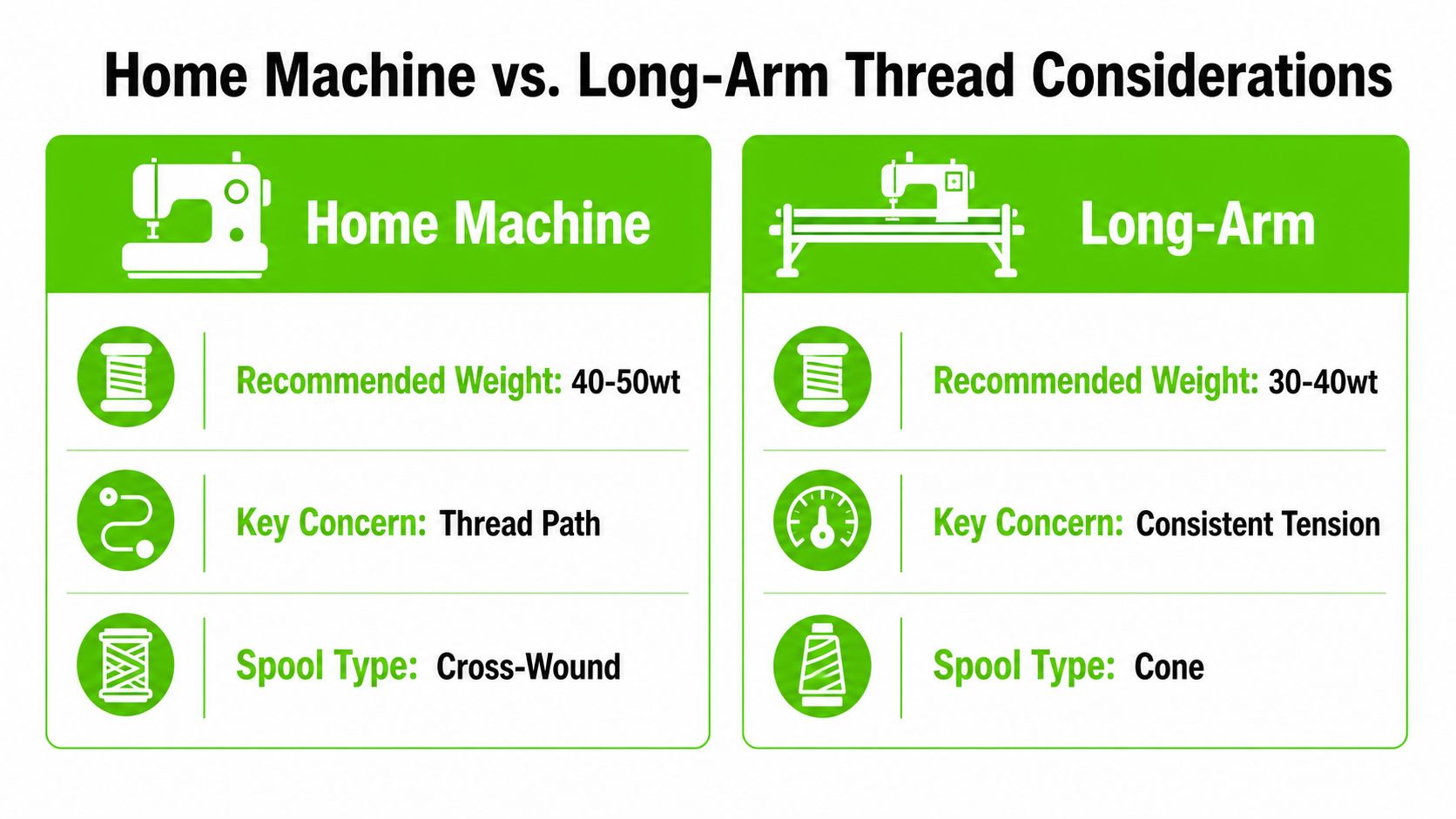
Home Machine Versus Long-Arm Thread Considerations
A thread that behaves beautifully in a domestic machine can feel stubborn in a long-arm, and the reverse is true too. The reason isn't mystery, it's mechanics. A home machine usually has a shorter thread path and a more compact tension system, while a long-arm sends thread through a different setup that can react differently to speed and spool style.
The same source that discusses thread matching also notes that home machines tend to do well with 40 to 50 wt thread and that the thread path is a key concern, while long-arm setups often focus more on consistent tension and use cone spools (comparison infographic in the section above). That doesn't mean a home machine can't handle other thread weights, or that a long-arm can't sew finer thread. It means the machine's behavior should guide the choice.
What changes when the machine changes
On a domestic machine, I watch how the thread travels from spool pin to needle. If it snags, twists, or adds lint quickly, I change the thread before I blame the quilt. On a long-arm, I pay closer attention to how smoothly the thread feeds at speed and how often I need to stop and clean.
Bobbin pairing matters more on long-arm machines because the top system and the lower thread need to stay in harmony over a larger quilting session. If the top thread is decorative and thick, the bobbin thread should still support stable tension rather than compete with it.
The simple takeaway is this. Best thread is relative to the machine, not absolute. A thread that asks less of your setup is often the one that gives you the better result.
Building Your Thread Selection Strategy
Thread shopping gets easier when you stop asking, “What do other quilters use?” and start asking, “What does this machine feed cleanly?” That single question filters out a lot of confusion. It also keeps you from buying specialty thread that looks gorgeous but demands more adjustment than your current machine wants to give.
Use a short checklist before you commit to a full quilt:
- Decide the stitch look: If you want visible texture, move toward 40 wt. If you want flexibility, start with 50 wt.
- Match the machine behavior: A machine that feeds smoothly with minimal lint should guide your choice more than marketing copy.
- Choose the fiber for the job: Cotton for a classic quilted look, polyester or cottonized polyester for smooth feeding, metallic only when you want shine and can slow down.
- Pair the needle early: A mismatched needle can ruin a perfectly good thread choice.
- Test on the actual sandwich: Fabric alone doesn't tell you how thread will behave with batting and stitch density.
If you're shopping for thread alongside machines, accessories, or classes, B-Sew Inn carries the kinds of supplies and educational resources that help quilters test smarter and troubleshoot faster. That matters because a good result usually comes from a good setup, not from guessing. The right thread is the one that suits your machine, your project, and the amount of maintenance you're willing to live with.
If you want help matching thread, needles, and machine setup with less trial and error, visit B-Sew Inn to explore sewing and quilting supplies, accessories, and learning resources that support real-world machine quilting. Their tools and classes can help you build a setup that feeds cleanly, quilts smoothly, and fits the way you sew.

