
It all starts with a single, exciting idea, doesn't it? Maybe you're dreaming of a custom-fit dress, a cozy handmade quilt, or just tackling that pile of simple home repairs. Whatever it is, that little spark of an idea is the first step. The path from that vision to a finished project can feel a bit daunting, but I promise you, modern sewing machines are more welcoming and user-friendly than you might think. This guide is your first stitch in that vibrant world, showing you how to get started on your journey to creating beautiful sewing machine designs.
Your First Step into a World of Creativity
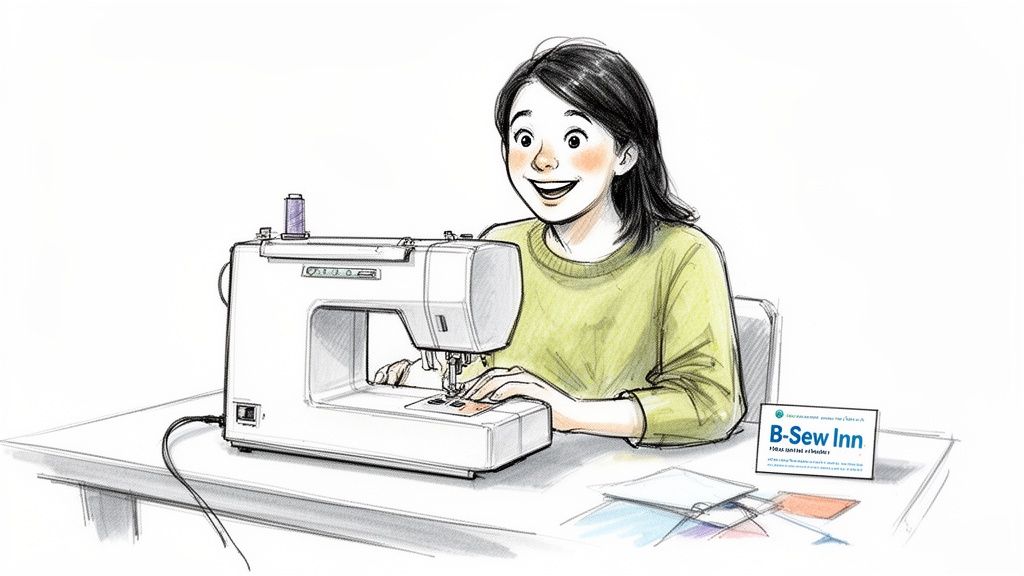
Diving into sewing is an incredible feeling—it’s a world packed with potential for creativity and expressing who you are. It’s this wonderful craft that mixes artistry with pure practicality, letting you design your own clothes, create gifts straight from the heart, or bring your unique home decor ideas to life. If you're feeling a mix of excitement and maybe a little apprehension, trust me, you're in good company. So many beginners worry about how complex the machines are or if they have the skills to even get started on their first design.
Here’s the good news: sewing has never been more accessible. The global sewing machine market is absolutely booming, which means it’s a fantastic time for newcomers to jump in. The industry is on track to grow to over USD 11 billion by 2033, a huge surge powered by a real renaissance in home crafting and DIY projects. For you, this growth translates into better, more intuitive machines and a treasure trove of resources. You can read more about this industry trend and its growth on cognitivemarketresearch.com.
Empowerment Through Crafting
Here at bsewinn.com, we truly believe sewing is more than just a hobby; it’s a powerful way to show off your individuality. Our whole mission is to empower crafters by providing not just the tools, but the complete support system you need to confidently create custom sewing machine designs. We see every stitch as a step toward building your skills and bringing your vision to life.
Sewing is the art of turning a flat piece of fabric into a three-dimensional expression of your style and imagination. It’s about making something truly your own, from the first cut to the final stitch.
Whether your goal is to replicate a design you fell in love with or to invent something completely new, the journey always starts with the right machine and the right guidance. That’s where we come in. We’ve hand-picked a selection of machines that are perfect for beginners, and we pair them with the support you need to really master them.
Support Every Step of the Way
Your sewing adventure doesn't just stop when you buy a machine—that's really just the beginning! bsewinn.com is here for your long-term success with a ton of resources designed to help you flourish.
- Online Classes: Our "how-to" guides show you step-by-step how to create tangible sewing projects, from simple totes to intricate quilts.
- Expert Training: Get hands-on instruction to build your confidence on any machine you choose, empowering you to tackle complex designs.
- Extensive Resources: Access our library of tutorials and guides filled with project examples that you can replicate and customize.
From helping you choose that very first machine to celebrating your first custom creation, we are here to make sure you have the knowledge and encouragement to bring all your amazing ideas to life.
Decoding the Different Types of Sewing Machines
Walking into the world of sewing machines for the first time can feel like learning a whole new language. You’ll hear words like “mechanical,” “computerized,” and “serger,” and it's easy to get a little overwhelmed. Don't worry. Breaking down these categories is way simpler than it looks, especially if you think of them like tools you already know.
A mechanical sewing machine is like a classic, reliable manual car. Everything is controlled by sturdy knobs and dials, from your stitch length to the tension. There’s a very direct, hands-on feel to it. These machines are straightforward, incredibly durable, and absolutely fantastic for learning the fundamentals of sewing without a screen full of digital options to distract you. They’re the workhorses, perfect for basic repairs, simple clothes, and really getting a feel for how a stitch comes together.
Then you have the computerized sewing machine, which is more like a modern smart car with a built-in GPS. Instead of dials, you’ll find an LCD screen and push-button controls that open up a world of possibilities. These machines can offer hundreds of different stitch patterns—think beautiful decorative florals or perfectly sized buttonholes—all available at the touch of a button.
Smart Features for Modern Crafters
Computerized models often come packed with beginner-friendly features that just make life easier. An automatic needle threader, for example, saves you from all that squinting and frustration. Speed control lets you slow things way down when you’re learning or tackling a tricky curve. If you’re trying to figure out which "car" fits your driving style, this deep dive into computerized sewing machines vs mechanical is a great place to start.
Finally, we have the serger (also called an overlocker). This isn't your everyday car; it’s more like a specialized race car built for one specific, incredible purpose: creating clean, professional-looking edges on your fabric. A serger uses multiple threads to trim the raw fabric edge and wrap it in a neat seam, all in one super-fast pass. It's the secret weapon for preventing fabric from fraying and giving your handmade clothes that polished, store-bought finish.
A serger doesn’t replace your regular sewing machine—it partners with it. Your standard machine handles the construction, while the serger gives the seams a strong, beautiful finish.
As you explore, you'll probably also hear about embroidery machines. While some sewing machines have embroidery functions, many are dedicated units designed for decorative stitching. Understanding what embroidery is helps clarify how this craft is different from standard sewing and whether it's a feature you want to look for right away.
To help make the choice even clearer, let's lay out the options side-by-side.
Which Sewing Machine Is Right for You?
This little chart breaks down the main players to help you figure out where you fit in.
| Machine Type | Best For | Key Feature | Ideal B-Sew Inn Customer |
|---|---|---|---|
| Mechanical | Learning the ropes, sewing heavy-duty fabrics, and handling straightforward repairs. | Manual, dial-based controls that give you direct stitch manipulation. | The new crafter who’s excited to master the fundamentals from the ground up. |
| Computerized | Quilting, decorative stitching, and any project that needs a high degree of precision. | Automated features like push-button stitch selection and needle threading. | The hobbyist who’s ready to explore creative stitches and custom designs. |
| Serger | Finishing seams on clothes, especially with stretchy or knit fabrics that like to fray. | Trims and encloses fabric edges at the same time for a durable, professional look. | The garment-maker who is focused on creating high-quality, polished apparel. |
Ultimately, choosing your first machine is all about matching its strengths to your creative dreams. Here at bsewinn.com, we love helping people navigate these choices. We’ll make sure you find a machine that not only meets your needs today but also has room to grow with you as your skills blossom. Our team is always here to help, from online classes to in-person training, so you can start your sewing journey with total confidence.
How to Choose Your Very First Sewing Machine
Now that you have a handle on the different types of machines, we can get to the fun part—choosing the one that’s perfect for you. Picking your first machine doesn't have to feel overwhelming. In fact, you can narrow down the perfect choice by asking yourself just three simple questions.
Think of these questions as your personal roadmap. They’ll guide you to a machine that not only fits what you need right now but will also be there for you as your skills grow. This little decision tree shows how your priorities can point you toward the right machine.
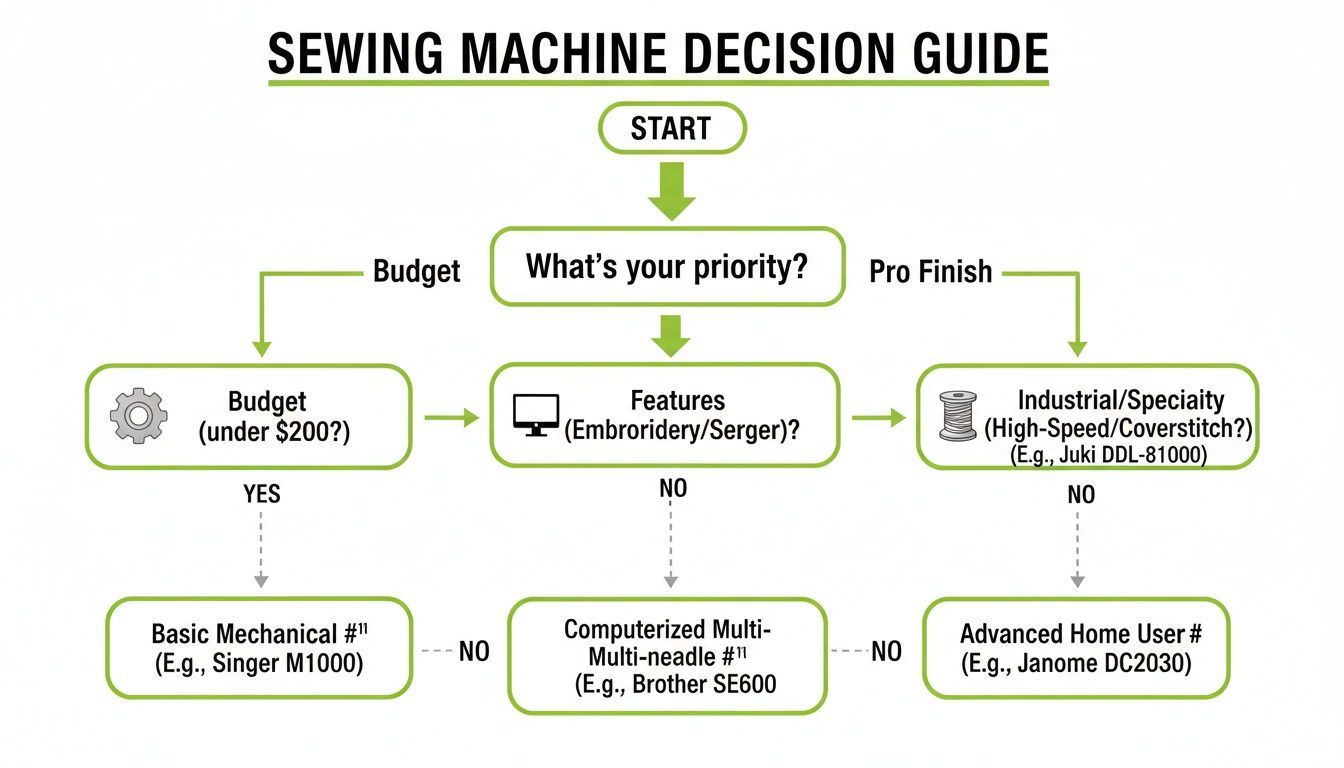
This visual guide helps clarify whether your main focus is on sticking to a budget, getting advanced features, or achieving that professional-looking finish on your projects.
What Do You Want to Create?
First, let's dream a little. What projects are you excited to start? Are you picturing yourself sewing your own clothes, piecing together intricate quilts, or making unique home decor? What you plan to make is the biggest clue to what features you’ll need.
- For Garment Makers: You’ll want a machine with a nice variety of stitches, a free arm for getting around cuffs and sleeves, and a reliable buttonhole function. Trust me, a good buttonhole feature is a game-changer.
- For Quilters: Look for a machine with a larger throat space—that’s the area to the right of the needle. A walking foot for even fabric feeding and a needle-down function will also make your life so much easier.
- For General Crafters: A solid mechanical or a good entry-level computerized machine will give you plenty of versatility for all sorts of projects, from tote bags to throw pillows.
What is Your Budget?
Your budget is obviously a huge factor, but try to think of it as an investment in your creativity. You can find a machine at nearly any price point, but investing in a quality brand means you’re getting a reliable tool that can grow right along with you.
We totally get this balancing act at bsewinn.com. That’s why we love helping people find the absolute best machine for their money. Our selection of certified pre-owned machines is also a fantastic option for new sewists to get a high-quality model without the brand-new price tag.
What Features are Essential?
This is where the home sewing market is really stepping up for beginners. The whole industry is booming, projected to hit USD 8.29 billion by 2033, and a lot of that growth is thanks to new sewists like you! Companies are adding user-friendly features that make learning a breeze—for instance, one-step buttonholes can cut down on common mistakes by up to 80%. You can dig into more of these trends over at SkyQuestt.com.
Essential features like an automatic needle threader or adjustable speed control aren't just luxuries; they are tools that build confidence by removing common frustrations for beginners.
When you connect with bsewinn.com, you can learn about all these features. Our team can show you how a needle threader saves your eyes or how speed control can help you master tricky curves without any stress. We're here to help you find a machine with just the right mix of features to make your sewing journey joyful and successful from the very first stitch.
Setting Up Your Machine for the First Stitches
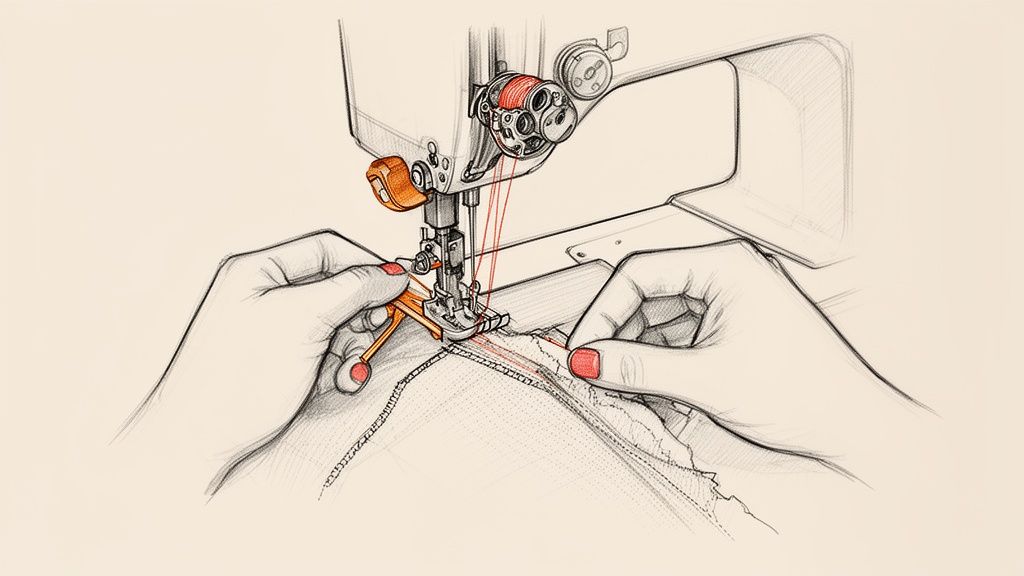
This is the moment you've been waiting for! It's time to turn that machine-in-a-box into your new creative partner. Unboxing your very first sewing machine is a huge milestone, and I promise the initial setup is way less intimidating than it looks. We'll walk through the first essential steps that are pretty much the same for any machine you choose.
Think of it like learning to drive a car for the first time. Before you can hit the open road, you have to master a few key things. For sewing, that means winding the bobbin, threading the machine, and changing the needle. Each little step you master is a victory that will build your confidence.
Your First Hands-On Steps
The journey from a sealed box to your first seam involves just a few universal tasks. Sure, every machine has its own personality, but these core actions are consistent across the board. The best advice I can give is to take your time, keep your machine's manual handy, and just enjoy getting to know your new tool.
-
1. Winding the Bobbin: The bobbin is that little spool that holds the thread for the bottom of your stitch. Your machine will have a specific path to guide the thread from the main spool to the bobbin winder. Getting this right—nice and tight and even—is the secret to a beautifully balanced stitch.
-
2. Threading Your Machine: Okay, this is the one that usually feels the most daunting for newcomers. But here's the good news: most modern machines have numbered guides or little diagrams printed right on them to show you the way. Follow that path, and you’ll ensure the top thread has the perfect tension. For a great visual, our guide on how to thread a sewing machine breaks it down beautifully.
-
3. Changing the Needle: A fresh, sharp needle is your absolute best friend for clean, professional-looking stitches. You should get in the habit of changing them often, usually after about 8-10 hours of sewing. Most machines just have a small screw you loosen to pop the old needle out and slide a new one in. Just remember to put the flat side of the needle shank toward the back!
Sewing Your First Straight Line
Alright, your bobbin is wound and your machine is threaded. It's time to make some magic happen.
Grab a piece of scrap fabric—an old cotton pillowcase or a leftover piece of fabric works perfectly. Don't even think about making it perfect. This is all about practice.
Your first stitch is a big deal. It’s the moment you officially become a sewist. Celebrate it, no matter how wobbly that line might be!
Place your fabric under the presser foot, lower the foot, and gently press the foot pedal. Your only job is to guide the fabric with your hands; let the machine’s feed dogs do the work of pulling it through. The goal here is just to get a feel for the machine and listen to how it sounds as it creates that first line of stitches.
That first run is just the beginning. The more you sit down and practice, the more natural it will feel. Here at bsewinn.com, we're huge fans of this learning process. Our online classes and tutorials are packed with "how-to" guides designed to help you build on this first success, taking you from wobbly lines to creating stunning sewing machine designs you can be truly proud of.
Essential Sewing Tools Every Beginner Needs
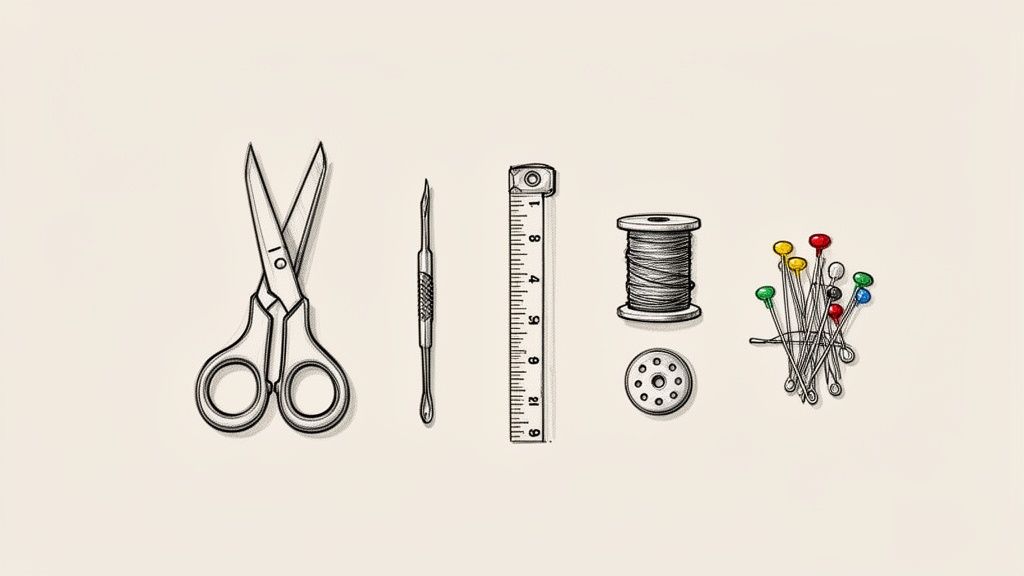
While your sewing machine is definitely the star of the show, every star needs a great supporting cast. That's where your sewing tools come in. Having a few key accessories on hand makes the whole creative process so much smoother and more fun.
Think of it like building a basic toolkit. When you have everything you need right at your fingertips, you can stop searching for gadgets and just focus on bringing your awesome ideas to life.
Your Must-Have Starter Kit
You absolutely don't need to buy every shiny new tool on the market when you're just starting out. Instead, focus on getting a few high-quality basics that will see you through countless projects. Our team at bsewinn.com can help you find the perfect notions to get you started!
Here’s what I recommend having in your sewing box from day one:
- Fabric Shears: These are not the same scissors you use for opening mail! A good pair of dedicated fabric shears will have blades sharp enough to slice cleanly through fabric without snagging or chewing up the edges. Keep them for fabric only, and they'll stay sharp for years.
- Quality Thread & Bobbins: It's tempting to grab cheap thread, but trust me, it's not worth the frustration. Good thread is strong and smooth, which means fewer breaks and tangles. You'll also need bobbins that are made for your specific machine model—this is really important!
- Seam Ripper: This little tool will be your best friend. Everyone makes mistakes (I still do!), and a seam ripper lets you quickly and neatly pull out stitches without wrecking your fabric. No shame in the seam-ripping game!
- Measuring Tape & Pins: A flexible measuring tape is a must-have for everything from measuring patterns to taking your own measurements. A good set of sharp pins will keep your fabric pieces locked securely together so nothing shifts while you're sewing.
Building your toolkit is one of the most exciting parts of starting your sewing journey. Every little item you add, from a colorful spool of thread to a special stabilizer, opens up a whole new world of creative possibilities.
Once you have the basics down, you can start exploring other handy skills, like learning how to transfer designs onto fabric, which is perfect for future embroidery or appliqué projects.
If you want to dive deeper into all the cool little accessories out there, be sure to check out our guide on what sewing notions are.
Your Path Forward with bsewinn.com
Getting your first sewing machine is just the start of an amazing creative journey. Honestly, it's the moment the real fun begins! As you've seen, knowing the basics opens up a world of possibilities, and with bsewinn.com, you're never navigating this new world alone. We're here to be your guide, your support system, and your biggest cheerleader long after you've unboxed your machine.
Watching our customers grow as sewists is what we live for. We've seen firsthand that with the right guidance, anyone new to this craft can absolutely master it. That's exactly why we've built a complete support system—it’s designed to help you build skills and confidence with every single project you tackle.
Your Next Step to Creative Success
Okay, you've made a few stitches... now what? Moving forward means investing in your skills, and this is where our community and educational resources really shine. We want to give you a clear path to becoming the crafter you've always wanted to be.
Buying a sewing machine is the first step. Joining a community that supports your growth is how you turn a new hobby into a lifelong passion.
With bsewinn.com, your learning journey never has to stop. We offer real, tangible ways to help you hit your goals, whether that's piecing your first quilt or sewing a garment that looks like it came straight from a boutique.
- Online Classes: This is your all-access pass to a library of "how-to" guides. You can watch them anytime, anywhere, making it perfect for mastering new techniques on your own schedule.
- Hands-On Training: Nothing beats learning in person. Join one of our expert-led training sessions to get personalized guidance and build serious confidence on your specific machine.
- Extensive Resources: Feeling stuck for ideas? Explore our huge collection of custom sewing machine designs and tangible project examples that you can replicate or use as a jumping-off point for your own creations.
We’d love for you to join the bsewinn.com family. Let's start this exciting creative adventure together and bring all those incredible ideas in your head to life.
Your First Sewing Questions, Answered
Once you get past those first few stitches (how exciting was that?!), you're going to have questions. That's a great sign! It means you're diving in and really learning the craft. We hear a lot of the same questions from new sewists, so we've gathered the most common ones right here to help you keep that creative momentum going.
What’s the Best Thing to Make First?
When you're just starting out, the best project is one that gives you a quick, satisfying win. You want something you can finish and feel proud of. My advice? Stick to projects with mostly straight lines. This is where you’ll build your core skills—like learning to guide the fabric and keep a steady seam allowance—without getting frustrated.
It’s all about building confidence. Making something simple and useful right away is the best motivation to keep going.
- Pillowcases: These are perfect for practicing long, straight seams and learning how to finish edges neatly.
- Tote Bags: A simple tote is a brilliant next step. You’ll learn how to construct corners and attach straps, which are skills you'll use over and over.
- Quilt Blocks: If you’re curious about quilting, making a single block is a great introduction to cutting and piecing with precision. For a fun, sewing-themed start, you could even try a sewing machine quilt block pattern.
At bsewinn.com, our beginner online classes almost always start with tangible projects just like these. We walk you through every step to make sure that first creation is a total success.
How Often Should I Clean My Machine?
Think of your sewing machine like your car—it needs regular tune-ups to run smoothly. As you sew, little bits of lint, dust, and thread build up inside, especially down in the bobbin area and around the feed dogs. If you let it go too long, that gunk can mess with your stitch quality or even cause your machine to jam up.
A good rule of thumb is to give your machine a quick clean after every 8-10 hours of sewing. Just grab the little brush that came with your machine and gently sweep out any lint you see in the bobbin case. But for the deep clean—the oiling and calibration—you should bring it to a pro about once a year. Our technicians at bsewinn.com can give it a full service to make sure everything is running perfectly.
Why Is My Thread Getting All Bunched Up Underneath?
Ah, the dreaded "bird's nest." That tangled mess of thread under your fabric is probably the most common frustration for every new sewist. It looks like the bobbin is misbehaving, but nine times out of ten, the real culprit is the top thread.
The number one cause of thread bunching underneath is that the machine isn't threaded correctly on top. If the upper thread doesn't catch in the tension discs properly, it can't create a balanced stitch, and it pulls the bobbin thread up into a tangled knot.
Here’s how to fix it: Unthread your machine completely and start over from scratch. The most important trick is to make sure your presser foot is up while you're threading. Lifting the foot opens up the tension discs so the thread can slip right in where it belongs. Follow the thread path, making sure the thread is seated in every single guide. If it still happens, try a brand-new needle and check that your bobbin was wound evenly.
Ready to see where your new sewing skills can take you? bsewinn.com is here for every step of your creative adventure. From expert advice and hands-on classes to finding the perfect machine, we’ve got everything you need to bring your ideas to life. Come visit us online to get started: https://www.bsewinn.com

