
So, what in the world is a 'sewing notion'? Let's clear that up right away.
Think of it like this: sewing notions are pretty much everything you need for a project besides the fabric and the machine itself. They're all those small but absolutely essential tools and accessories—from needles and pins to zippers and buttons—that actually make sewing possible. At B-Sew Inn, we believe that mastering these tools is the first step to unlocking your creative potential with custom sewing machine designs.
What Are Sewing Notions, Really?
Imagine trying to bake a cake without measuring cups, a mixing bowl, or a whisk. You’ve got the flour and sugar, but you can’t turn them into anything. That’s exactly what sewing without notions is like.
They are the critical supporting cast that brings your fabric and sewing machine together to create something amazing. Whether you're mending a simple tear or creating a beautifully embroidered jacket using one of our custom designs, you simply can't do it without them.
These tools are so fundamental that they're the backbone of a huge industry. The global market for sewing supplies, which is all of these little must-have items, was valued at USD 5,450 million in 2025 and is expected to jump to USD 7,303.52 million by 2031. (Learn more about the sewing supplies market). That growth just shows how vital these tools are to makers all over the world.
The bottom line is, having the right notions on hand makes every single project smoother, faster, and more professional. It’s the difference between a day of frustrating snags and a joyful creative win.
Here at B-Sew Inn, we're committed to empowering you on your creative journey. Our guides, resources, and custom sewing machine designs are all created to help you succeed, and that starts with having the essentials to bring your ideas to life.
For more on building that foundation, check out our guide on the top sewing tools for beginners.
The 7 Core Categories of Sewing Notions
Walking into a sewing store can feel a little overwhelming, right? Walls of tiny gadgets, gizmos, and tools! But the world of notions is much simpler than it looks. It helps to think of everything falling into seven core categories. Once you get a handle on these groups, it’s like having a map for your sewing journey—you’ll always know exactly what you need for each step of your project.
Every single sewing project, from a simple pillowcase to an elaborate quilt, is built on two fundamental pillars: the fabric you choose and the notions you use to put it all together.
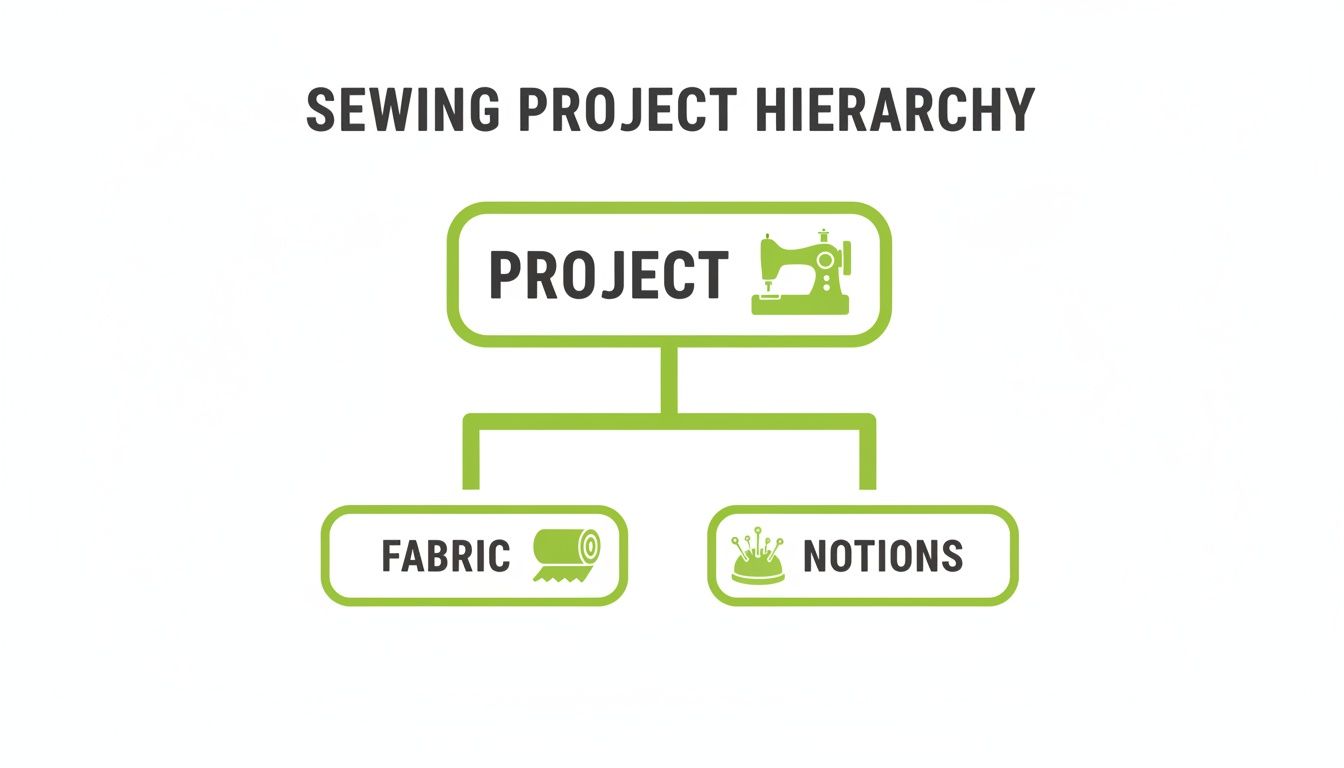
As you can see, notions aren't just an afterthought; they are half of the equation. You simply can't have a finished project without them. Let's break down these essential families of tools.
Cutting and Marking Tools
Long before your sewing machine's needle makes its first stitch, your project begins with precise preparation. This is where your cutting and marking tools shine.
- Cutting Tools: This is all about separating your pattern pieces from the fabric cleanly. A quilter, for example, might swear by their rotary cutter for zipping through long, straight cuts with speed and accuracy. A garment sewist, on the other hand, often relies on a pair of high-quality fabric shears to gracefully navigate every curve of a pattern.
- Marking Tools: These are your secret weapons for transferring all those important pattern details—like where to place darts, pleats, and buttonholes—onto the fabric. Whether you prefer a classic tailor’s chalk or a modern disappearing ink pen, these temporary guides are the key to assembling your project accurately.
Measuring and Pinning Tools
With your pieces perfectly cut and marked, the next job is to line everything up and hold it in place for sewing.
This is where tools like a seam gauge come in handy, offering a level of precision for small measurements like hem allowances that a regular tape measure just can't provide. And while pins are a timeless classic, many sewists now reach for sewing clips, especially for thick layers like quilt binding or leather, because they hold tight without leaving any holes.
Any seasoned sewer will tell you that the secret to a professional-looking project is all in the prep work. Taking the time to measure carefully and pin securely will save you a world of headaches (and seam ripping!) later on.
To help you get a quick overview of the key players, here’s a look at some of the most fundamental notion categories.
Essential Sewing Notions at a Glance
This table is a handy cheat sheet for the basic groups of notions and what they do. Think of it as your quick-start guide to stocking your sewing kit!
| Notion Category | Primary Use | Examples |
|---|---|---|
| Needles & Thread | The absolute essentials for joining fabric, whether you're using a machine or stitching by hand. | Machine Needles, Hand-Sewing Needles, All-Purpose Thread, Embroidery Floss |
| Fasteners | These are the bits and pieces that allow garments to open and close, or just add a nice decorative touch. | Zippers, Buttons, Snaps, Hooks & Eyes |
| Pressing Aids | The tools you use with your iron to shape seams, banish wrinkles, and create those beautifully crisp edges. | Iron, Pressing Cloth, Tailor’s Ham, Seam Roll |
The remaining categories are what truly bring your project to life and give it that polished, ready-to-wear look. From fasteners to pressing aids, mastering these tools is what separates homemade from handmade.
At B-Sew Inn, our goal is to empower you to create with confidence. Our extensive resources and online classes are designed to guide you through mastering every tool in your sewing box, so you can tackle any of our inspiring sewing machine designs.
Choosing the Right Thread for Your Project
Picking the right thread involves so much more than just finding a color that matches your fabric. I like to think of thread as the literal glue holding your project together. If you choose the wrong kind, you're setting yourself up for headaches like puckered seams, weak stitches, or even frustrating sewing machine issues. It’s one of those small details that makes a massive difference in how your final piece looks and holds up over time.
A good rule of thumb is to match your thread fiber to your fabric fiber. For example, if you're working with 100% cotton thread on a cotton fabric, they'll both behave the same way in the wash—shrinking and wearing at a similar rate. But use a polyester thread on that same cotton fabric? You might get weird puckering along the seams after the first wash because the polyester thread won’t shrink along with the fabric.
Understanding Thread Types and Weights
Different projects just plain require different threads. You wouldn't use the same thread for delicate heirloom sewing as you would for hemming a pair of heavy jeans. Here are a few you’ll see all the time:
- All-Purpose Polyester: This is the workhorse of the sewing world. It's my go-to for most things, from putting together a dress to simple household repairs.
- Cotton Thread: With its lovely low-sheen finish, this is perfect for quilting and any project using natural fibers. It just blends in beautifully.
- Embroidery Thread: Made from rayon or polyester for maximum shine, this thread is designed to stand out. It comes in a rainbow of colors for decorative work on machines from brands like Baby Lock.
Of course, once you have the type figured out, you still have to pick a color! If you want to get really good at pairing colors, brushing up on the basics of color theory can be a huge help. For a deeper dive into all the thread options out there, check out our complete guide to the best threads for sewing.
Thread isn't just functional; it's a design element. A heavier weight thread is fantastic for bold, decorative topstitching that you want people to see. A finer, lighter weight thread will sink into the fabric, creating delicate, almost invisible seams.
The global sewing thread market, a huge piece of the notions industry, was valued at USD 3.69 billion in 2024. That's a lot of thread! It just goes to show how essential it is for creating strong, reliable seams in everything from couture gowns to outdoor gear. At B-Sew Inn, we stock high-quality threads because we know they're the key to avoiding machine troubles and getting that professional finish you’re looking for.
How to Build Your First Sewing Kit
Getting started with sewing should feel exciting, not like you're trying to solve a puzzle. The best way to begin is by putting together your first sewing kit. Think of it less like a massive shopping spree and more like gathering the essential tools for a new craft—you only need the basics to get you through those first few projects.
It's tempting to buy every cool gadget you see, but starting with a curated list of must-haves will save you from clutter and confusion.
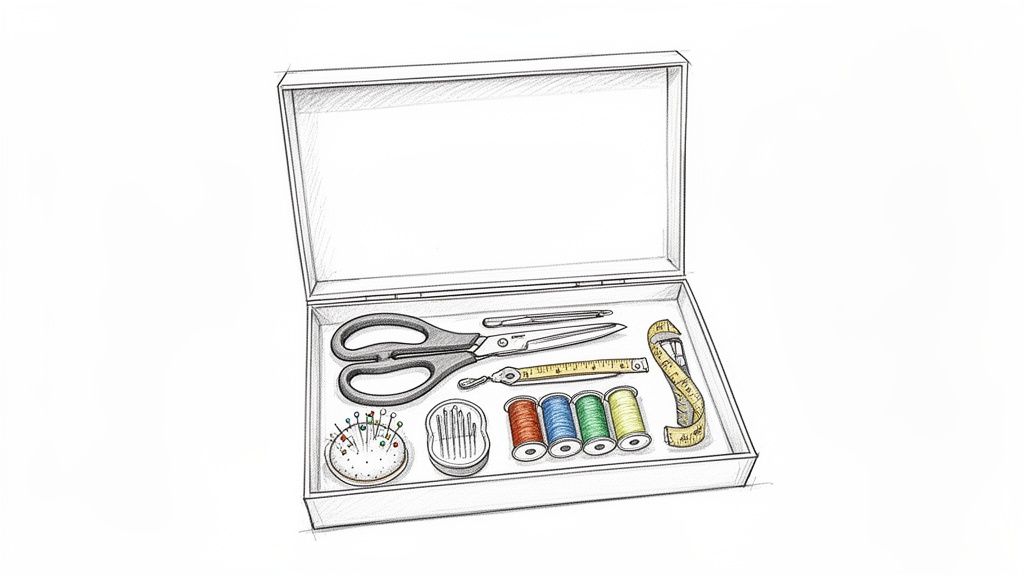
This simple approach lets you start smart without a huge investment. Each of these items has a specific job that will make the whole process smoother and way more enjoyable.
Your Essential Starter Notions
Here’s a practical checklist of the absolute necessities for your first sewing kit. I've even included a pro tip for each one to help you make smart choices right from the get-go.
- Fabric Shears: A great pair of 8-inch shears that you only use for fabric will change your life. Pro Tip: Whatever you do, don't use your fabric shears on paper. It will dull them in an instant, and there's no going back.
- Seam Ripper: We all make mistakes! This little tool will become your best friend for pulling out stitches without wrecking your fabric. Pro Tip: Find one with a comfortable grip. Trust me, you'll be using it more than you think.
- Pins or Clips: Glass-head pins are wonderful because they won’t melt if you accidentally hit them with an iron. Sewing clips are a fantastic alternative, especially for thick layers or delicate fabrics you don't want to poke holes in.
- Flexible Tape Measure: This is a non-negotiable for taking body measurements and measuring curves. Pro Tip: Grab a 60-inch fiberglass tape measure; unlike plastic ones, it won't stretch out over time and throw off your measurements.
- All-Purpose Thread: Start with a few spools of quality polyester thread. Neutral colors like black, white, and gray will get you through most of your early projects.
Mastering these fundamental tools is the first step toward bringing your creative ideas to life. Each sewing notion in your kit is a building block for your skills and confidence.
At B-Sew Inn, we're here to help you get comfortable with all your new tools. Our online classes and other extensive resources are designed to guide you as you learn the ropes, turning your sewing machine into your favorite creative partner.
Advanced Notions for Quilting and Embroidery
Once you get comfortable with the sewing basics, a whole new world of specialized tools opens up. This is where things get really exciting, especially if you’re diving into crafts like quilting or embroidery.
These advanced notions are the secret to getting those clean, professional-looking results. They aren't just fun accessories; they’re what you need to manage complex projects and get the most out of high-performance machines.
For quilters, the moment you switch from scissors to a rotary cutter and self-healing mat is a total game-changer. Seriously. Suddenly, you can slice through multiple layers of fabric with incredible speed and accuracy. Pair that with a few specialty rulers, and your cutting time shrinks.
Another must-have is a walking foot. This clever attachment feeds all your layers—your quilt sandwich—through the machine at the same time, which stops the fabric from shifting and keeps your points perfectly aligned.
Notions for Perfect Embroidery
Embroidery is a different beast, and it comes with its own set of essential tools for bringing digital designs to life. The absolute most important notion here is stabilizer. It’s the foundation you place behind your fabric to keep it from puckering or distorting while the machine stitches.
Knowing which stabilizer to use is crucial, and it really depends on your fabric:
- Cut-Away Stabilizer: This one provides permanent support, making it perfect for stretchy knits that might otherwise lose their shape.
- Tear-Away Stabilizer: Got a sturdy woven fabric like cotton or denim? Tear-away is your friend. Once you're done stitching, it rips away cleanly.
- Wash-Away Stabilizer: As the name implies, this type dissolves in water. It's the perfect choice for delicate fabrics like organza or for projects like freestanding lace where you don't want any stabilizer left behind.
At its core, advanced sewing is about controlling the fabric to achieve a precise vision. Whether it's a specialty ruler for quilting or the right stabilizer for embroidery, these notions give you that control.
If you’re curious to learn more about the art of embroidery and what it requires, this is a great resource on What Is Embroidery.
Here at B-Sew Inn, we're dedicated to empowering crafters to level up. We not only stock all these specialized supplies, but our extensive online classes and training ensure you know exactly how to use them to create stunning projects from our custom sewing machine designs. For a deeper dive, check out our guide on essential quilting supplies for beginners.
Keeping Your Sewing Tools in Top Condition
Think of your sewing notions as an investment in your craft. When you buy quality tools, they're meant to last, and a little bit of care will keep them performing perfectly for years to come. It’s just like maintaining your sewing machine; giving your tools some attention ensures they’re always ready when inspiration hits.
You'd be surprised what a difference a few simple habits can make. Regularly sharpening your fabric shears and rotary cutters is a must—it prevents those frustrating fabric snags and guarantees a clean, precise cut every single time. Another pro tip? Keep your thread stored away from direct sunlight. UV rays can make it brittle, leading to annoying breaks mid-seam.
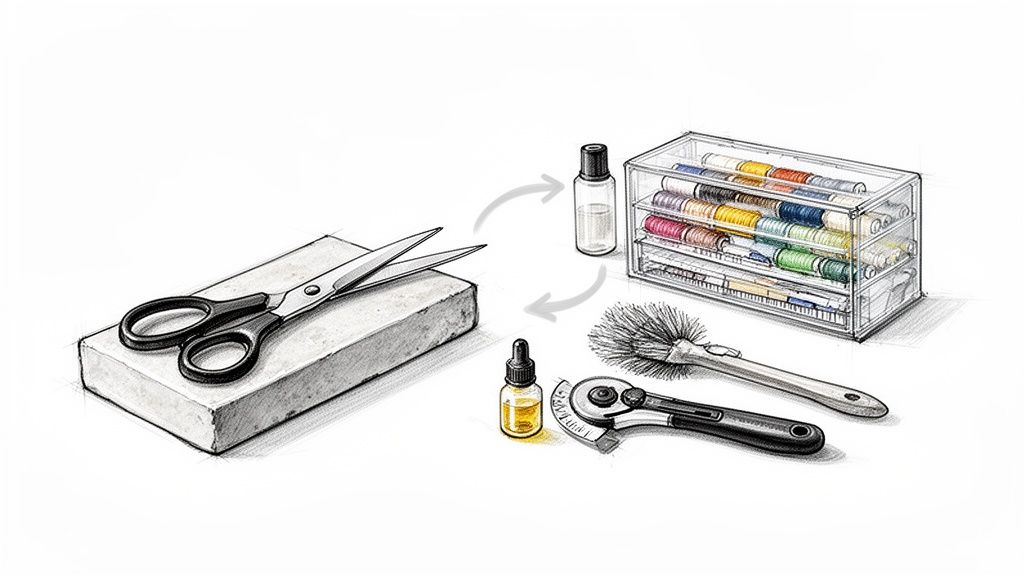
Simple Tool Maintenance Tips
Here are a few quick things you can do to keep your notions in fighting shape:
- Prevent Rust: Moisture is the enemy of your pins and needles. Keep them in a dry, sealed container or a magnetic pin cushion to keep them rust-free and sharp.
- Clean Regularly: Give your rulers and cutting mats a quick wipe-down. Lint and tiny fabric bits can build up and throw off your measurements.
- Sharpen Blades: Don't wait until your scissors are chewing through fabric. Use a sharpener made for shears, and swap out your rotary blades the moment you notice them skipping.
This focus on taking care of our tools is a huge part of the crafting journey. The U.S. market for sewing supplies stores hit an incredible $5.2 billion in 2024, which just goes to show how many of us are passionate about having the right gear.
At B-Sew Inn, our job doesn’t end when you buy something. We’re here to help you protect that investment with extensive resources and support, so you get the most out of every single tool. You can find more cool stats about the fabric and craft supplies market right here.
Your Top Sewing Notion Questions, Answered
As you get more comfortable with sewing, you're bound to have some questions pop up about all these little tools. That's totally normal! Getting good, clear answers is the best way to move past a sewing hiccup and build up your confidence. Let's tackle some of the most common questions we hear from fellow sewists.
What are the absolute must-have notions if I'm just starting out?
If you're building your very first sewing kit, don't get overwhelmed! Just focus on the five essentials. You’ll want a solid pair of fabric shears (an 8-inch pair is a great all-rounder), a seam ripper for those inevitable "oops" moments, a flexible measuring tape, some glass-head pins that won’t melt under your iron, and a few spools of all-purpose polyester thread in black, white, and gray.
Do I really need all those different kinds of machine needles?
Honestly, yes! While you can get by with a universal needle for a little while, using the right needle for your fabric is the single best trick to avoid skipped stitches and prevent your fabric from snagging or getting damaged. Swapping to a ballpoint needle for knits or a sharp microtex for delicate wovens makes a world of difference. It's a small change that leads to a much more professional finish.
What's the real difference between scissors and shears?
It all comes down to the handles. Shears have one bigger handle that fits several fingers, giving you more power and control for cutting long, smooth lines across fabric laid on a table. Scissors, on the other hand, have two identical, smaller finger holes. They're perfect for smaller, more nimble tasks like snipping threads or trimming small pattern pieces.
At B-Sew Inn, we are committed to empowering crafters by providing not only the best tools but also the knowledge to use them. Our custom sewing machine designs are created to inspire you, and our extensive resources, including expert training and online classes, are here to support you at every step. Come explore our huge collection and start your next project today at https://www.bsewinn.com.

