
If you're wondering what the best batting for quilts is, the answer really comes down to what you're making. For that classic, flat, crinkled heirloom look, 100% cotton is my go-to. If you want something with incredible warmth and a bit of puff, wool is fantastic. For an everyday quilt that needs to be tough and affordable, you can't go wrong with polyester or a cotton/poly blend. This single choice will do more to define your quilt's personality and how long it lasts than almost anything else.
Why Your Batting Choice Defines Your Quilt
Let's talk about the heart of every quilt—the batting. It's the hidden middle layer that gives your project its warmth, the way it drapes, and so much of its character. Picking the right batting is the secret to turning a beautiful quilt top into a treasured piece that feels just right and holds up for years. Understanding your materials is the first step toward creating quilts that look professionally finished, a core principle we empower crafters with at bsewinn.com.
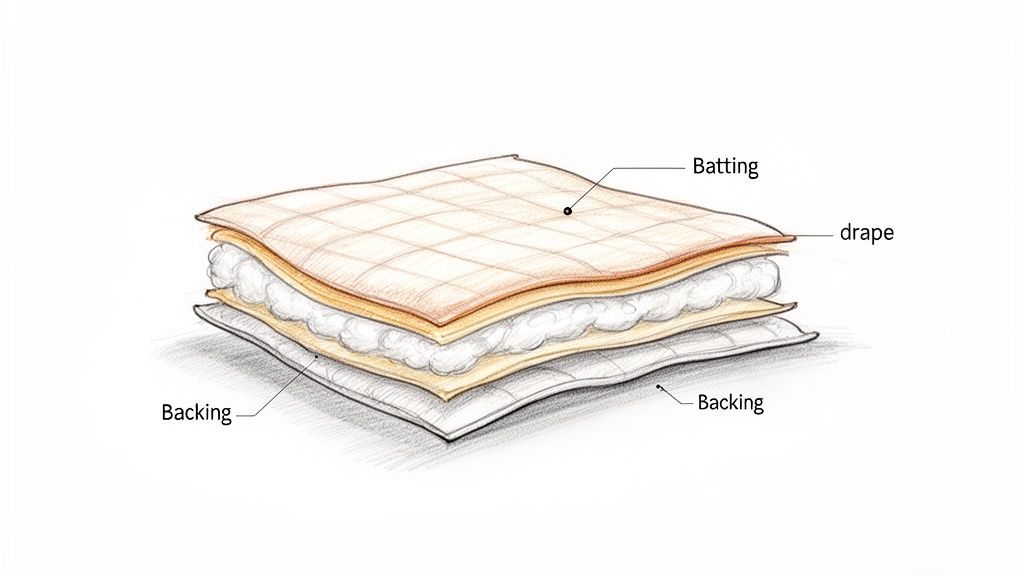
Think of batting as the quilt's bones. It's the internal structure that decides how the quilt hangs, how it feels when you curl up with it, and how it behaves over time. The material you choose will directly shape the final look, whether you're aiming for a modern, flat drape or a big, puffy, cozy comforter.
At B-Sew Inn, we're committed to empowering crafters by not only providing custom sewing machine designs but also the knowledge to use them. This guide breaks down the batting options so you can choose with total confidence, backed by our extensive resources and online training.
The Foundation of a Lasting Quilt
Choosing the best batting for your quilt is about more than just the feel; it’s an investment in your project's future. The growing global interest in quilting just goes to show why picking quality materials is a smart move. Research suggests that a well-made quilt can easily last 25-50 years with normal use, which makes your batting choice pretty critical for creating something that stands the test of time. You can read more about the expanding quilt market and its trends if you're curious.
This one decision influences so much about your finished quilt:
- Warmth and Weight: Different fibers provide different levels of insulation.
- Drape and Texture: The batting determines how a quilt hangs and what its surface feels like.
- Stitch Definition: Your quilting stitches will either pop and stand out or blend in, all based on the batting's loft.
- Durability and Care: The fiber content dictates how your quilt will handle washing and everyday life.
Whether you're making your first baby blanket or a complex showpiece on a custom sewing machine from B-Sew Inn, getting the batting right is the secret to a professional finish. It’s the soul of your quilt, silently working behind the scenes to bring your vision to life.
A Practical Guide to Quilt Batting Materials
Picking the right batting is like casting the main character for your quilt—each material has a unique personality that defines the final performance. At B-Sew Inn, we're dedicated to helping you master every step of the creative process. Our goal is to make sure every project you create not only looks incredible but feels exactly the way you imagined, showcasing the full potential of your skills.
Let's walk through the most popular options to find the perfect middle layer for your next project.
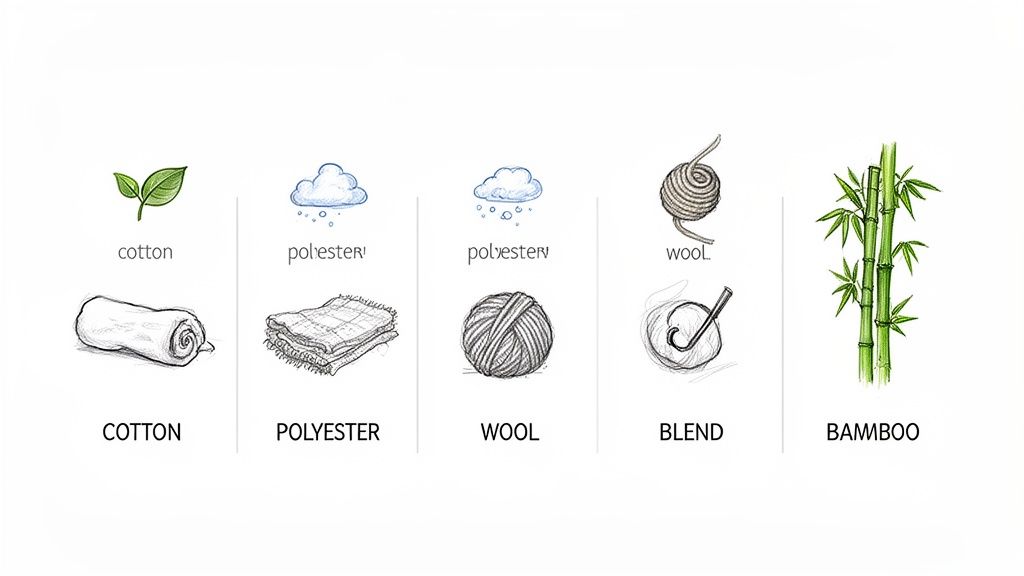
The material you choose will influence everything from how your quilt drapes and its warmth to the quilting process itself. It’s no surprise that cotton and cotton/poly blends are the go-to choice for about 65% of home quilters. They’re breathable, easy to work with, and deliver consistently beautiful results—perfect for replicating the designs we feature in our tutorials.
The Most Common Batting Fibers
Every type of batting fiber brings something different to the table, making each one suited for different kinds of projects. Getting a feel for these differences is the first step to choosing with confidence. If you're building your toolkit, be sure to check out our complete list of essential quilting supplies for beginners.
Cotton Batting
A true classic, 100% cotton batting is loved for its soft texture and graceful drape. It’s a natural, breathable fiber that gives you that classic, slightly crinkled look after the first wash—a hallmark of a treasured heirloom quilt. Cotton is also a bit heavier than other options, which gives it a comforting, substantial feel.
Polyester Batting
Polyester is a synthetic powerhouse known for its impressive durability and loft. It’s lightweight, resists shrinking and creasing, and holds its shape incredibly well through wash after wash. This makes it a fantastic choice for bed quilts and kids' blankets that will see a lot of love. A high-loft poly batting is also perfect when you want to make your quilting stitches really pop.
Think of batting as the soul of your quilt. Cotton offers that traditional, cozy feel, while polyester provides bouncy, resilient loft. Wool gives you lightweight warmth, and blends deliver the best of both worlds.
Wool Batting
When you want incredible warmth without the weight, wool is the undisputed champion. This natural fiber is exceptionally breathable and provides amazing insulation, making it ideal for those snuggly winter quilts. Wool also has a wonderful loft that shows off quilting stitches beautifully and resists creases, helping your quilts maintain a smooth, polished look.
Cotton/Polyester Blends
These blends, often in an 80/20 cotton-to-polyester ratio, offer the perfect compromise. You get the softness and breathability of cotton combined with the strength and stability of polyester. This creates a versatile, all-purpose batting that’s a dream to quilt with and easy to care for.
Exploring Specialty and Eco-Friendly Options
Beyond the big three, a few other materials have unique perks for specific projects. These can elevate your quilt with unique textures or more sustainable qualities.
- Bamboo Batting: An eco-friendly darling, bamboo is silky-soft, breathable, and has natural antibacterial properties. It drapes like a dream, creating a lightweight quilt with a distinctly modern feel.
- Fusible Batting: This clever batting has a light, heat-activated adhesive on both sides. It lets you temporarily fuse your quilt sandwich together with an iron, which means no more pinning or spray basting on smaller projects!
For a deeper dive into how these materials stack up, this article on Wool Vs Synthetic Quilts Compared is a great resource. Understanding your options is the key to taking full control of your project's final look and feel.
At-a-Glance Guide to Quilt Batting Types
Feeling a little overwhelmed by the choices? Don't be! This quick-reference table breaks down the basics to help you find your perfect match.
| Batting Type | Key Characteristic | Best For | Drape |
|---|---|---|---|
| Cotton | Natural, breathable, creates a crinkled heirloom look | Traditional quilts, wall hangings, table runners | Soft and heavy |
| Polyester | Durable, high loft, resists shrinking and wrinkles | Bed quilts, baby quilts, projects needing definition | Lightweight and puffy |
| Wool | Lightweight warmth, excellent insulation, resists creases | Cozy bed quilts, lap quilts, show quilts | Spongy and resilient |
| Cotton/Poly Blend | Best of both worlds: soft, stable, and easy to handle | All-purpose quilting, from bed quilts to throws | Soft with good body |
| Bamboo | Silky-soft, eco-friendly, naturally antibacterial | Modern quilts, lightweight throws, baby quilts | Fluid and luxurious |
| Fusible | Heat-activated adhesive for easy basting | Small projects, wall hangings, craft items | Varies by fiber content |
Ultimately, the best batting is the one that brings your creative vision to life. We encourage you to experiment with different types as you grow as a quilter—you might just discover a new favorite.
Understanding How Loft Shapes Your Final Quilt
Think of your quilt batting as the stuffing in a cozy pillow. Loft is simply the word we use for its thickness or puffiness, and it's one of the biggest decisions you'll make for your quilt's final look and feel. Choosing the right loft is like deciding between a sleek, modern blanket and a plush, traditional comforter. Both are beautiful, but they have completely different vibes.
This choice truly defines your quilt's personality. Whether you're quilting on your home machine or a powerful longarm from B-Sew Inn, getting the loft right means your finished project will have the exact texture you were dreaming of from the start.
Low Loft Batting For a Modern Drape
When you want a flat, lightweight finish, low-loft batting is your best friend. It’s usually about ⅛ inch thick, which creates a quilt that drapes beautifully, almost like a vintage coverlet. This minimal thickness lets the details of your piecing and the beautiful lines of your stitching really shine, since there's no puffiness to hide your hard work.
Low loft is absolutely the way to go for projects where you want crisp, defined stitches.
- Wall Hangings: It keeps the quilt hanging flat against the wall without any awkward bulk.
- Table Runners: The slim profile lays perfectly on a table.
- Modern Quilts: It’s a perfect match for geometric patterns and detailed free-motion quilting.
Because it’s not bulky, low-loft batting is also a dream to work with on a regular home sewing machine. You can quilt dense designs without fighting a thick, resistant middle layer.
High Loft Batting For a Puffy Finish
On the flip side, high-loft batting gives you that plush, cloud-like finish that just screams "cozy." Typically measuring around ½ inch thick, this batting adds a ton of dimension and warmth. The extra thickness creates deep shadows around your quilting stitches, making them pop with dramatic texture.
High loft is all about creating volume and a huggable quilt. It transforms a simple top into a warm, inviting comforter that’s perfect for snuggling on a cold day. This makes it the go-to choice for bed quilts and tied comforters.
While all that puff is great for comfort, it can be a bit more of a challenge on a standard sewing machine. The bulkiness means you’ll need a longer stitch length (think 3.5 to 4.0) to keep your stitches from getting swallowed up by the batting. At B-Sew Inn, we guide crafters through these technical details, often recommending high-loft batting for our custom longarm machines, which handle the thickness with ease.
How to Match Batting to Your Quilting Project
Every quilt you make has a story and a purpose. Choosing the right batting is all about matching it to that purpose. This single decision shapes how the quilt feels, how it functions, and how it looks in the end. By following this guide, you'll be able to confidently replicate the beautiful examples we showcase in our designs and online classes.
If you start by thinking about the project first, you’re already on the path to success. This little bit of planning ensures your quilt not only looks fantastic but also performs beautifully, whether it's giving gentle comfort to a newborn or standing up to the rigors of a longarm machine.
Batting Choices for Common Quilt Types
Let's break down how to pair batting with some of the most popular quilting projects you're likely to tackle. Think of this as a simple framework to help you pick the perfect middle layer every single time.
- For a Soft Baby Quilt: To create a replicable baby quilt design like those in our tutorials, safety and comfort are paramount. A breathable and hypoallergenic material like organic cotton or bamboo is a wonderfully gentle choice. It’s soft against sensitive skin and gives you peace of mind.
- For a Durable Bed Quilt: Quilts that are going to live on a bed and see daily use need to be tough. A cotton/poly blend (like an 80/20) is my go-to. It gives you the best of both worlds: cotton's softness and polyester's durability. It also holds up beautifully to frequent washing.
- For a Detailed Art Quilt: When your intricate stitching is the main event, you need a stable, almost invisible foundation. A thin, low-loft cotton or even a fusible batting provides that stability. It lets your stitches pop with crisp, clean definition, without any of the puffiness that can distort your hard work.
Your project dictates your batting. A cozy bed quilt needs durable warmth, a baby quilt requires gentle breathability, and an art quilt demands a stable canvas for your stitches. Matching them correctly is the secret to a successful project.
It’s exciting to see the passion for this craft grow worldwide. Quilting is truly a global art form! The market reflects this, with regions like Asia Pacific becoming a major hub. In fact, it’s projected to hold 22.5% of the nearly $4.8 billion four-seasons quilt market by 2025. You can dive deeper into these global quilting market trends to see just how much this timeless skill is expanding.
Special Considerations for Longarm Quilting
Longarm quilting is a whole different ballgame, and it places a unique set of demands on your materials. The machine moves at high speeds, putting the quilt layers under some serious tension. That tension can easily stretch, pull, or distort a standard batting that isn't up for the challenge.
This is why choosing a batting with a scrim is pretty much non-negotiable for longarmers. What’s a scrim? It’s a very fine, non-woven stabilizer that’s needle-punched right into the batting. It acts like a hidden web of strength, keeping the fibers from shifting or pulling apart under the pressure of the longarm. Using a batting with a scrim is the secret to getting a smooth, professional finish. To learn more about controlling your layers, check out our guide on how to use a walking foot for even fabric feeding.
The flowchart below gives you a simple decision tree to help you choose the right loft based on the final look you're going for.
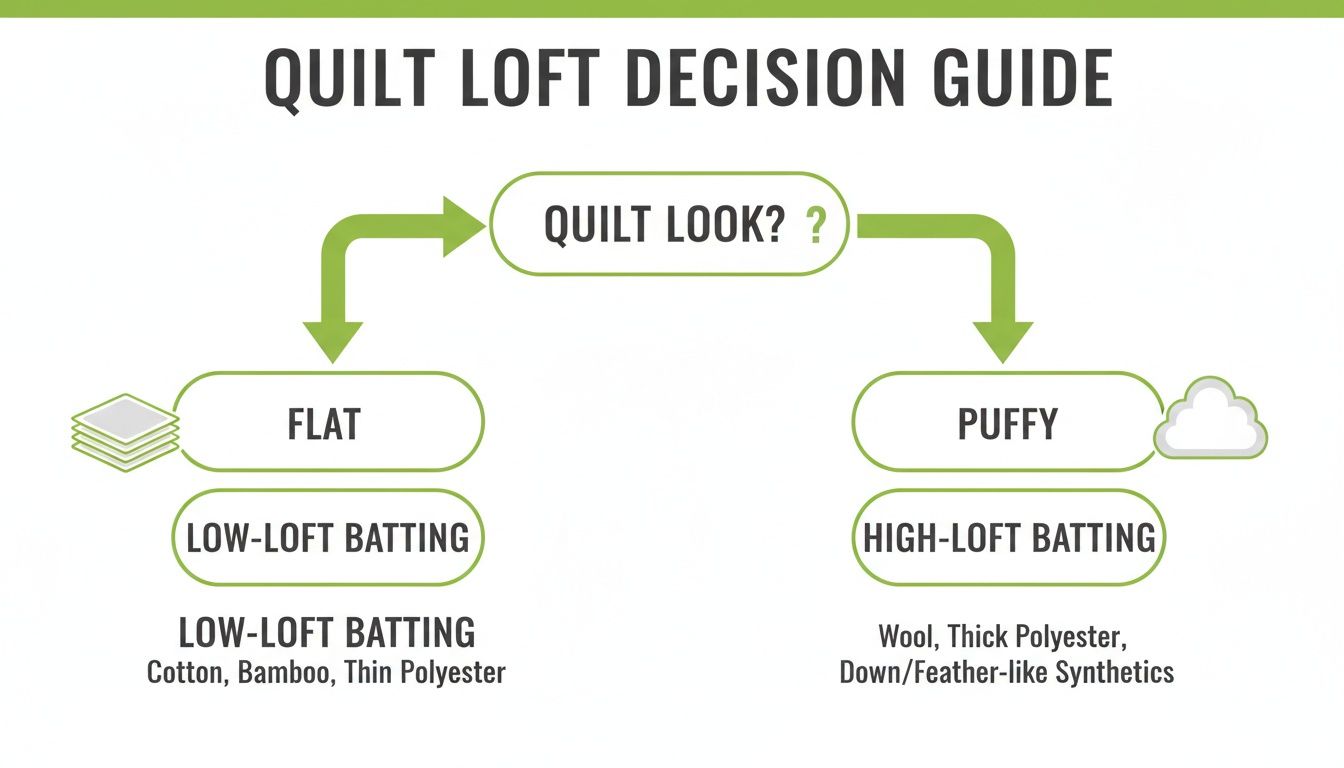
This visual guide simplifies the choice between a flat or puffy aesthetic, linking each to the ideal batting loft. Here at B-Sew Inn, our experts and online classes are always here to help you pair our premium battings with the right tools and techniques for any project you can dream up.
Pairing the Right Needle and Thread with Your Batting
Picking out the perfect batting is a huge step, but now you have to give your machine the right tools for the job. Think of your needle and thread as batting's partners—when all three get along, your quilting is smooth and frustration-free. Get the combination wrong, and you’re in for a world of skipped stitches and snapped threads.
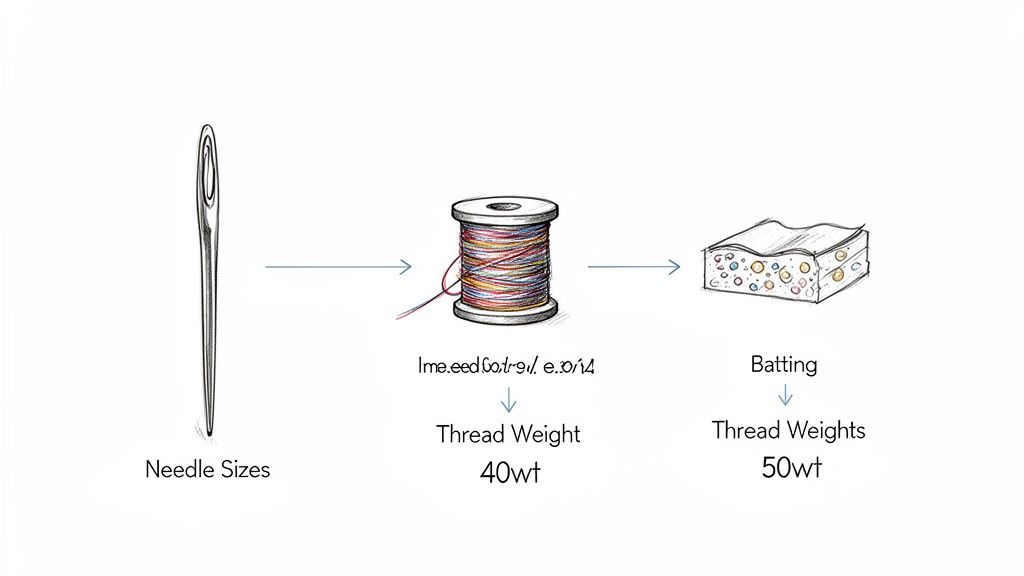
The loft and density of your batting are what will guide your needle and thread choices. When you get this synergy right, your machine can glide through all three layers of that quilt sandwich without a hitch, laying down beautiful, even stitches every single time. Honestly, getting this combo right is one of the first things we focus on in our B-Sew Inn online classes because it’s so fundamental to getting that professional look.
Selecting the Perfect Needle for Your Batting
Ever tried to poke a dull pin through a thick piece of cardboard? That’s exactly what your sewing machine needle goes through. A dense, needle-punched cotton batting needs a sharp, sturdy needle that can pierce through its tightly packed fibers without a fight.
For projects like that, a 90/14 Quilting needle is my go-to. It's specifically designed with a tapered point to ease through multiple layers and has a strong shaft that won’t bend or break under pressure.
Now, if you’re working with a light and fluffy polyester batting, it’s a whole different ballgame. That batting is far more forgiving with its open, airy structure. It doesn't put up much resistance, which means you can usually get away with a standard 80/12 Universal needle and have no problems at all.
Your needle is the leader in this trio. Choosing one that’s strong enough for your batting’s density is the key to preventing skipped stitches and ensuring a smooth quilting process from start to finish.
Matching Thread Weight to Batting Loft
Once you've got your needle sorted, it's time to think about thread. The loft of your batting is the big player here because it affects how much your stitches will show. A thread's weight (wt) tells you its thickness—and remember, it's a bit counterintuitive: a lower number means a thicker thread. If you want to dive deeper, we have a whole guide on picking the best thread for machine quilting.
Here’s the breakdown:
- Low-Loft Batting: When you’re using thin batting and want your quilting to be subtle and intricate, a fine 50wt cotton thread is your best friend. It will blend right into the fabric, making your piecing the real star of the show.
- High-Loft Batting: For those wonderfully puffy, high-loft battings, you’ll want a thicker 40wt thread to make your stitches pop. The extra thickness keeps the stitches from getting lost in all that fluff, adding gorgeous texture and definition to the quilt.
Caring for Your Quilted Masterpiece
You’ve poured so much of yourself into your quilt—all those hours of cutting, piecing, and stitching. Now, let's talk about how to make sure it lasts a lifetime. How you care for your quilt is just as important as how you made it, and the secret really lies in the batting you chose.
Following the care instructions for your specific batting is the best way to keep your quilt looking beautiful for decades. Each fiber has its own personality, and learning how to treat it right will turn your project into a true family heirloom.
Washing Instructions by Batting Type
The stuff on the inside of your quilt sandwich completely dictates how you should wash it. Get this part wrong, and you could end up with a shrunken, distorted, or felted mess. So, first things first, always know what kind of batting you're working with.
-
Cotton Batting: This is how you get that classic, crinkly, vintage vibe we all love. You can expect about 3-5% shrinkage after that very first wash. To keep it under control, always use cold water and stick to a gentle cycle. If you're not a fan of the crinkle, you can pre-wash the batting itself before you even start quilting.
-
Polyester and Blends: These are the easy-going, low-maintenance heroes of the batting world. They barely shrink, so you can pop them in the machine with cold or warm water and tumble dry on low without a worry.
-
Wool Batting: Wool needs a bit more of a gentle hand. Wash any quilt with wool batting in cold water on a gentle cycle—this is key to preventing it from felting up. And whatever you do, avoid high heat in the dryer. Your best bet is to either tumble dry on a no-heat, air-fluff setting or lay it flat to dry.
Properly caring for your quilt is really the final step in the whole creative process. It’s what guarantees that the texture, drape, and warmth you so carefully chose will be enjoyed for generations to come.
Here at B-Sew Inn, we understand that every detail matters. Our online classes and wealth of resources are here to support you at every stage, from picking out the perfect materials to that crucial first wash, empowering you to create stunning sewing machine designs.
Common Questions About Choosing Quilt Batting
Let's dive into some of the questions we hear all the time from our amazing community here at B-Sew Inn. Our educators have put their heads together to answer the big ones, hoping to clear things up so you can tackle your next project with total confidence.
Putting together the perfect quilt sandwich can feel a little overwhelming at first. But sometimes, just a few key answers are all it takes to make everything click. Our goal is to give you that "aha!" moment so your choices match your creative vision.
Your Quilting FAQs Answered
We’ve pulled together the top three questions that pop up in our classes and online groups. Hopefully, these will help you feel a lot better the next time you're standing in front of the batting aisle.
1. What is the best batting for a beginner quilter?
If you're just starting out, my hands-down recommendation is a good quality, low-loft 80/20 cotton/poly blend. This stuff is just so forgiving. It's easy to work with, drapes beautifully, and doesn't tend to shift or beard, which saves you a lot of frustration. You get the lovely softness of cotton with a little bit of polyester's strength and stability—a perfect, stress-free choice for your first few quilts.
2. Do I need to pre-wash my quilt batting?
Ah, the great pre-washing debate! It really comes down to the look you're going for. If you're using 100% cotton batting and want a smooth, modern finish, then yes, you should pre-wash it to handle the shrinkage. Just give it a gentle soak in lukewarm water and then tumble dry on low. On the other hand, a lot of quilters absolutely love that crinkly, vintage texture that happens when you don't pre-wash. For most polyester, wool, and blend battings, shrinkage is so minimal that you can skip this step entirely.
3. What does scrim mean on batting packaging?
You'll see this word on a lot of batting packages, and it's a great feature to understand.
Scrim is a very thin, lightweight stabilizer that's been needle-punched into one side of the batting. Think of it as a hidden layer of support.
This little addition makes a huge difference. It adds strength and stability, which stops the batting from stretching or getting distorted while you quilt. That's why batting with a scrim is a top choice for longarm quilters—it holds up beautifully to the machine's tension. It also means you can space your quilting stitches farther apart without worrying about the batting bunching up inside your quilt over time.
At B-Sew Inn, we're committed to empowering you through every step of your creative journey. From picking out the perfect fabric to helping you master a new technique on one of our custom sewing machines, we provide the tools and support you need. Check out our wide range of machines, accessories, and online classes to bring all your quilting dreams to life.
Find your perfect machine and supplies at https://www.bsewinn.com.

