

Diving into quilting is like unlocking a whole new level of creativity. You're not just sewing; you're turning fabric and thread into heirlooms and art. The right tool makes all the difference, and a specialized quilting sewing machine is your single most important partner in this adventure. This guide serves as your comprehensive how-to, showcasing tangible examples and techniques that you can replicate to create stunning sewing machine designs.
So, What's the Big Deal About a "Quilting" Machine?
At the end of the day, a quilting machine is designed to make every part of the quilt-making process smoother and more enjoyable. Think about it: a standard sewing machine is fantastic for whipping up a dress or hemming a pair of pants. But quilting? That's a whole different ballgame. You're wrestling with bulky layers, stitching intricate free-motion designs, and needing absolute precision over a huge surface. The right machine gets those physical struggles out of the way so you can just focus on your art.
For instance, when you're piecing together a "Log Cabin" block, the perfect quarter-inch seam is everything. Later, when you're quilting the finished “sandwich”—that's the quilt top, fluffy batting, and backing all layered together—you need a machine that can power through all that bulk without skipping a beat. A dedicated quilting machine handles both jobs beautifully.
This isn't just about buying a tool; it's an investment in your craft. Here at B-Sew Inn, we're committed to empowering you through our custom sewing machine designs and support. We’re not just here to sell you a box; we’re here to give you a complete support system to help you grow.
A Foundation Built on Support
Choosing a machine can feel like a huge commitment, but you’re not in it alone. We've built an entire ecosystem to help you succeed and feel totally confident from your very first stitch.
This support includes:
- Online Classes: Learn everything from the basics to advanced techniques right from your home, with guidance from our expert instructors.
- Specialized Training: Get hands-on with your new machine at special events and workshops designed to help you master its coolest features.
- Tons of Resources: You get access to a whole library of tutorials, patterns, and guides to spark your next idea or help you troubleshoot a tricky spot.
When you start your quilting journey, you're not just picking up a new hobby—you're joining a huge, welcoming community of makers. You can even explore the broader world of creativity and arts to see how it all connects. This guide is here to walk you through everything, from the core concepts to the high-tech features, helping you find that perfect machine to bring your vision to life.
Understanding Different Types of Quilting Machines
Stepping into the world of quilting machines can feel a little overwhelming at first, but I promise it's simpler than it looks. The best way to think about it is matching the right tool to your creative vision. We’ll walk through the main categories together, starting with the basics and working our way up, so you can find the perfect partner for your quilting adventures.
Your machine is the heart of your craft, but getting the most out of it takes more than just plugging it in. True quilting magic happens when you combine a great machine with great support. This is where classes, training, and a community of fellow quilters come in—they turn that new machine into an extension of your own creativity.
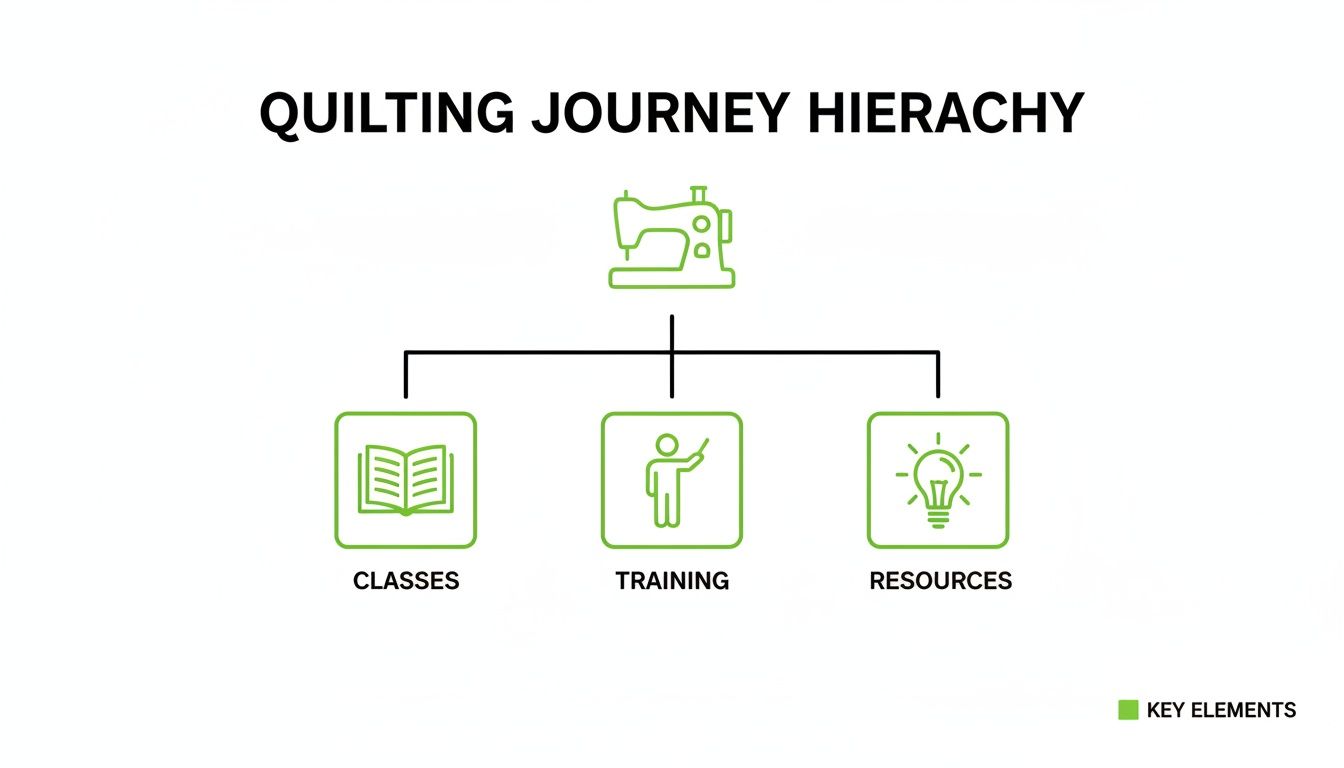
As you can see, the machine is just the starting line. It's the learning and expert guidance that really help you hit your stride.
Before we dive into the specific types, here’s a quick overview to help you see how they stack up against each other.
Quilting Machine Types At A Glance
This table breaks down the core differences between the main types of quilting machines, who they're best for, and what to expect in terms of features and complexity.
| Machine Type | Best For | Key Characteristics | Complexity |
|---|---|---|---|
| Mechanical | Beginners or quilters who love simplicity and hands-on control. | Durable, reliable, and straightforward. Uses knobs and dials for all settings. | Low |
| Computerized | Hobbyists and serious quilters looking for precision, speed, and creative features. | LCD screens, push-button controls, and automated functions like thread cutting. | Medium |
| Long-Arm | Dedicated quilters, professionals, or anyone finishing lots of large quilts. | A large frame holds the quilt, while the quilter moves the machine head. | High |
| Quilting & Embroidery Combo | Multi-talented crafters who want to piece, quilt, and embroider with one machine. | A high-end computerized machine with a detachable embroidery unit. | High |
Now, let's get into what makes each of these machine types tick.
Mechanical Quilting Machines
Think of a mechanical machine as the trusty manual car of the sewing world. You're in complete control, using physical knobs and dials to select your stitch, adjust tension, and set the length. There are no screens or menus to navigate.
These machines are absolute workhorses, known for their durability and no-fuss operation. This makes them a fantastic starting point for beginners who want to really learn the nuts and bolts of sewing without a steep technology curve. They’ll give you all the essential stitches you need for piecing quilt tops and some basic quilting, and their simplicity is truly their biggest strength.
Computerized Quilting Machines
Moving up to a computerized machine is like trading that manual car for a modern one with all the bells and whistles. These machines feature an LCD screen and simple push-button controls that automate a ton of functions, which can be a massive help on big projects. Features like a needle up/down button, an automatic thread cutter, and a speed control slider become your best friends.
The leap from mechanical to computerized machines has been a huge deal in the sewing world. It's why you see so many quilters creating incredibly intricate work from their home studios. These machines can stitch at over 1,000 stitches per minute, remember custom stitch patterns, and even connect to software for amazing quilting designs.
Key Takeaway: The biggest wins with a computerized machine are precision and consistency. You get access to hundreds of built-in stitches, including beautiful decorative ones that are perfect for quilting, letting you achieve a really professional finish with way less manual guesswork.
Most computerized models also offer more "throat space"—the area to the right of the needle—which gives you crucial room to maneuver bulky quilts. The ability to program stitches opens up a creative playground that's tough to match by hand. If you’re ready to tackle more ambitious designs, this is the machine for you. For a closer look, check out our guide on the best free-motion quilting machines.
Specialized Long-Arm Machines
For the quilter who has truly caught the bug, the long-arm machine is the ultimate dream. These are a whole different ballgame. Instead of pushing your fabric under the needle, the fabric is stretched onto a large frame, and you move the machine's head over it. This completely flips the script on quilting, giving you incredible freedom and control for those big, swooping, all-over designs.
A long-arm is a serious commitment in both space and budget, there's no doubt about it. But for finishing large quilts quickly and with a flawless, professional look, they are simply unmatched. They're the top choice for serious hobbyists and anyone looking to turn their passion into a small business.
Quilting and Embroidery Combo Machines
What if you love piecing quilts and adding beautiful embroidered details? You don’t have to choose! A quilting and embroidery combo machine gives you the best of both worlds in one powerful package.
In its quilting mode, it’s a feature-packed computerized sewing machine. But with the quick attachment of an embroidery unit, it transforms into a tool for creating stunning, custom-embroidered designs on quilt blocks, bags, or anything else you can dream up. These machines are perfect for the creative multitasker who loves to personalize every project.
Key Features Every Quilter Should Know
Okay, now that we’ve got a handle on the different types of quilting machines out there, it’s time to get into the fun stuff—the specific features that make a machine a dream to quilt on. Think of this as your personal checklist for what really matters. Each one of these details can make your projects easier, more precise, and just plain more enjoyable.
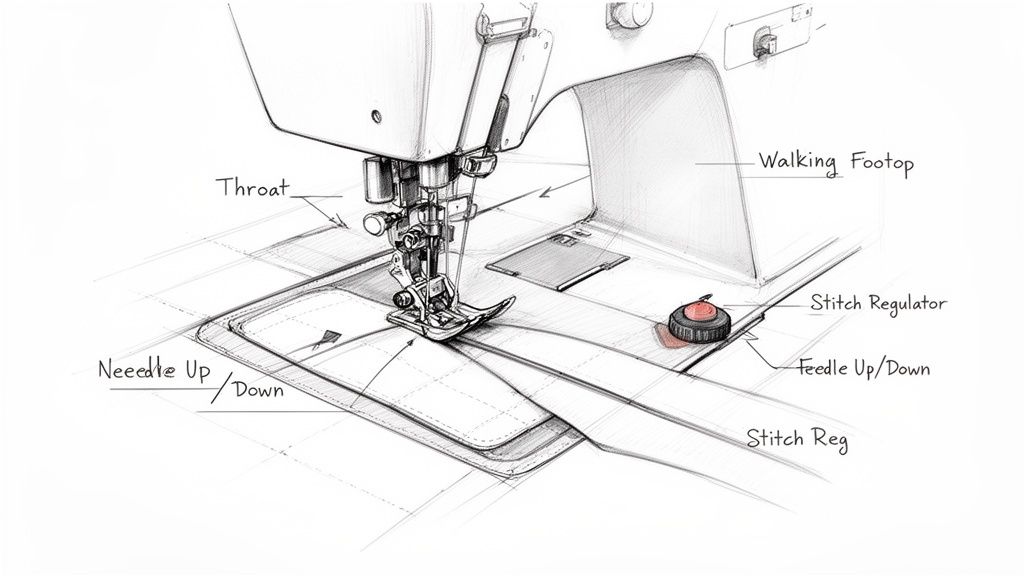
We're going to break down not just what each feature is, but why it's a game-changer for quilters. From the massive throat space you need for a king-sized quilt to the tiny-but-mighty needle up/down button, you'll see how all these pieces fit together. This is the knowledge that lets you walk up to any machine and know right away if it's built for the kind of quilting you want to do.
The Quilter's Best Friend: Throat Space
If you ask an experienced quilter what they look for first, they’ll almost always say throat space. This is the open area to the right of the needle, sometimes called the harp, and it determines how much quilt you can actually fit in the machine. A standard sewing machine might give you 5-6 inches, which is fine for sewing a shirt, but it’s a real struggle for quilting.
Now, imagine trying to wrangle a big, fluffy quilt—top, batting, and backing—through that tiny opening. It feels like a wrestling match, and you usually lose. Machines made with quilters in mind offer a much roomier throat space, often 9 inches or more. That extra room is everything. It lets you roll and glide your quilt without it getting bunched up, turning a frustrating task into a smooth, creative process.
Advanced Feed Systems for Flawless Seams
Quilting means sewing through at least three layers, and those layers love to shift, pucker, and stretch. This is where a good feed system becomes your secret weapon. It’s what makes sure all your fabric layers move together in perfect harmony, giving you crisp points and flat seams.
There are two main ways machines tackle this:
- Integrated Dual Feed: This is a built-in system where a little walking mechanism works from the top, perfectly in sync with the feed dogs below. It grabs the top layer of fabric and moves it along at the exact same pace as the bottom layer.
- A Walking Foot: This is a presser foot you attach to the machine that does a similar job. It has its own set of feed dogs that grip and move the top fabric, preventing that dreaded "quilting creep" that can throw off your whole block. For many quilters, a good walking foot is non-negotiable.
These systems are how you get those professional-looking quilt blocks and borders. They eliminate the puckers and waves that drive new quilters crazy by keeping every single layer perfectly aligned from start to finish.
Learning your way around a walking foot can instantly level up your quilting. For a tangible example, you can replicate our "Simple Striped Quilt" project where a walking foot is used to quilt perfectly straight lines, a foundational skill you can learn through our online resources.
Stitch Regulation for Perfect Free-Motion
If you’ve ever been captivated by the artistic, free-flowing designs of free-motion quilting, then stitch regulation is a feature you’ll want to know about. When you’re "drawing" with your needle, your hands naturally speed up and slow down. Without a regulator, this leads to wonky stitches—tiny ones when you go slow and long, loopy ones when you speed up.
A stitch regulator completely solves this. It's a clever little sensor that watches how fast you move the fabric and tells the machine to adjust its speed to match yours. The result? Gorgeous, consistent stitches every single time. It doesn't matter how complex your design is or if your hands are a little shaky. It’s a huge confidence booster that lets you focus on being creative, not on being a robot.
Essential Functions and Presser Feet
Beyond the big-ticket items, it's often the little things that make the biggest difference in your day-to-day sewing flow. Once you have these, you'll wonder how you ever lived without them.
One of the most-loved features is the needle up/down function. With a simple button press, you can tell the needle to always stop in the "down" position inside the fabric. This is a lifesaver when you're pivoting at a corner or need to adjust your quilt's position during free-motion work. The needle acts like a tiny anchor, holding your spot perfectly.
You'll also want to look for specialized presser feet. A 1/4-inch piecing foot is a must-have for getting those precise seams that make patchwork come together perfectly. A free-motion or darning foot is designed to hover just over the fabric, allowing you to move your quilt in any direction for stippling or doodling. The best quilting machines usually come with a nice collection of these feet right in the box.
Finally, a speed control slider is a quilter's best friend. It lets you set a maximum speed so you can floor the foot pedal without the machine taking off like a rocket. This is fantastic for beginners learning control or for anyone tackling a tricky pattern that requires slow, careful stitching. It's all about accuracy and less stress
Choosing a Machine for Your Quilting Ambitions
The right quilting machine is more than just a piece of equipment; it's a creative partner that needs to grow with you. To find that perfect match, it really helps to think about where you are on your quilting journey. Your needs when you're just starting out are worlds apart from those of a seasoned hobbyist or someone dreaming of turning their passion into a business.
Let's walk through three common quilter profiles. See which one feels like you—it'll help you zero in on the features that matter most and make sure your new machine supports you every step of the way.
The Enthusiastic Beginner
Welcome to the club! As a beginner, your biggest priority is learning the fundamentals without getting bogged down by a machine that’s too complicated. The last thing you want is something that adds frustration when you're trying to build your skills. You need a reliable, easy-to-use partner to help you master the basics.
For you, it all comes down to simplicity and reliability. Look for a machine with:
- A good walking foot or integrated dual feed: Honestly, this is a non-negotiable. It keeps your fabric layers from shifting around, which is one of the biggest headaches for new quilters trying to get their points to match.
- A needle up/down function: This little button is a huge help. It makes pivoting at corners a piece of cake, helping you get those sharp, accurate points right from your very first quilt block.
- Clear controls and a manageable stitch selection: Don’t worry about hundreds of decorative stitches just yet. Find a machine that nails the essential stitches perfectly.
Here at B-Sew Inn, we're committed to empowering new crafters. Our online classes are designed to get you comfortable with these core features, providing step-by-step guidance for tangible projects you can replicate, turning that initial spark into a lifelong skill.
The Dedicated Hobbyist
Okay, you’ve pieced a few quilts, you've got the basics down, and you are officially hooked. But now you’re starting to bump up against the limits of your starter machine. You’re ready for bigger projects, want to dabble in free-motion quilting, and feel the urge to add more creative touches to your work. It's definitely time for an upgrade.
As a dedicated hobbyist, you should be looking for features that open up your creative options. This is where a larger, more powerful computerized quilting machine can really change your world.
Your number one upgrade is throat space. I’m not exaggerating when I say that moving from a standard 6-inch throat to one that's 9, 11, or even larger is a total game-changer. It gives you the actual physical room to quilt larger projects without a wrestling match, finally letting you tackle those bed-sized quilts with ease.
You'll also want to look for things like a higher stitches-per-minute (SPM) rate to speed things up, a wider variety of decorative stitches for those special touches, and maybe even a machine with stitch regulation to make your free-motion quilting look smooth and professional.
The Aspiring Small Business Owner
When your hobby starts to look like it could be a profession, your machine needs shift. It's not just about creativity anymore; it's about durability, efficiency, and professional quality. Whether you're planning to sell your finished quilts or offer quilting services to others, you need a machine that can handle a serious workload. This is often when quilters start seriously considering a dedicated longarm machine.
For the aspiring business owner, the priorities become crystal clear:
- Durability and Speed: You need an absolute workhorse. Think high-quality components built to run for hours on end without breaking a sweat.
- Advanced Features: Computerized controls, programmable patterns, and laser-precise stitch regulation are no longer luxuries—they're essential for producing consistent, high-end results that clients will pay for.
- Efficiency Boosters: Little things like large-capacity bobbins and automatic thread trimmers save you precious seconds that add up to hours, making you far more productive.
This is a big step, but B-Sew Inn offers custom sewing machine designs and extensive resources to support you. The demand for home crafting is booming, with global revenues for household sewing machines projected to grow significantly. This clear trend shows beginners starting with simple models and serious quilters investing in premium systems. No matter your ambition, our equipment, training, and support will help you get there.
Creating Your Ideal Quilting Workspace
Your new machine is the star of the show, but the right setup can be the difference between a frustrating afternoon and hours of quilting bliss. You don't need a perfect, dedicated studio to get started. It's really all about arranging your machine and tools in a way that feels natural, supports your creative flow, and—most importantly—takes care of your body during those long, happy sewing sessions.
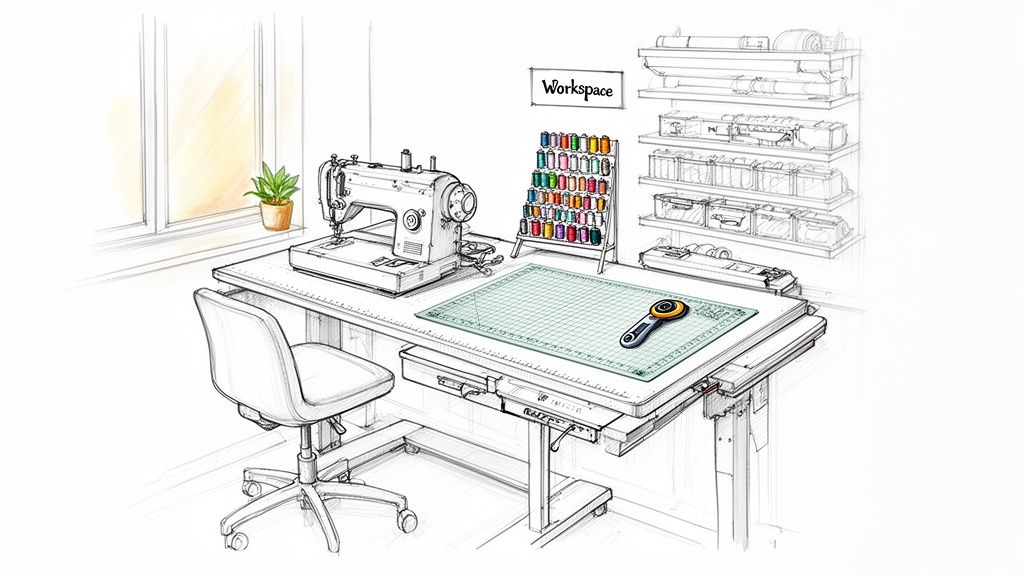
We'll start with keeping your machine in tip-top shape, then dive into creating a comfy, ergonomic space. Finally, we’ll round up the essential accessories that complete any quilter's toolkit.
Essential Machine Maintenance
A little bit of care goes a long way. Keeping your machine clean and maintained is the best way to protect your investment and ensure it runs smoothly for years. A clean machine is a happy machine, and a happy machine gives you beautiful, consistent stitches without any fuss.
Think of lint as the enemy of a perfect stitch. It builds up in the bobbin area and around the feed dogs, where it can mess with your tension or even jam up the works. Honestly, taking just 30 seconds to brush it out before you start a project is one of the easiest ways to sidestep future headaches.
Here are a few habits that will make a world of difference:
- Change Your Needle. Often. This is the big one. A fresh needle is sharp, straight, and your best defense against skipped stitches or damaged fabric. A good rule of thumb is to swap it out every 8-10 hours of sewing, or just start fresh with every large project.
- Keep the Bobbin Area Clean. Grab a little brush and gently sweep out any lint that's collected around the bobbin case. You'd be surprised how fast it gathers!
- Oil When Needed. Check your machine’s manual. Some of the newer machines are self-lubricating, but others need a single drop of oil in a few key spots to keep them running quietly and efficiently.
Ergonomics for Comfortable Quilting
Let's face it, quilting often means sitting for long stretches. Setting up your space ergonomically isn't just about comfort; it's about protecting your health. The whole point is to reduce strain on your back, neck, and shoulders so you can sew for longer without feeling wiped out.
Your table and chair are the foundation of good quilting posture. The ideal sewing table lets your machine sit flush with the surface. This creates a large, flat runway for your quilt to glide across, preventing the weight of the fabric from pulling and tugging against the needle as you sew.
An adjustable chair is also a game-changer. You want to be able to sit with your feet flat on the floor and your knees at a comfortable 90-degree angle. Your arms should form a similar 90-degree angle when your hands rest on the machine. This simple alignment makes a massive difference in fighting off fatigue during those marathon quilting sessions.
Must-Have Quilting Accessories
Okay, your machine is purring and your chair is comfy. Now for the fun part: the tools! Having the right accessories within arm's reach makes every single step, from cutting fabric to finishing the binding, so much more precise and enjoyable.
These are the absolute workhorses of my quilting space:
- Rotary Cutter & Self-Healing Mat: When it comes to cutting fabric, nothing beats the speed and accuracy of a rotary cutter. A big self-healing mat is a must—it protects your table and gives you a grid for straight, accurate cuts.
- Quilting Rulers: You'll want a collection of clear acrylic rulers for cutting strips, squares, and triangles with precision. If you're just starting, a versatile 6" x 24" ruler is the perfect first buy. You can always add specialty rulers later.
- Quality Thread: Please, don't skimp on thread! Using a high-quality, 100% cotton thread gives you stronger seams and, bonus, creates way less lint in your machine.
- Quilting Gloves: I was skeptical at first, but these are a game-changer. The little grips on the fingertips give you amazing control when guiding your quilt, especially for free-motion work. They seriously cut down on hand fatigue.
At B-Sew Inn, we know that putting together your creative space is a huge part of the quilting journey. We’ve hand-picked everything from ergonomic sewing furniture to the best threads and cutters, so you can find everything you need to build your own personal quilting sanctuary.
Grow Your Skills with B-Sew Inn
Choosing your perfect quilting machine is a huge moment, and it’s one we love celebrating with you! But that’s really just the first step in our journey together. Here at B-Sew Inn, we are committed to empowering crafters through our custom sewing machine designs. Our real mission is to help you grow as a quilter, and we’ve built an entire creative world to help you do just that.
Think of us as your creative partner. This isn’t just about making a sale; it’s about making sure you feel confident and inspired every time you sit down to sew. Whether you're mastering a new quilting technique or tackling your very first big project, our extensive resources are right here with you.
Your Creative Support System
We get it—the right tools are important, but so are inspiration and know-how. That's why we’ve put together a ton of resources to support you, no matter where you are in your quilting journey. It's not just about learning which button does what; it's about helping you become the quilter you’ve always wanted to be.
Our support network includes:
- Hands-On Online Classes: From beginner basics to advanced free-motion quilting, our expert-led classes bring hands-on guidance right into your sewing room.
- Inspiring Training Events: Come join us for special events where you can dive deep into new techniques, learn from the best in the industry, and connect with fellow quilters who share your passion.
It all boils down to this: when you join the B-Sew Inn family, you get a partner who is genuinely invested in your success. We bring the tools, the training, and the community to help you thrive.
The B-Creative Membership Advantage
For those ready to really dive in, our B-Creative membership unlocks a whole new level of support. This exclusive program gives you access to a massive library of tutorials, patterns, and project guides, putting a world of creativity right at your fingertips. More than that, it plugs you into a vibrant community of makers who love to share tips and cheer each other on.
We also offer practical help, like flexible financing options, to make getting that dream machine a little easier. This whole approach—combining top-notch equipment with real, hands-on education—is a huge part of why the crafting world is booming. In fact, the global sewing machine market is expected to hit nearly USD 7.89 billion by 2033, thanks to a growing community of hobbyists and small business owners just like you. You can learn more about the expanding market for sewing machines to see just how big this movement is. We're thrilled to be a part of it, empowering quilters one stitch at a time.
Common Questions About Quilting Sewing Machines
Diving into the world of quilting machines can feel a little daunting. So many questions pop up! Whether you've been quilting for decades or are just piecing your first nine-patch, getting clear answers makes all the difference.
Let's walk through some of the most common questions we hear every day in our stores. Think of this as our final chat before you make a decision, making sure you feel completely confident and excited about your new machine.
Can I Use a Regular Sewing Machine for Quilting?
You absolutely can! In fact, most quilts start on a standard sewing machine. They are perfectly fine for piecing—the part where you stitch all your fabric blocks together to create the quilt top.
But, you’ll feel the difference the moment you try to quilt the actual layers together. This is where dedicated quilting sewing machines really shine. Their biggest advantage is a much larger throat space, which gives you room to actually maneuver that bulky quilt sandwich. Plus, they usually come with a walking foot for perfect, even stitches and can handle higher speeds, making the whole process feel less like a wrestling match and more like the creative joy it should be.
What Is the Most Important Feature for a Beginner?
If you’re just starting out, the one feature that will save you the most headaches is a great feed system. Look for a machine that comes with a walking foot or has an integrated dual feed system built right in. This is the secret to preventing the quilt’s top layer from shifting and creating puckers—one of the biggest frustrations for new quilters.
Another game-changer is a needle up/down function. It’s a simple little button that tells the needle to always stop in the down position, buried in your fabric. It acts like a third hand, holding everything perfectly still so you can pivot at corners and get those crisp, professional-looking points in your patchwork.
Key Insight: Don't get caught up in a million fancy stitches at first. For beginners, confidence comes from control. Features like a solid feed system and a needle up/down function solve the most common challenges right away, letting you focus on the fun part.
How Often Should I Service My Quilting Machine?
We like to think of it as an annual check-up for your creative partner. Bringing your machine in for a professional service once a year is the best way to catch small issues before they become big problems.
Between professional visits, a little TLC at home goes a long way. Make it a habit to clean the lint out of the bobbin area after every big project. And a fresh needle after every 8-10 hours of sewing is non-negotiable! This simple routine is the best way to protect your investment and keep your machine humming along happily for years.
What Is Throat Space and Why Does It Matter?
Throat space—sometimes called the harp—is simply the open area to the right of your needle. It's the workspace that determines how big of a project you can comfortably handle. A standard sewing machine might only have 5-6 inches of space, which is plenty for sewing a shirt but gets cramped fast with a quilt.
For quilting anything larger than a lap blanket, a generous throat space is a must. It gives you the room to roll and guide your quilt without the fabric getting bunched up and fighting you every step of the way. That extra real estate is what turns quilting a bed-sized project from a physical struggle into a truly creative flow.
Your quilting journey is one of creativity and passion, and the right machine can make it all the more rewarding. Here at B-Sew Inn, we’re not just selling machines; we’re here to support your craft with expert advice, hands-on classes, and a community that gets it. Let us help you find the perfect partner for your next project.

