
The best sewing machine for your home is the one that feels like an extension of your own hands—the one that gets your creative gears turning for that next quilt, dress, or embroidery project. A truly great machine strikes a beautiful balance between being easy to learn and powerful enough to grow with you. It’s not just a tool; it’s a partner. Here at B-Sew Inn, our entire mission is to empower you by providing not just the perfect machine, but a complete "how-to" guide for bringing your creative visions to life through our custom sewing machine designs and robust support system.
Your Journey to Finding the Perfect Home Sewing Machine
Welcome! You've landed in the right place if you're looking for the perfect sewing machine. It doesn't matter if you're just starting out, excited to sew your very first pillowcase, or if you're a seasoned pro ready to tackle an intricate quilt. Your machine is your most important creative tool, and this guide is designed to walk you through everything that matters, from the different types of machines out there to the specific features that will make your heart sing.
Our goal is simple: to give you the confidence that comes from really understanding your options. But our relationship doesn't stop once you've found "the one."
More Than Just a Machine
We've learned that a new machine is just the beginning. To really thrive, you need a support system. That’s why we’ve built an entire ecosystem to help you grow. Our commitment is to empower you through tangible support and comprehensive how-to guides that showcase what's possible with our custom sewing machine designs.
- Online Classes and Training: Get expert, step-by-step guidance to master everything from basic stitches to complex embroidery designs you can replicate at home.
- Tons of Resources: Dive into our library of tutorials and project ideas, featuring tangible examples of quilts, garments, and crafts created on our machines.
- A Real Community: Connect with people who get just as excited about making beautiful things as you do.
With this kind of backup, you can start creating with total confidence right out of the box.
The Growing World of Home Sewing
It’s not just you—the passion for making things at home is absolutely booming. The household segment snatched up 42% of the USD 4.56 billion global market in 2024, and it's only getting bigger. We’ve seen a 35% jump in home crafting here in the U.S. since 2020, with 58 million adults now sewing regularly. It's a clear sign that people are craving unique, high-quality creations they can make themselves, and we are here for it.
At B-Sew Inn, we get to see this passion up close every single day. Our educators are constantly pushing the limits of what's possible, turning ambitious ideas into stunning realities on the very machines we carry. To get a feel for the fundamentals, check out our guide on sewing machine basics for beginners.
So, Which Type of Sewing Machine is Right for You?
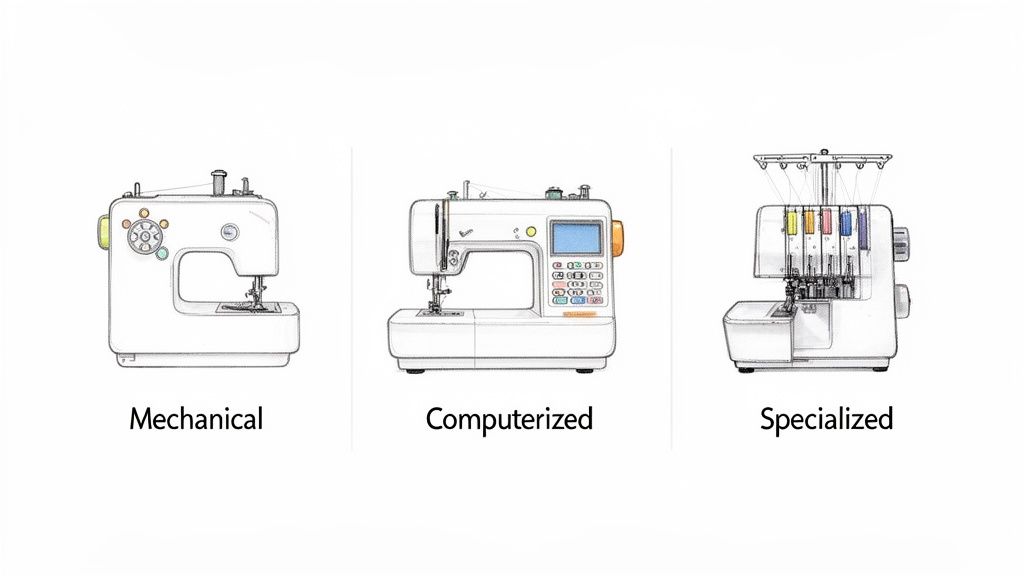
Before we get into all the bells and whistles, let's start with the big picture. Choosing the best sewing machine for your home really begins with one foundational question: which type of machine fits your needs? It can feel a little overwhelming at first, but it all boils down to three main categories: mechanical, computerized, and specialized machines.
Think of it like choosing between a manual or an automatic car. One gives you rugged, hands-on control, while the other handles the tricky stuff for you, letting you focus on the journey. Understanding this core difference is the first step toward finding a machine that feels like an extension of your own creativity.
The Reliable Mechanical Machine
Mechanical sewing machines are the classic workhorses of the sewing world. You know the ones—they operate with satisfying clicks of knobs and dials, giving you direct, tactile control over everything from stitch selection to tension. This hands-on approach is fantastic for beginners learning the fundamentals of how a stitch is actually formed.
These machines are legendary for their durability and straightforward design. With fewer electronic parts, there's less that can go wrong, and they can handle basic sewing and mending tasks for decades. If you prioritize reliability and really want to master the core mechanics of sewing, this is a perfect place to start.
The Smart Computerized Machine
Stepping up to a computerized machine is like giving your creative toolkit a major upgrade. These models feature digital screens, push-button controls, and a whole host of automated functions that deliver incredible precision and convenience. They take the guesswork out of complex tasks, so you can focus on bringing your vision to life.
Computerized machines come loaded with a huge library of built-in stitches, from flawless utility seams to intricate decorative patterns. Features that were once considered luxuries—like automatic needle threaders, one-step buttonholes, and programmable stitch sequences—are now pretty standard. This automation not only saves a ton of time but also produces consistently professional results, making them a favorite for sewists of all skill levels.
At B-Sew Inn, we see it all the time: a huge number of our customers eventually graduate to a computerized model. The ability to execute hundreds of stitch patterns perfectly, every single time, empowers them to tackle more ambitious projects with total confidence.
Want to see how they stack up side-by-side? We break it all down in our guide to the key differences between computerized and mechanical sewing machines.
Specialized Machines for Next-Level Crafting
Once you get the hang of things, you might discover a passion for a specific craft—quilting, embroidery, or creating professional-looking garments. This is where specialized machines come in. They aren't typically your first machine, but they're often the second or third addition to a serious crafter's studio, built to elevate projects from "homemade" to "hand-crafted."
Here are a few of the key types you’ll find at B-Sew Inn:
- Sergers (or Overlockers): Ever wonder how store-bought clothes have such clean, durable seams? That's the magic of a serger. Using multiple threads, a serger trims the seam allowance and wraps the raw edge in one super-fast step, preventing fraying and adding stretch. It's the secret to a professional finish.
- Embroidery Machines: If you dream of adding custom logos, monograms, or intricate art to fabric, an embroidery machine is a must-have. These computerized wizards stitch pre-programmed patterns with stunning precision, turning plain items into personalized masterpieces.
- Long-Arm Quilting Machines: For the avid quilter, a long-arm is the ultimate dream machine. Its massive workspace and specialized frame make quilting large projects like bedspreads not just manageable, but truly joyful. It allows for beautiful, free-flowing stitching across the entire quilt top without having to wrestle the fabric through a small machine.
Each of these machines is built to do one thing exceptionally well. Adding one to your sewing room unlocks a whole new level of quality and creative possibility.
Comparing Essential Sewing Machine Features
Once you have a general idea of the type of machine you want, the real fun begins: digging into the features that will actually define what you can create. I like to think of a sewing machine's features like a chef's spice rack. A beginner can make a fantastic meal with just salt and pepper, but an expert chef needs that full array of spices to bring complex flavors to life.
The right features will perfectly season your creative projects. This is your roadmap to understanding what really matters. We’ll break down the core specs that separate a basic, get-the-job-done machine from one that can handle any wild idea you throw at it.
Stitch Options: From Utility to Artistry
The number of built-in stitches can be one of the most eye-catching numbers on a machine's box, but let me be clear: more is not always better. The key is having the right stitches for what you want to do. If you're just starting out and focusing on garments, a solid set of 10-20 utility stitches is more than enough to get you going.
These are the essentials you'll use constantly:
- Straight Stitch: The foundation of all sewing. You'll use this for seams and topstitching.
- Zigzag Stitch: Absolutely perfect for finishing raw edges to stop them from fraying, and it's a go-to for sewing knit and stretch fabrics.
- Blind Hem Stitch: Your secret weapon for creating nearly invisible hems on skirts, trousers, and curtains.
- One-Step Buttonhole: This is a lifesaver. It’s an automated feature that creates perfect, consistent buttonholes every single time, without the guesswork.
Now, if you're a serious quilter or an aspiring embroidery artist, that's a different story. A library of hundreds of decorative stitches opens up a whole new world of creative expression. Think heirloom sewing, unique free-motion quilting designs, and one-of-a-kind embellishments. For a deeper dive, our guide on how to choose a sewing machine is a great resource for matching stitches to your specific goals.
Motor Strength and Speed Control
The motor is the heart and soul of your sewing machine. It dictates both its power and its endurance. If you have any plans to work with heavy materials, a strong, durable motor is non-negotiable. It's like a car engine—you need more horsepower to climb a steep hill. A powerful motor will punch the needle through thick layers of denim, canvas, or a bulky quilt sandwich without skipping a beat.
Just as important as raw power is control. A speed control slider is a game-changing feature, especially when you're doing intricate work. It lets you set a maximum speed, so you can press the foot pedal all the way down without the machine racing away from you. This gives you that slow, steady pace you need for navigating tight curves or executing perfectly precise topstitching.
The world of home sewing is really being transformed by computerized machines, with this market segment projected to grow at a blistering 6.0% CAGR through 2035. For example, a Baby Lock computerized machine here at B-Sew Inn can hit 850 stitches per minute with over 200 built-in designs. This lets an embroidery hobbyist create professional-looking motifs in under 30 minutes, a task that would take hours by hand. We're also seeing a global trend toward sustainable tech, like energy-efficient motors that can cut power consumption by up to 25%, which really appeals to eco-conscious makers. You can read more about these sewing machine market trends and how they’re shaping the future of crafting.
Feed Dogs and Presser Feet: The Unsung Heroes
While the needle and thread get all the glory, the real workhorses are the feed dogs and presser feet, working quietly behind the scenes. Feed dogs are those little metal teeth under the needle that grip your fabric and pull it through the machine. A quality feed system is what ensures your fabric moves evenly, preventing the puckering and stretched-out seams that drive so many sewists crazy.
A superior feed dog system, often with seven points of contact, is the secret to flawlessly straight stitches. It acts like a tiny conveyor belt, guiding every layer of fabric in perfect sync.
Presser feet are the interchangeable attachments that hold the fabric down against those feed dogs. Your machine will come with a standard all-purpose foot, but specialized feet are what truly unlock professional-level results and make tricky techniques a breeze.
Common Presser Feet and What They Do:
- Zipper Foot: Lets you stitch incredibly close to zipper teeth for a clean, tidy installation.
- Buttonhole Foot: Works with your machine to create perfectly sized buttonholes every time.
- Walking Foot: An absolute must-have for quilters. This foot has its own set of feed dogs to move the top layer of fabric at the same rate as the bottom, preventing layers from shifting.
- Free-Motion Quilting Foot: This foot hovers just over the fabric, allowing you to move it in any direction to "draw" with thread.
To help you connect these features to your specific craft, here's a quick checklist breaking down what's most important for different types of sewing.
Feature Checklist for Your Sewing Needs
| Feature | Beginner (Garments) | Intermediate (Quilting) | Advanced (Embroidery) |
|---|---|---|---|
| Basic Utility Stitches | Must-Have | Must-Have | Must-Have |
| One-Step Buttonhole | Must-Have | Nice-to-Have | Nice-to-Have |
| Decorative Stitches | Nice-to-Have | Nice-to-Have | Must-Have |
| Speed Control | Nice-to-Have | Must-Have | Must-Have |
| Strong Motor | Nice-to-Have | Must-Have | Must-Have |
| Walking Foot | Nice-to-Have | Must-Have | Nice-to-Have |
| Embroidery Unit Capable | Nice-to-Have | Nice-to-Have | Must-Have |
| Large Throat Space | Nice-to-Have | Must-Have | Nice-to-Have |
Remember, the goal isn't to get a machine with every possible feature, but to find one with the right features for you.
At B-Sew Inn, we truly believe that understanding what these components do is the first step toward creative freedom. Our online classes and training sessions are designed as how-to guides to help you master every one of them, turning your new machine from a tool into a trusted creative partner.
Matching Your Machine to Your Creative Passion
The best sewing machine out there isn't the one with a million bells and whistles; it's the one that feels like a natural partner for your specific creative projects. This article is your comprehensive "how-to" guide for translating a machine’s features into tangible designs you can actually create. It’s about picturing that machine in your sewing space, humming along as you bring your ideas to life.
Whether you're dreaming of a closet full of handmade clothes, piecing together a family heirloom, or adding custom embroidery to everything you own, the right machine will feel less like a tool and more like an extension of your own hands. Let's connect the dots between what you love to do and the machine that will help you do it.
This decision tree helps visualize how your main creative interest points you toward the most important features on a machine.
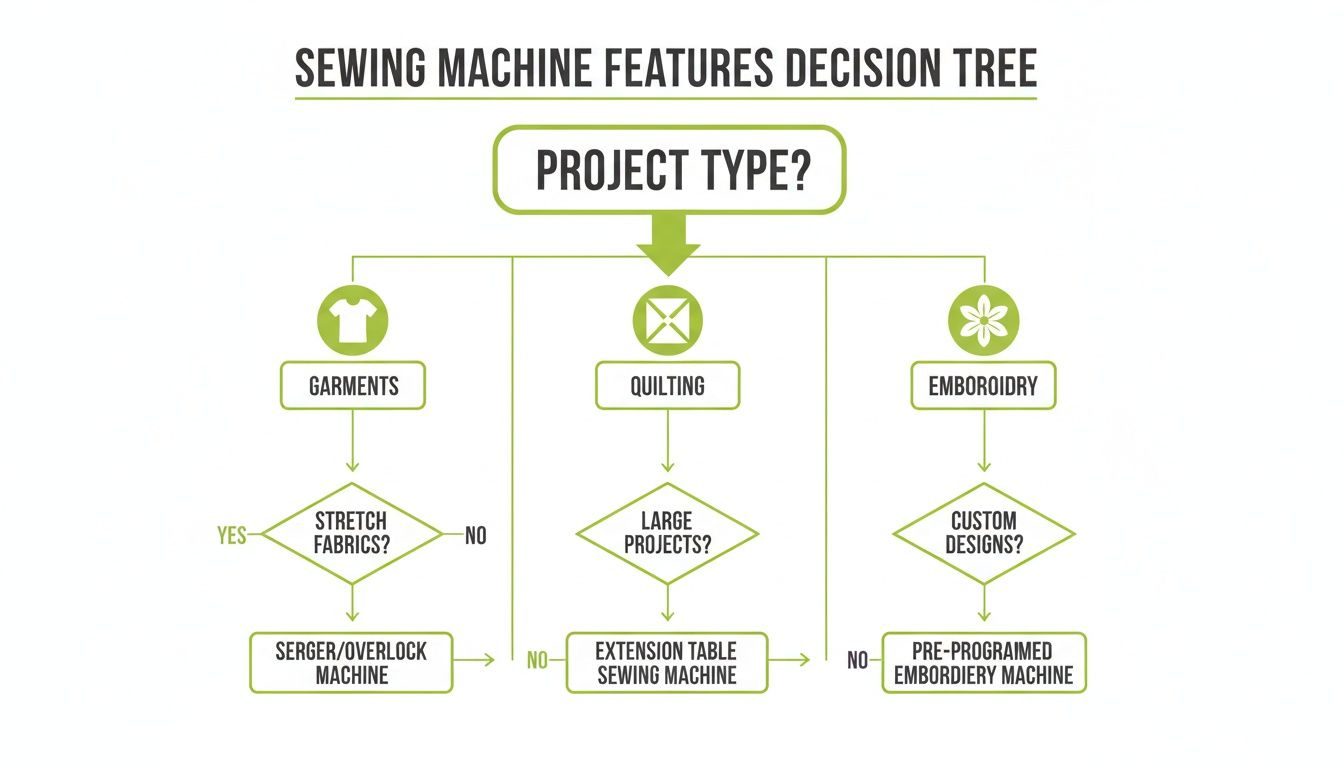
As you can see, what you plan to make—garments, quilts, or embroidery—is the best starting point for figuring out what capabilities you really need.
For the Garment Maker and Fashion Designer
If your heart is set on creating your own wardrobe, you need a machine that’s a master of precision. You’ll be bouncing between all sorts of fabrics, from slippery silks that need a gentle touch to heavy denim that demands some serious power. The custom designs possible with the right machine allow you to replicate high-end fashion details right at home.
Your go-to machine should have:
- A Flawless Straight Stitch: This is the absolute foundation of making clothes. It has to be perfect.
- A One-Step Buttonholer: This feature is a game-changer. It automates making buttonholes so they look consistent and professional every single time, saving you a world of frustration.
- Fabric Versatility: Look for a machine with adjustable presser foot pressure and a strong motor. This combo lets you tackle everything from chiffon to canvas without skipped stitches or chewed-up fabric.
A machine with these core strengths will give your homemade garments that polished, ready-to-wear finish. At B-Sew Inn, we love helping aspiring designers find machines that make these tricky tasks feel completely effortless.
For the Passionate Quilter
Quilting is a unique art that puts some very specific demands on a sewing machine. You’re not just stitching two little pieces of fabric together; you're wrestling a bulky "quilt sandwich" and often using your needle to literally draw with thread. Our resources showcase tangible examples of stunning quilts you can replicate.
For quilters, the space to the right of the needle—what we call the "throat" or "harp" space—is everything. A generous throat space of 8 inches or more gives you room to maneuver big quilts without constantly fighting the fabric.
Key features for any quilter's machine include:
- A Walking Foot: This is non-negotiable for quilting. It has its own set of feed dogs that grip the top layer of your quilt, moving it in sync with the bottom layer to stop any puckering or shifting.
- Robust Free-Motion Capabilities: This means you can drop the feed dogs out of the way, letting you move the fabric freely in any direction to "paint" beautiful designs with your thread.
- A Sturdy Extension Table: This creates a large, flat surface that supports the weight of your quilt. It prevents drag on the needle and helps you get beautifully even stitches.
Our online classes and training sessions are full of quilters who can tell you firsthand how these features completely transformed their craft.
For the Embroidery Artist
Embroidery is where technology and artistry meet in the most beautiful way. Modern embroidery machines use incredibly smart software to stitch out complex, multi-colored designs with a precision that’s just breathtaking. B-Sew Inn is committed to empowering crafters by showcasing custom sewing machine designs perfect for personalizing gifts, branding items, or adding unique artistic flair.
When you're looking for a machine for embroidery, you’ll want to focus on:
- A Large Embroidery Field: The hoop size dictates the biggest design you can stitch at one time. Bigger hoops mean less re-hooping and way more creative freedom.
- Intuitive Software: Look for a machine with on-screen editing, easy ways to get designs onto the machine (like a USB port or Wi-Fi), and a user-friendly interface that doesn't feel like you need a computer science degree to use.
- Multi-Needle Efficiency: If you're getting serious about embroidery, a multi-needle machine is the dream. It can stitch designs with several colors without you having to stop and manually change the thread for every single color switch.
B-Sew Inn's huge library of resources can help you master this technology, turning your digital ideas into gorgeous, tangible art.
How B-Sew Inn Supports Your Creative Growth
When you bring home a new sewing machine, that’s not the end of the story—it's the beginning of a whole new chapter. Choosing the right machine is a huge first step, but what really helps you fall in love with sewing is the support you get after the purchase. At B-Sew Inn, we are committed to empowering crafters long after they’ve unboxed their new creative partner.
We've built a complete ecosystem designed to grow your skills and boost your confidence, whether you’re making your very first stitch or you're an experienced quilter. Our goal is to give every creator the guidance and inspiration they need to bring their custom sewing machine designs to life.
Master Your Machine with Expert Training
We don’t just hand you a box and wish you luck. Our how-to guides and training are designed to teach you how to get the absolute most out of your machine. That’s why we offer a huge range of online classes and training sessions that showcase tangible examples of what you can create. You can start with the basics, like threading your machine, or jump into advanced techniques for quilting and embroidery.
Our expert-led tutorials are made to be practical, so you can follow along at home. Imagine creating a perfect, professional-looking serged seam on a new dress or executing a flawless edge-to-edge quilting design. This kind of hands-on learning takes away the intimidation that can come with new technology.
Join a Community That Invests in You
Sewing can feel like a solo hobby, but it truly blossoms within a community. We’ve worked hard to create a space where you can connect with other crafters, show off what you’re making, and find your next spark of inspiration. Our exclusive B-Creative memberships are your ticket to a world of extra resources.
We’ve built a support network that feels like having an expert friend on call. It’s about creating a space where questions are encouraged, successes are celebrated, and every project feels achievable.
With a membership, you unlock a treasure trove of tutorials, exclusive events with industry experts, and a community of people who genuinely get it. It’s about more than just sewing; it's about growing together.
Practical Support for Every Step
We know that practical stuff matters just as much as creative inspiration. To help make your dream machine a reality, we offer flexible financing options. Plus, our huge inventory of accessories—from specialty presser feet to high-quality thread and stabilizers—means you’ll always have the right tools for the job.
Ever since Isaac Singer's first mass-produced machine in 1851 cut garment production time by up to 90%, the industry has been on a quest for more efficiency and precision. Today, that legacy lives on. It's no surprise that 62% of new home sewists now choose computerized machines, which can reduce errors by 40% compared to older manual models. For our customers, this means access to powerful tools like sergers that blaze through 1,500 stitches per minute—perfect for professional-level results. You can read more about these trends in this sewing machine market report.
At the end of the day, choosing B-Sew Inn means you’re not just a customer; you’re a partner. We’re here to give you the tools, knowledge, and encouragement you need to reach your creative potential.
Answering Your Top Questions About Home Sewing Machines
Diving into the world of sewing machines can feel a little overwhelming, and it’s totally normal to have a few questions as you get close to making a choice. Think of us as your friendly guide at the quilt shop—we've heard all these questions before from makers just like you.
Our goal is to clear up any lingering doubts so you can feel excited and confident about the machine you bring home. Let's get these common questions answered so you can get to the fun part: creating!
How Much Should I Spend on My First Sewing Machine?
This is the big one, isn't it? The honest answer is that it really depends on your creative goals and how serious you think you'll get. For a solid, entry-level machine from a brand you can trust—like the Baby Lock machines we stand by here at B-Sew Inn—a realistic budget is somewhere in the $200 to $500 range. This price point gets you out of the "toy" category and into a reliable machine that won't fight you every step of the way.
It can be tempting to grab one of those sub-$150 machines you see at big box stores, but I've seen the frustration they cause. They're often built with flimsy plastic parts and weak motors, leading to endless headaches with skipped stitches and tension problems. Investing just a bit more upfront means you get a workhorse that can grow with you for years.
Now, if you're already dreaming of quilting or embroidery, it’s smart to aim a little higher. For these crafts, a more practical starting point is between $500 and $1,500. This opens the door to machines with features you'll desperately want, like more throat space for quilts or built-in embroidery functions.
What's the Single Most Important Feature for a Beginner?
Hands down, the most important feature for anyone new to sewing is ease of use. When you're just starting, you want to focus on learning how to handle fabric and understand patterns, not wrestling with a complicated machine. A machine that feels intuitive and helpful will build your confidence like nothing else.
Here are the game-changing features I always point out to beginners:
- A Top-Loading (Drop-In) Bobbin: These are a lifesaver. You just pop the bobbin in from the top, and the clear cover lets you see how much thread you have left. No more running out of thread in the middle of a perfect seam!
- An Automatic Needle Threader: This isn't a luxury; it's a must-have. This little hook mechanism pulls the thread through the eye of the needle for you, saving you from eye strain and one of the most frustrating parts of setting up.
- A Speed Control Slider: This is like having training wheels for your sewing. It lets you set a maximum speed so you can press the foot pedal all the way down without the machine taking off like a rocket. It gives you the control to sew at a slow, steady pace until you feel ready to speed up.
Should I Get a Computerized or Mechanical Machine?
This really comes down to what kind of sewist you see yourself becoming. A mechanical machine is the classic, no-fuss option. You turn physical knobs to select stitches and adjust settings. They're known for being tough and are great for basic mending and straightforward projects. They really teach you the nuts and bolts of how a sewing machine works.
But for most people today, a computerized machine is the better long-term partner. With the push of a button, you get a huge menu of perfect, consistent stitches. They automate things like buttonholes, making them flawless every time. This precision is a huge advantage for quilting, garment sewing, and any kind of decorative work.
If you have any ambition to explore different sewing projects, from bags to quilts, a computerized machine gives you the creative freedom you'll eventually crave. The automation isn't cheating; it's a tool that lets you focus on your design and creativity, not just the mechanics.
Simply put: if you just need a machine for hemming pants twice a year, mechanical is fine. If you're starting a new hobby you want to grow with, go computerized. You won't regret it.
How Often Does My Sewing Machine Need a Tune-Up?
Just like your car, your sewing machine runs best with a little regular TLC. The good news is that most of it is simple stuff you can do right at home.
Here's the routine I recommend to everyone:
- Change Your Needle: This is the cheapest insurance you can buy for your sewing projects. A fresh needle should go in after every 8 to 10 hours of sewing time. A dull needle is the #1 culprit behind skipped stitches, pulled threads, and fabric damage.
- De-Lint Regularly: After each project, take a little brush and clean the lint out from around the bobbin case and feed dogs. Lint is like a sponge for oil and can gum up the works surprisingly fast.
Beyond that, we highly recommend bringing it in for a professional servicing every 12 to 24 months, depending on how much you sew. Think of it as a spa day for your machine. Our certified techs at B-Sew Inn will give it a deep clean, oil all the internal parts that you can't reach, check the timing, and make sure everything is calibrated perfectly. This tune-up is what ensures your machine will be your happy, creative partner for years to come.
At B-Sew Inn, we're here for your entire creative journey. From picking out the perfect machine to learning how to use it with our classes and resources, our whole mission is to help you create with confidence. Explore our machines, accessories, and classes to see how we can support your passion.

