

Long arm quilting prices for hired service commonly sit around $0.02 to $0.04 per square inch for edge-to-edge work and $0.08 to $0.15 per square inch for custom work, while rented machine time and purchased equipment are budgeted by the hour or by acquisition cost instead. Minimum charges, batting, thread, binding, and other extras can change that starting figure into a very different final total.
The popular advice says to shop for the lowest cents-per-square-inch rate and move on. That advice is incomplete, and it leads quilters to compare numbers that don't describe the same job. A repeat design, a dense pantograph, and block-by-block custom quilting involve different planning, stitch counts, and machine time, so the headline rate should never be read alone.
A smarter approach treats every quote as a total-cost decision. Studio service, customer-operated rental, and ownership each move cost to a different place, whether that's labor per project, billed hours plus supplies, or a machine investment spread across years of use.
Table of Contents
- Why Long Arm Quilting Prices Are Hard to Compare
- Choose Between Service Rental and Ownership
- Calculate Long Arm Quilting Service Prices
- See What Changes the Quoted Price
- Compare Your Three Long Arm Options
- Budget for Long Arm Machine Rental Time
- Make Machine Ownership Financially Work
- Build a Quote Comparison Worksheet
Why Long Arm Quilting Prices Are Hard to Compare
Consider two attractive quotes for the same finished top. One studio advertises a lower square-inch rate but charges separately for batting, thread, trimming, and return shipping. The other studio lists a slightly higher rate, includes some materials, and spells out preparation in the base price. The cheaper headline can easily produce the higher invoice.
That pattern repeats because long arm quilting prices are built from layers, not one number. Size sets the area. Design category sets the labor level. Minimums protect setup time on small pieces, and finishing choices add separate lines that many beginners don't budget at first.
Where the Mismatch Starts
- Design scope differs: A repeated edge-to-edge motif isn't priced like individually planned blocks, borders, and sashing.
- Materials differ: One quote includes batting or standard thread, while another treats both as add-ons.
- Finishing differs: Trimming, binding, backing preparation, and shipping may sit inside or outside the quilting charge.
- Small projects differ: Loading and alignment take time even when the quilt area is modest, so a minimum can override simple area math.
Rental and purchase decisions add another complication. A studio quote prices a finished result, rental prices access to a machine for a block of time, and ownership prices equipment, accessories, learning time, service, and eventual resale or trade-in value. Those aren't interchangeable budgets, even when the finished quilt looks similar.
A quilter who finishes one bed quilt a year faces a different math problem than a quilter with a stack of tops waiting every month. Desired control matters too, because some makers want a professional to plan the stitching, while others want hands on the machine. Readers who need the basic process defined first can start with an explanation of what longarm quilting involves before comparing money.
The lowest advertised rate isn't evidence of the lowest total cost. Scope decides value.
The practical recommendation is blunt. Don't ask only what the rate is. Ask what the rate includes, what it excludes, and which cost path fits the number of quilts likely to be finished.
Choose Between Service Rental and Ownership
Every pricing conversation becomes clearer after sorting the decision into three paths. Outsourced quilting charges for a project and for another maker's labor. Rental charges for machine access while the quilter supplies the labor. Ownership charges upfront or through financing, then spreads that commitment across future projects. Comparing quotes before choosing a path wastes time.
Path One Hiring a Studio
Hiring a studio suits a one-off heirloom, a deadline gift, or a large quilt that would be physically awkward at home. The quilter pays for expertise, machine capacity, design execution, and often a more predictable finish. The tradeoff is less direct control and a per-project bill that repeats with every top.
Path Two Renting Machine Time
Rental suits a quilter who wants control without buying a frame and machine. It also creates a low-commitment way to learn loading, tension checks, pattern placement, and pacing on real equipment. The risk is underestimating setup time, because the clock doesn't care whether stitching has started.
Path Three Buying Equipment
Ownership suits regular use, independent scheduling, and a strong interest in the quilting step itself. It rarely makes sense for occasional small projects, since the machine, frame, thread, notions, cabinets, cutting tables, service, and learning curve all demand attention. Frequency is the deciding test, not enthusiasm on purchase day.
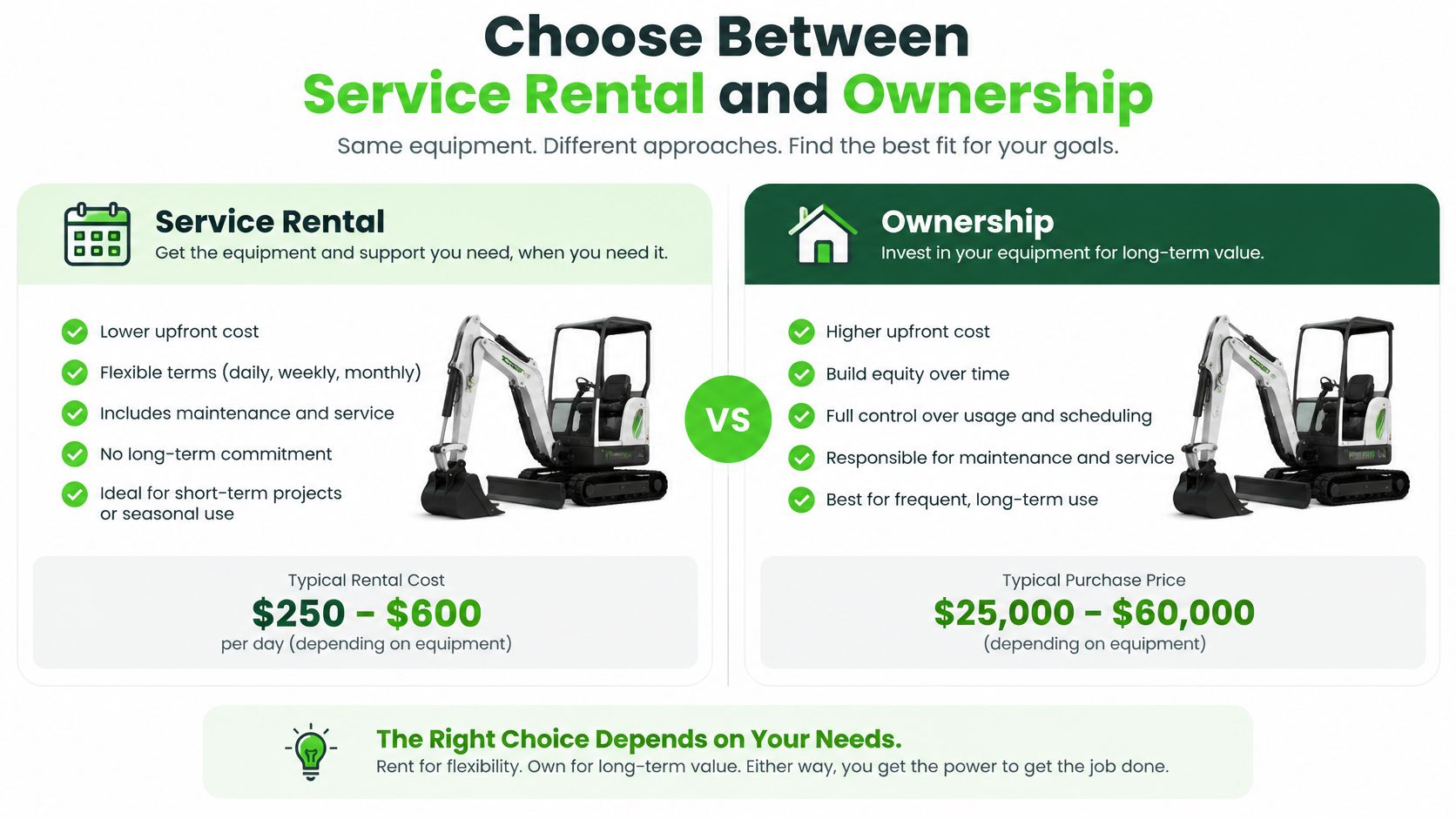
B-Sew Inn fits the ownership and learning side of that decision as an authorized dealer with stores in Tulsa and Oklahoma City in Oklahoma, Springfield in Missouri, Humble in Texas, and Fayetteville in Arkansas. The stores sell and service machines from Baby Lock, Bernina, Bernette, Brother, and Janome, and they also offer in-person classes, service, repair, and trade-ins. Beginners comparing equipment categories can review guidance on long arm quilting machines for beginners before testing machines in person.
The clear rule is simple. Occasional quilts usually point toward service, regular experimentation points toward rental, and sustained volume plus a desire for control points toward a serious ownership conversation.
Calculate Long Arm Quilting Service Prices
The advertised rate is a multiplier, not a price. Service math starts with area: length × width = square inches, then square inches × quilting rate = base quilting charge. Long-arm services are commonly priced that way rather than by the hour or by size alone, as shown in published longarm pricing examples using square-inch rates. Every add-on a studio bills for sits on top of that product.
Work the Queen Example First
A queen top measuring roughly 90 × 108 inches equals 9,720 square inches, producing approximately $194 to $389 for edge-to-edge work and $778 to $1,458 for custom work before extras, based on queen-size calculations at those published rate ranges. Treat this as one published pricing example rather than a guaranteed local quote; batting, thread, binding, shipping, and preparation still belong in a complete estimate.
A smaller throw shows why design category matters more than many quilters expect. A published schedule separating dense and custom tiers prices large- and medium-scale dense designs at $0.02 per square inch, small-scale dense designs at $0.03, and custom quilting at $0.04 to $0.10. On a 60 × 70-inch, 4,200-square-inch throw, that math produces $84, $126, and roughly $168 to $420 before materials or delivery. Note that this schedule prices dense and custom work lower than the $0.08 to $0.15 custom range cited earlier, so always confirm which design category a studio's rate applies to before comparing quotes. Same quilt, same dimensions, very different labor.
Separate the Three Design Categories
Edge-to-edge quilting repeats one design across the whole surface. It's the budget-friendly choice for everyday quilts, busy fabrics, and projects where texture matters more than block-specific detail. A dense pantograph also repeats, but tighter spacing uses more thread and machine time, so the rate often rises. Custom quilting plans different treatment for blocks, borders, and negative space, and that planning is exactly what the higher rate buys.
Another published schedule charges $0.023 per square inch for all patterns, which makes a 60-by-80-inch, 4,800-square-inch quilt equal $110.40, as detailed in a flat-rate square-inch pricing schedule. A single-rate menu is easier to estimate. Quilters still need to confirm which materials are included and whether a loading margin changes the billed area.
| Quilt top | Approximate square inches | Edge-to-edge base at $0.02-$0.04 | Custom base at $0.08-$0.15 |
|---|---|---|---|
| Throw, 60 × 70 inches | 4,200 | $84 to $168 | $336 to $630 |
| Large throw, 60 × 80 inches | 4,800 | $96 to $192 | $384 to $720 |
| Queen, 90 × 108 inches | 9,720 | $194 to $389 | $778 to $1,458 |
Those rows are arithmetic, so treat them as a defensible starting range before asking a studio to price the actual top, design, and finishing scope.
Practical rule: Measure the finished top, not the pattern envelope. A small measurement error grows quickly across thousands of square inches.
The recommendation is to calculate two scenarios for every important quilt. Price the repeat design first, then price the design treatment wanted. That gap tells a quilter whether custom detail is worth paying for on that specific project. Then add the extras back in, since the square-inch product is only the starting point.
See What Changes the Quoted Price
Density can move a quote even when dimensions stay fixed. Simple meandering at $0.02 per square inch, denser meandering at $0.03, and custom work at $0.05 to $0.08 make a 60-by-80-inch quilt equal $96, $144, and $240 to $384 before added fees, based on a schedule comparing meandering density with custom treatments. Stitch count is labor, and labor is the bill.
Machine and Setup Factors
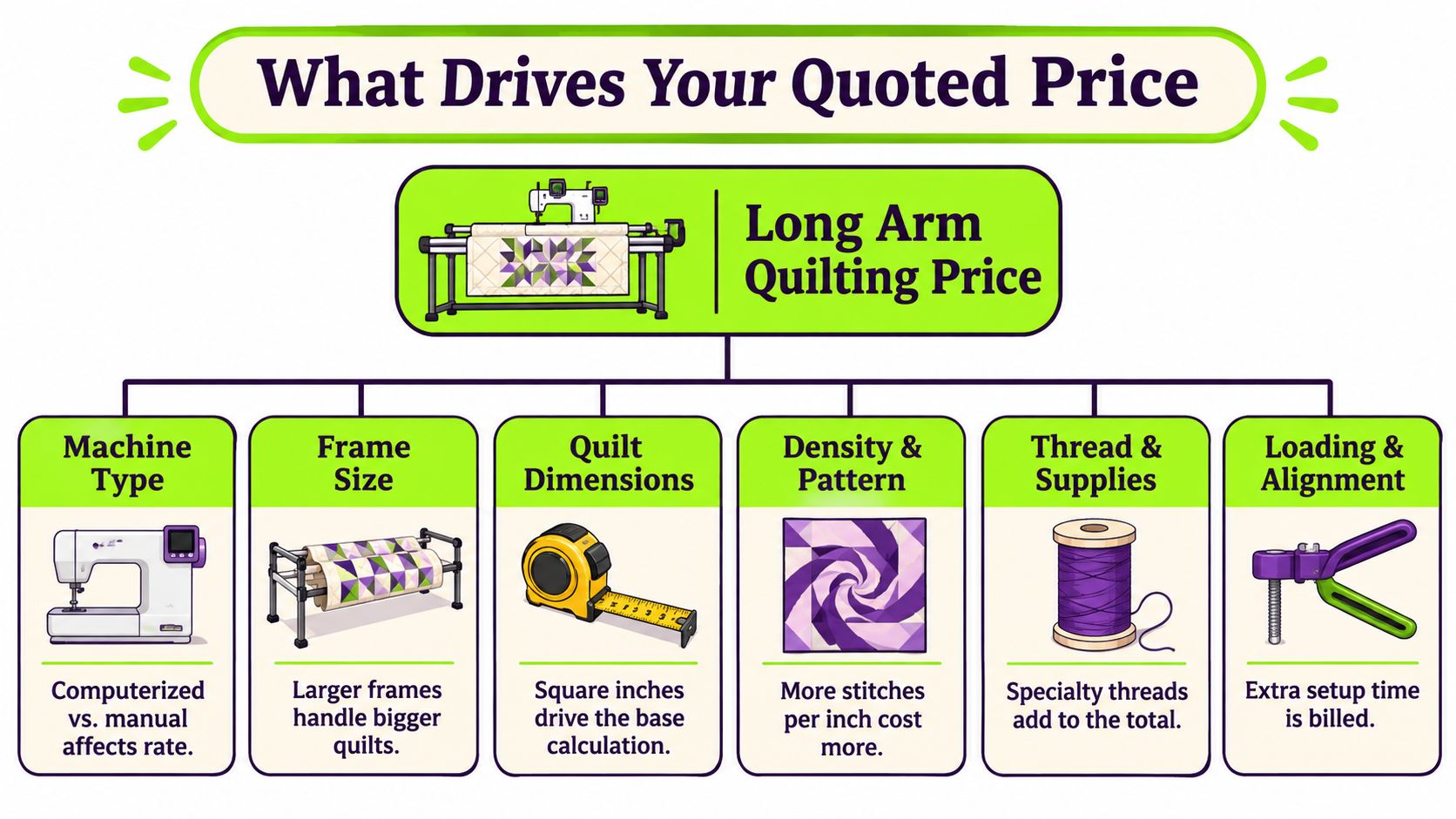
Machine type matters because computerized repeat placement and hands-guided free-motion work don't consume time in the same way. Frame size matters because a quilt must fit the available throat and frame capacity without awkward repositioning. Loading, alignment, basting, tension testing, and unloading also take real time before decorative stitching begins.
Small quilts expose that setup cost most clearly. Minimums around $45 to $55 exist because loading, aligning, selecting a pantograph, testing tension, and unloading are largely independent of quilt area, as explained in service order guidance on minimum charges and setup work. A wall hanging can therefore cost more than its modest area suggests.
Material and Finishing Factors
- Thread use: Open designs may use fewer bobbins, while dense designs consume substantially more thread.
- Batting: Some quotes include standard batting, while others price the selected batting separately.
- Binding and trimming: Finishing the edge is separate work from quilting the layers together.
- Preparation: Backing seams, pressing, loose threads, or wavy borders can require correction before loading.
- Shipping: Mail-in service adds packing, transit, insurance decisions, and return delivery to the project total.
Thread charges illustrate the point. One service reports $4 per bobbin, with open designs using one or two bobbins and dense designs using seven or eight, while batting is commonly priced separately by yard in published material and density surcharge details. Those small lines can widen the gap between two quotes that looked close at first glance.
Before requesting a firm estimate, a quilter should prepare finished dimensions, backing and batting status, design intent, number of patterns, deadline, binding needs, and preparation questions. Budget trackers and planning worksheets help organize those inputs, and readers comparing household services across categories may also find value in reviewing the best price comparison tools for Canada as an example of structured total-cost thinking. The principle transfers directly: compare like with like, line by line.
Don't send a top and hope the invoice behaves. A complete quote request prevents most surprises.
Compare Your Three Long Arm Options
No route wins for every quilter. Service minimizes equipment commitment, rental reduces ownership risk, and buying gives scheduling control after a major investment. The right comparison asks how cash is paid, who does the work, how much skill is required, and where surprise costs hide.
| Option | Primary cost shape | Best fit | Watch for | Key question |
|---|---|---|---|---|
| Hire a studio | Per project, based on area and design | Occasional quilts, heirlooms, deadlines | Minimums, materials, binding, shipping | Does the quote describe the exact design and finishing scope? |
| Rent machine time | Hourly access plus supplies | Hands-on learning, several tops, trial before buying | Minimum sessions, setup time, excluded batting and backing | How many billable hours will loading and stitching realistically take? |
| Buy a machine | Upfront or financed equipment cost plus upkeep | Regular quilting and independent control | Accessories, service, space, learning time, financing total | Will use stay frequent enough to justify the commitment? |
Match the Option to the Project
A one-off heirloom usually belongs with a studio. The design may need block-specific planning, careful thread choices, and experienced handling, and repeating that project cost isn't likely. Paying for expertise once is rational.
A hobbyist finishing several quilts across a year has a harder choice. Rental can keep cash flexible while building skill, but repeated sessions demand honest tracking of hours and materials. Studio service may still win for large or complicated pieces, especially when time is limited.
A quilter who wants regular, independent control should evaluate ownership more seriously. That doesn't mean buying immediately. It means testing machines, checking frame fit for typical quilt sizes, learning service requirements, and estimating realistic monthly use.
Smaller pieces deserve a separate decision. Baby quilts, runners, and wall hangings can sometimes be finished on a domestic machine, and quilters weighing that route can review techniques for quilting with a regular sewing machine. Sending every small project out can trigger minimums that make home practice financially attractive.
Service buys an outcome. Rental buys access. Ownership buys availability. Those are different purchases.
The strongest decision comes from matching the cost shape to behavior. A quilter should count expected projects, preferred level of control, available space, and tolerance for learning curves before declaring any option cheapest.
Budget for Long Arm Machine Rental Time
Rental pricing looks simple because the hourly number is easy to read. The budget still fails when quilters count only stitching time. Loading the layers, aligning the top, choosing a pattern, testing tension, advancing the quilt, and unloading all consume part of the session.
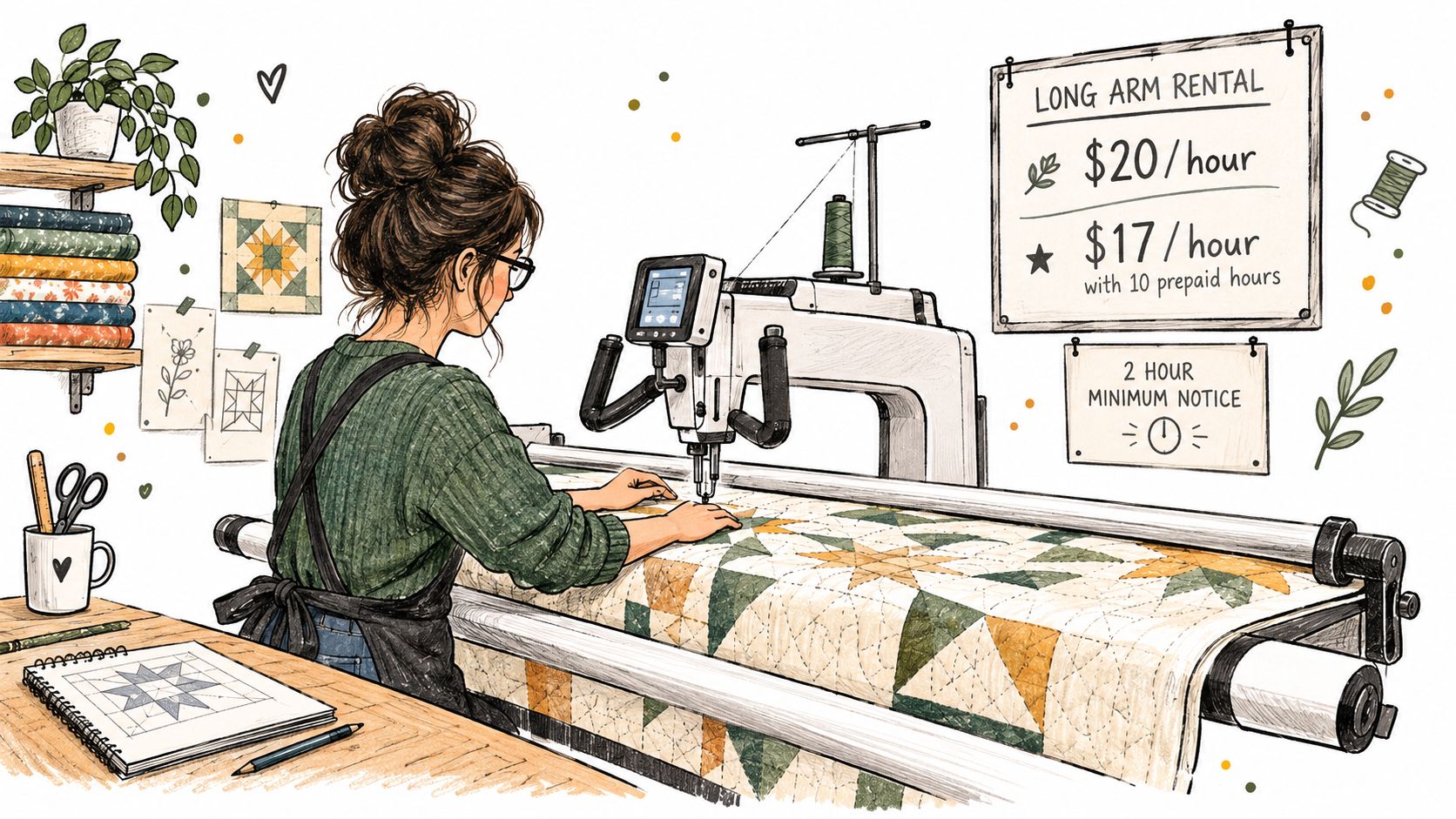
One published customer-operated program charges $20 per hour, offers ten prepaid hours at $17 per hour, requires a two-hour minimum, and bills after that minimum in 15-minute increments, according to a rental schedule with hourly and prepaid terms. That means a minimum session costs at least $40, while ten prepaid hours cost $170 before excluded materials, using the rates in that same rental example. The example shouldn't be treated as a universal market rate, but it shows exactly how rental math behaves.
Build the Rental Materials List
That program includes solid-color Signature thread, while batting and backing are excluded. A renter therefore needs prices or supplies ready for every excluded item before booking. Backing size, batting type, needles if required by the program, and any specialty thread choice belong on the same budget sheet as hourly time.
Usable time deserves equal attention. A first session often includes orientation, practice stitches, and slower loading while the renter learns the frame. A dense design also advances more slowly than an open repeat, so pattern choice affects hours just as it affects studio rates.
- Estimate conservatively: Add setup and unloading to expected stitching time.
- Confirm machine fit: Check whether the frame and throat suit the quilt size and desired design scale.
- Price exclusions: List batting, backing, specialty thread, and travel or shipping separately.
- Ask about increments: A small overrun may be billed in the next time block after the minimum.
- Track actual hours: Real session data makes the next service-versus-rental comparison far more accurate.
Rental is a smart middle path when it's treated as paid learning plus production. It's a poor bargain when a quilter books the minimum, brings an oversized or poorly prepared top, and spends the session solving preventable problems.
Make Machine Ownership Financially Work
Buying a longarm shouldn't be justified with a single avoided studio bill. Ownership works when realistic use, available space, desired control, and long-term service support line up across the period the machine will be used. A machine that sits idle doesn't become economical because it was purchased with good intentions.
Start With Fit, Not Features Alone
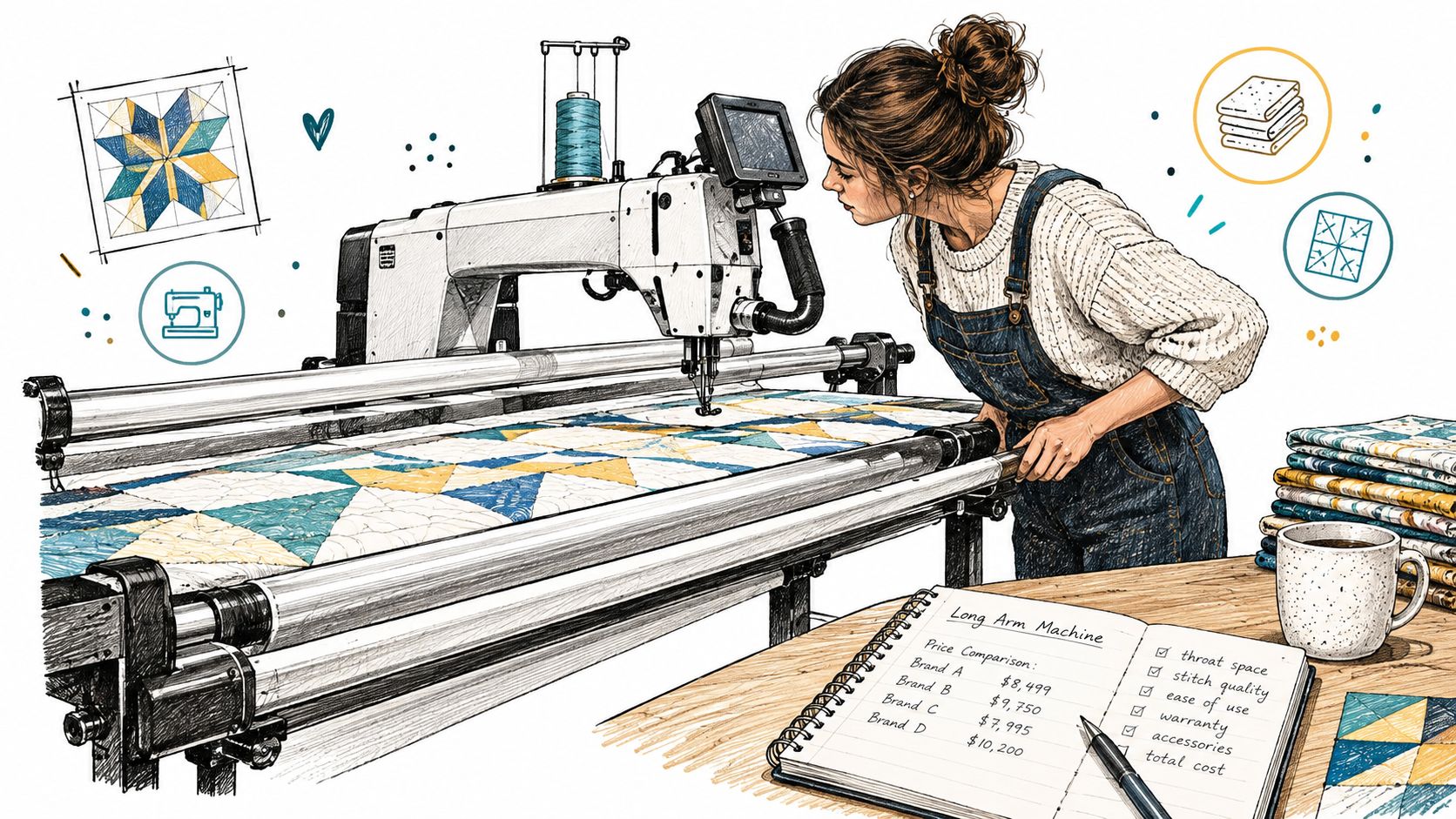
Frame size should match the largest quilts a maker finishes, not the largest quilt imagined for someday. Machine type should match preferred work style, whether that's hands-guided movement, stitch regulation, computerized placement, or a mix. Hands-on testing matters because handle feel, screen logic, tension adjustments, lighting, and loading systems reveal practical differences that specifications can't settle.
Accessories belong in the first budget conversation. Thread, needles, rulers, feet, stabilizer or other notions where relevant, cabinets, and cutting tables affect both cost and workspace function. Service access matters too, since a longarm is equipment that benefits from knowledgeable setup, maintenance, repair support, and in-person machine mastery help.
Computerized capability changes the labor picture. Baby Lock Pro-Stitcher 6 Quilting Robotics Software is described as a computerized system for a Baby Lock longarm that supports edge-to-edge designs, blocks, borders, and custom motifs, with switching between computerized and free-motion quilting. That kind of system should be evaluated as part of total equipment cost, design goals, and learning time, not as an impulse add-on.
Treat Financing and Resale Honestly
Financing is a budgeting tool, not a discount. A buyer should compare cash price, monthly payment, term length, and total amount paid, then test that payment against expected years of active use. A lower payment stretched over a longer period can still raise the effective ownership cost.
Resale and trade-in value can reduce effective cost later, but no responsible estimate should invent a future value. Condition, service history, included frame or software, local demand, and model currency all affect what a used setup may bring. Readers exploring that side of the decision can review considerations for a used long arm quilting machine and ask a dealer how trade-ins are evaluated.
The ownership recommendation is disciplined. Buy for proven project volume and tested machine fit. Rent or outsource while volume is still a guess.
Build a Quote Comparison Worksheet
The advertised rate is the least reliable number in this comparison. A studio's cents-per-square-inch figure, a rental shop's hourly price, and a dealer's monthly payment each cover exactly one line item, so judging any of them alone flatters whichever seller framed the number most narrowly. A worksheet fixes that by forcing service, rental, and ownership through identical questions.
Use the Same Rows for Every Option
- Quilt details: Finished dimensions, square inches, backing readiness, and deadline.
- Design category: Edge-to-edge, dense repeat, custom treatment, or a mix by area.
- Base charge: Quilting rate, hourly rental rate, or machine acquisition cost.
- Minimums and increments: Studio minimum, rental minimum, and any partial-hour billing rule.
- Included supplies: Thread, batting, needles, trimming, and preparation already covered.
- Added costs: Materials, binding, shipping, travel, accessories, service, and workspace furniture.
- Ownership terms: Financing total, expected use period, service needs, and possible trade-in path.
That row structure exists for a reason. A quilter discussion thread comparing actual longarming charges shows providers billing batting, thread, trimming, binding, density, minimum orders, shipping, and preparation separately, which makes final bills hard to predict from headline rates alone. A worksheet turns that unpredictability into comparable rows.
Run one quilt through it twice. Price the same dimensions as an edge-to-edge repeat, then as denser or custom work, keeping the finishing assumptions identical both times. The useful output is not the gap between the two quilting charges. It is the moment the worksheet reveals whether binding, batting, rental hours, or financing changes the preferred path.
For quilters who sell finished work or need a client-ready estimate format, it can help to customize an estimate invoice template so materials, labor, and optional finishing stay separated. Hobby quilters can use the same structure privately, even without issuing an invoice.
End the worksheet with a decision sentence. State the chosen path, the total expected cash outlay, the main risk, and the next action. That action might be requesting a studio quote with complete dimensions, booking rental time with materials already prepared, or asking a dealer about service and trade-in options.
Browse current longarm quilting machines, software, thread, and related supplies, or visit a store in Oklahoma, Missouri, Texas, or Arkansas to test equipment in person and discuss classes, service, repair, or a trade-in. Start that conversation at B-Sew Inn and bring quilt dimensions plus a realistic project count so the team can help compare service, learning, and ownership paths with clear numbers.

