
Serger and overlock machine are the same category of machine. The buying question is thread count, knife setup, and how the machine works beside a regular sewing machine.
| Question | Practical answer |
|---|---|
| Are serger and overlock machine different machines? | No, they're the same machine category with different regional names. |
| What does it do in one pass? | It trims, stitches, and finishes the edge at the same time. |
| What should a buyer compare first? | Thread count, knife configuration, and fabric control. |
| Does it replace a sewing machine? | No. It complements one. |
Most shopping advice starts with the wrong fight. It treats serger vs overlock machine like a brand-new rivalry, then buries the reader in thread counts before explaining what the machine does on fabric. That's backward. The name changes by region, the mechanism does not, and the only decision that matters is whether the machine matches the seams, fabrics, and workflow already on the table.
A useful starting point is to think about the job, not the label. For a clear visual of how the machine handles raw edges and garment finishes, the WearView fabric-viewing tool is a handy reference point because it helps compare edge appearance before anyone buys hardware. If a sewer wants the basics first, B-Sew Inn also has a straightforward primer on what a serger machine is.
Table of Contents
- Why Serger and Overlock Machine Are the Same Thing
- How a Serger Actually Works
- Matching Thread Count to the Work You Do
- Features That Actually Matter When Comparing Models
- Real Projects and the Right Serger Setup for Each
- How a Serger Fits Alongside Your Sewing Machine
- Choosing Your Serger and Getting Hands-On
Why Serger and Overlock Machine Are the Same Thing
Serger and overlock machine are two names for one machine category. The difference is regional language, and that's the whole story. Serger is the word most North American shoppers hear, while overlock is more common in the United Kingdom, Australia, and much of Europe. Before comparing hardware, it helps to see how finished edges look, and the WearView fabric-viewing tool makes that comparison easy. For a plain-language primer, B-Sew Inn also explains what a serger machine is.
Plenty of buyers walk into a shop convinced they must choose between two separate machines. Dealers don't stock them as unrelated product families. They stock overlock machines, marketed as sergers in one region and overlockers in another, because the machine performs the same core job: finishing fabric edges with an overedge stitch.
What the machine does in one pass
A serger trims the seam allowance, wraps thread around the cut edge, and joins or finishes the fabric layers in a single pass. That's the key benefit. It's fast, it keeps raw edges under control, and it makes knit seams behave better than a conventional stitch alone.
Practical rule: if a machine trims, wraps, and sews at the same time, the buyer is looking at the same basic category, no matter what the label says.
The useful comparison is configuration: thread count, knives, and stitch functions, not the label on the box. Buyers should look at how many threads the machine supports, whether it includes cutting knives, and what stitch functions it offers. ISO classifies overedge stitches in stitch class 500 under ISO 4915, which confirms this is a defined stitch system rather than a vague marketing term.
A conventional sewing machine still belongs in the room because it does things an overlock machine doesn't. Straight stitching, zippers, buttonholes, and precise topstitching remain the sewing machine's territory. That division of labor is the reason serious sewists keep both machines, even when the serger becomes the favorite for edge finishing.
How a Serger Actually Works
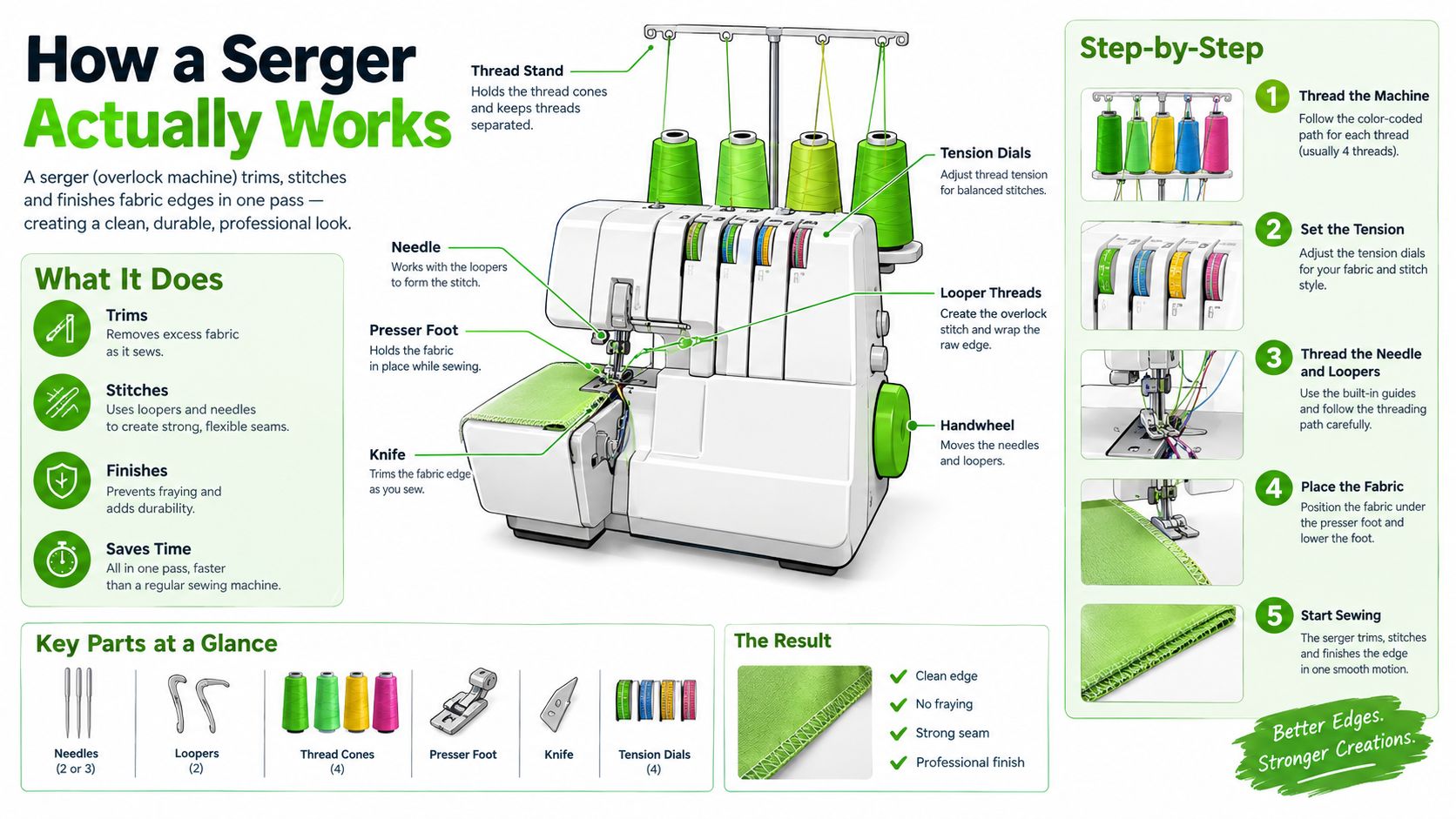
A serger doesn't build a seam the way a standard sewing machine does. Instead of a bobbin-based lockstitch, it uses one or two needles plus one or two loopers, all fed by multiple thread cones. Those loopers are the reason the stitch wraps around the fabric edge instead of locking in the middle of the cloth.
The moving parts that matter
The machine's built-in knife is what makes the process feel so different at the bench. Fabric enters the machine, the knife trims the edge immediately before stitching, and the loopers bind thread around the cut edge. That's why a serger can sew, finish, and trim in one pass. It's also why the machine looks so efficient when hems, side seams, or raw edges are moving through it cleanly.
Cutterless overlock machines exist, and that's worth respecting. Not every project should lose fabric at the edge. When seam allowance is scarce, or when a sewer needs to preserve a shape for later correction, a cutterless setup or a bypassed knife can be the safer choice. The blade is useful, but it shouldn't be treated like an always-on advantage.
The thread cone setup is part of the engineering too. The machine depends on several threads feeding separately through the loopers and needles, which is why threading a serger can feel less intuitive than threading a regular machine. That complexity isn't a flaw, it's the price of getting that stretchy, wrapped edge in one pass.
A useful shorthand is this. A 3-thread machine is mainly an edge-finishing tool. A 4-thread machine adds a second needle line for a stronger seam. A 5-thread machine takes things further for tougher seam security. Once that structure is clear, the labels stop feeling mysterious.
For a compact overview of the machine's role in real sewing rooms, B-Sew Inn's serger use guide helps connect the mechanics to everyday garment work.
Matching Thread Count to the Work You Do
Thread count is where the purchase gets real. A shopper doesn't buy a machine because 4 threads sounds better than 3. The shopper buys the setup that matches the seams already on the cutting table.
| Thread Count | Best For | Seam Type |
|---|---|---|
| 2-thread | Light edge work and selective finishing | Narrow edge finish |
| 3-thread | Everyday edge finishing, lighter garments, decorative hems | Standard overedge finish |
| 4-thread | General garment construction on wovens and knits | Overlock plus safety stitch |
| 5-thread | Stronger seams for demanding garments | Overlock plus separate safety stitch |
A 3-thread setup is the workhorse for clean edge finishing. It's the choice when a sewer wants the fabric edge wrapped neatly without overbuilding the seam. That's the configuration many buyers should expect to use most often when finishing seam allowances or handling lightweight hems.
A 4-thread machine is the smarter construction buy for most garment sewists. It combines an overlock edge finish with an extra needle line that functions like a safety stitch, so the seam feels more secure and more balanced. For both woven fabric and knit fabric, that extra line is the difference between a decorative finish and a seam that can earn its place in everyday construction.
A 5-thread setup goes a step further by combining overlocking with a separate safety stitch for stronger seams. That matters when the garment needs more security and the sewer doesn't want to choose between finishing the edge and building a firm seam. It's the kind of configuration that rewards a buyer who already knows the machine will live in regular garment production.
Rolled hems deserve mention because they're one of the few finishes that change the whole look of a project. On lightweight or sheer fabric, the edge is rolled and enclosed in thread, which makes napkins, scarves, and delicate hems look finished instead of merely overcast. For buyers comparing setup charts, the stitch chart matters more than the headline thread count.
For a practical breakdown of thread choices and project planning, B-Sew Inn's thread weight chart is worth checking before anyone commits to a setup.
Features That Actually Matter When Comparing Models
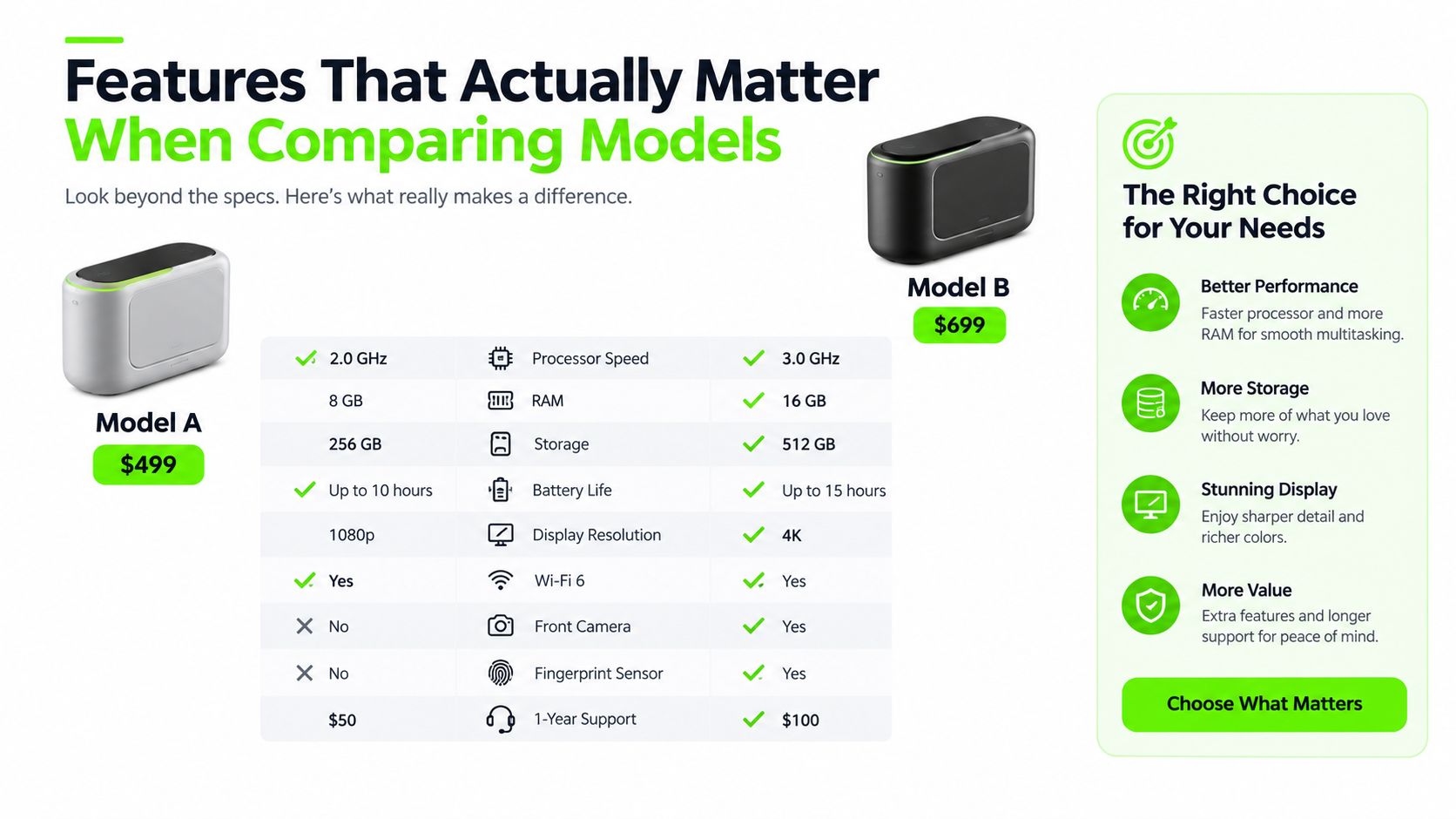
The first spec to care about is differential feed. It uses independently driven front and rear feed dogs, so the machine can handle knit fabric without stretching it out or handle lightweight woven fabric without puckering the edge. Common home-machine ranges fall around 0.7:1 to 2.0:1, and that adjustment range is what changes how the fabric behaves under the presser foot.
Speed matters less than control
A lot of shoppers get distracted by sewing speed. Domestic overlock machines commonly reach about 1,500 to 1,700 stitches per minute, which sounds impressive, but speed isn't the whole story. Threading, fabric handling, cut accuracy, and the time spent switching stitch setups all affect real output more than a big number on a brochure.
Stitch length is another quiet control that matters a lot. Technical guidance gives a usable range of roughly 0 to 5 mm, with about 3 mm working well for many medium-weight fabrics. That's the kind of setting that separates a machine that merely goes fast from one that produces a stitch a sewer wants to keep.
Practical rule: if a machine has strong differential feed and easy tension access, it'll feel more useful than a faster model that fights the fabric.
Threading systems and tension controls deserve close attention in the showroom. A model that's hard to thread or awkward to adjust can turn a simple seam into a stop-start task. Buyers should care less about flashy wording and more about whether the machine is set up for quick rethreading, simple tension adjustment, and enough thread capacity for the work they do most.
That's why a machine with adjustable feed, variable stitch length, and at least 3/4-thread capability often beats a faster but less flexible model. Real-world versatility comes from control, not bragging rights. For a focused shopping checklist, B-Sew Inn's buying guide for sergers is the kind of reference that keeps the buyer on the right spec page.
Real Projects and the Right Serger Setup for Each
A serger earns its place when the fabric and the workflow line up. It doesn't need to be perfect at everything. It needs to be the right machine for the next stack of projects.
For stretchy knit garments, the win is clear. The machine's stretch-friendly seam behavior and differential feed keep the edge from wavering while the seam goes together. If the project is a T-shirt, activewear layer, or any soft garment built from knit fabric, the serger is doing the job the standard sewing machine handles less gracefully.
For sheer or decorative edges, the priorities shift. A rolled hem is the clean finish that turns lightweight fabric into something polished instead of frayed. On those projects, the machine's ability to encase the edge tightly matters more than brute seam strength.
If the next project is a structured woven piece, the buyer needs to be careful. The serger helps finish the raw edge fast, but it doesn't replace the precision of a lockstitch machine for details that need clean control. A conventional machine still owns seam corrections, fitted construction, and the fine interior work that has to stay exact.
For garment fabric choices, a guide to t-shirt materials can help a sewer understand why some knits behave beautifully under a serger while others need more feed control and patience.
Where the knife helps, and where it gets in the way
The cutting blade is the serger's signature advantage, but it can also be the part that causes regret. When seam allowance is scarce, when a curve needs to stay untouched, when a correction is still possible, or when an enclosed corner needs to be preserved, the blade can remove fabric the sewer meant to keep.
That's why project planning matters more than machine hype. On activewear and heavy knits, the serger often shines because the seam wants stretch, speed, and a clean edge in one pass. On delicate alterations or precise pattern adjustments, the safest move is often to leave the blade disengaged or reach for the conventional machine first.
B-Sew Inn's serger project ideas are a useful way to match a machine setup to the kind of work already happening at the cutting table.
How a Serger Fits Alongside Your Sewing Machine
A serger is a specialist. A sewing machine is still the generalist. That's the cleanest way to think about the pair.
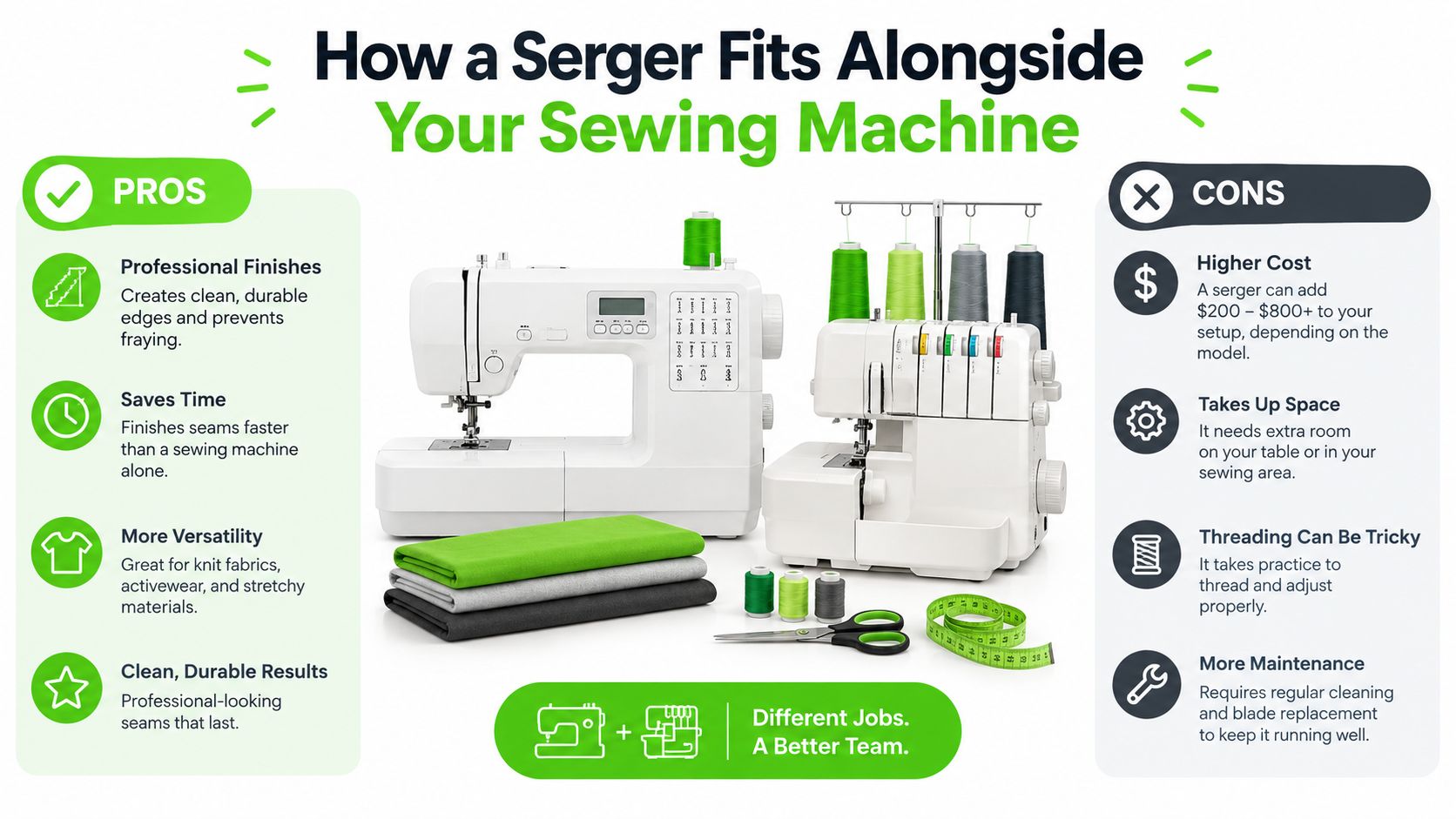
The serger wins at edge finishing, knit seams, and fast one-pass construction. The sewing machine still owns zippers, buttonholes, precise topstitching, and the kind of interior stitching that needs a bobbin-based lockstitch. That split isn't a weakness. It's the reason a good sewing room works.
The clearest buying rule
If the sewer already owns a solid sewing machine, the serger should be treated as a force multiplier. It speeds up finishing and improves the look of stretch seams, but it does not make the sewing machine obsolete. If the sewer is starting fresh, the first machine still needs to be the conventional sewing machine because it covers the broadest range of tasks.
That's where a store floor test matters. A buyer should feel the tension controls, try a real fabric sample, and check whether the machine's thread path and knife behavior fit actual habits. B-Sew Inn carries entry-level and more feature-rich options, including the Baby Lock Celebrate for a straightforward entry point and the Baby Lock Applaud for sewists who want creative top cover stitch options.
A serger makes sense when the buyer wants speed, cleaner edges, and better knit handling. It makes less sense when the buyer expects it to replace the functions of a standard machine. That's the line to hold.
Choosing Your Serger and Getting Hands-On
A first-time buyer should focus on a flexible 3/4-thread machine with differential feed and easy tension access. An experienced garment sewer usually benefits from moving up to a stronger 4-thread or 5-thread setup. A sewer chasing decorative hems and finishing options should look closely at creative coverstitch capability before paying for features that won't get used.
The smartest next step is hands-on testing. Seeing the machine in person at a B-Sew Inn store in Oklahoma, Missouri, Texas, or Arkansas gives a buyer the one thing online specs can't, real fabric time under the presser foot. That's where the right choice usually becomes obvious.
B-Sew Inn sells and services sewing, quilting, embroidery, and serger machines, and this topic is exactly the kind of purchase that benefits from a live demo and a real test drive. Visit B-Sew Inn to browse sergers, check current options, and plan a store visit or in-person class before you buy.

