

A preowned long-arm machine can look reassuring during a quick showroom demonstration: the carriage glides, the motor runs, and a few stitches land neatly on fabric. The harder question is whether that same machine will travel smoothly across the full frame, keep its stitches consistent, and remain serviceable after it's installed at home.
That's why used quilting long arm machines deserve more than a visual once-over or a brief demo. A long arm is a system of machine head, carriage, rails, frame, controls, and service needs. Before money changes hands, test the whole working area and confirm that the model's parts and support fit the way you plan to quilt.
Table of Contents
- Why a Used Long Arm Deserves a Real Test Drive
- Locking In Throat Space and Frame Size First
- The Walkaround Inspection You Should Never Skip
- Running the Stitch Test on a Real Quilt Sandwich
- Checking Software, Sensors, and Long-Term Support
- Where Smart Buyers Actually Shop for Used Long Arms
- Budgeting for Service, Accessories, and Trade-In Value
Why a Used Long Arm Deserves a Real Test Drive
A five-minute demonstration can confirm that a machine powers on. It can't establish that the carriage behaves well at the edges of the frame, that stitch regulation responds promptly, or that the tension stays consistent through changes in direction. A defect may only show up after the machine has traveled beyond the well-used center section.
Start with a simple rule: don't buy based on the seller's best demonstration. Run your own acceptance test. Ask to move the machine across the full frame, operate it at different speeds, and sew with the thread, needle, batting, and fabric combination you expect to use. If the seller can't allow a complete test, treat that limitation as part of the buying risk.
The machine head also isn't the whole purchase. The carriage, tracks, frame, leaders, clamps, and any computerized controls all affect how the system performs. A sound head on a poorly aligned frame can still make quilting frustrating, while an older mechanical machine may remain useful if its core components move and stitch reliably.
Long-arm quilting technology has a long history. A quilting machine debuted in 1871 with a basic two-bar frame, and by approximately 1877 the design had developed toward the familiar arrangement where the sewing head moves across the quilt. That history helps explain why age alone doesn't determine whether a used model is worthwhile. Newer systems may add stitch regulation or computerized controls, but buyers should judge the individual machine's condition and suitability, not just its age (history of long-arm quilting technology).
A clear understanding of how longarm quilting works makes it easier to assess the machine as a complete workspace. The practical question is whether the setup can handle the quilts the buyer makes, without recurring problems that a short demo might conceal.
Practical rule: If the machine can't be tested across the full workspace, the buyer hasn't seen enough to judge it.
Locking In Throat Space and Frame Size First
Before comparing listings, decide what quilt sizes the machine needs to handle. Throat space is the distance from the needle to the machine body. It determines how much quilt fits beneath the arm before the quilt needs to be rolled or repositioned.
A published comparison classifies machines under 8 inches as better suited to smaller projects, such as wall hangings and table runners; 10–11 inches as adequate for most queen-size quilts with occasional rolling; and 13 inches or more as allowing most quilts to be completed with less rolling. Treat those ranges as a starting point, then ask the seller for the machine's exact measurement. Descriptions such as “large throat” aren't precise enough to make a buying decision.
The frame matters just as much. Its length limits the quilt length the system can accommodate, while the throat affects working room under the head. Measure the space available in the room, too. A frame that supports larger projects may be a poor fit if it crowds walkways or leaves little room to load and advance a quilt.
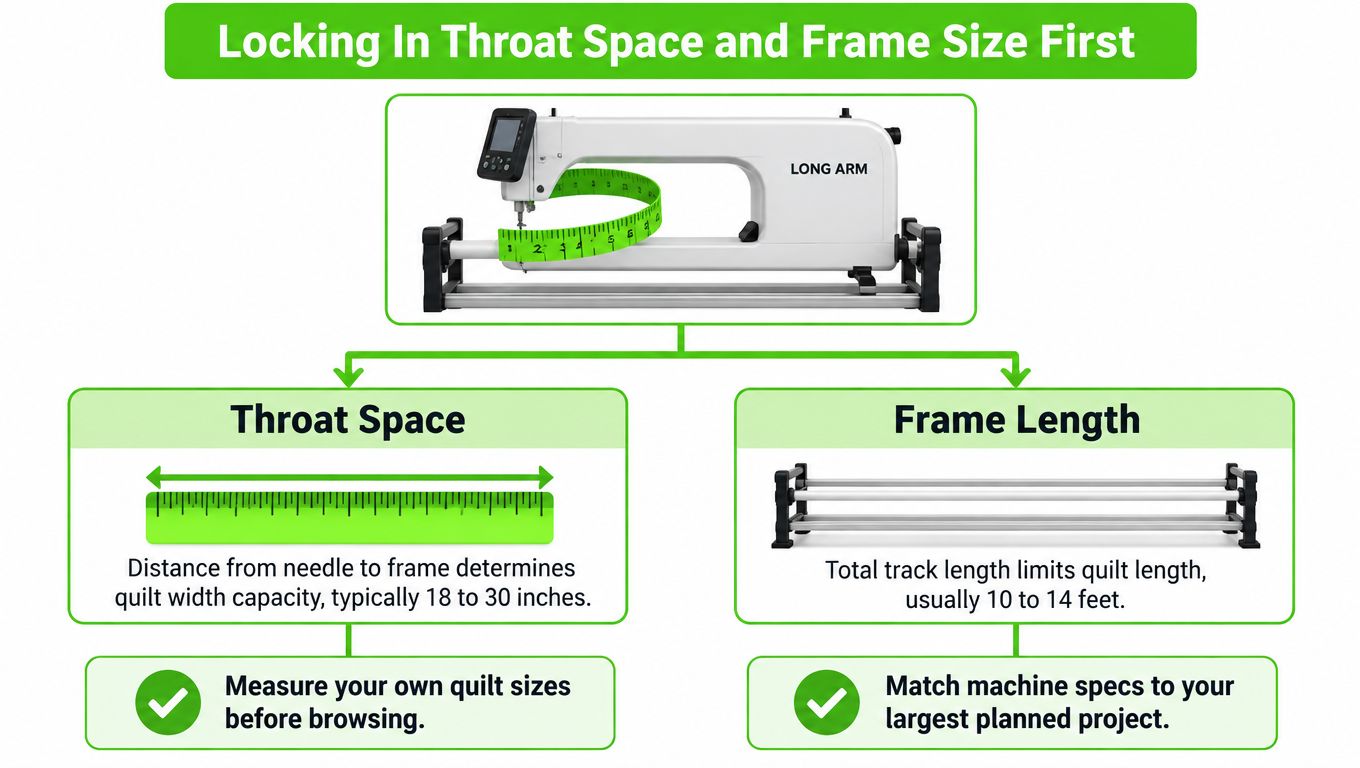
Write down the largest quilt normally made, the largest quilt planned, and the frame footprint the room can accommodate. Then compare each used machine against those requirements before factoring in cosmetic condition or included extras. Buying a short frame because its asking price looks attractive can leave the buyer wanting to replace the setup later.
A long-arm maintenance and ownership guide can help buyers think beyond the listing and plan for keeping a machine in working order. The right specification is the one that matches both the projects and the available workspace, not just the biggest machine a listing offers.
The Walkaround Inspection You Should Never Skip
A careful walkaround starts with the frame, before the machine is switched on. Check that the rails are level and parallel, then look along their full length for visible damage. A machine can travel well in the middle yet catch or wobble near an end where the rails have been neglected.
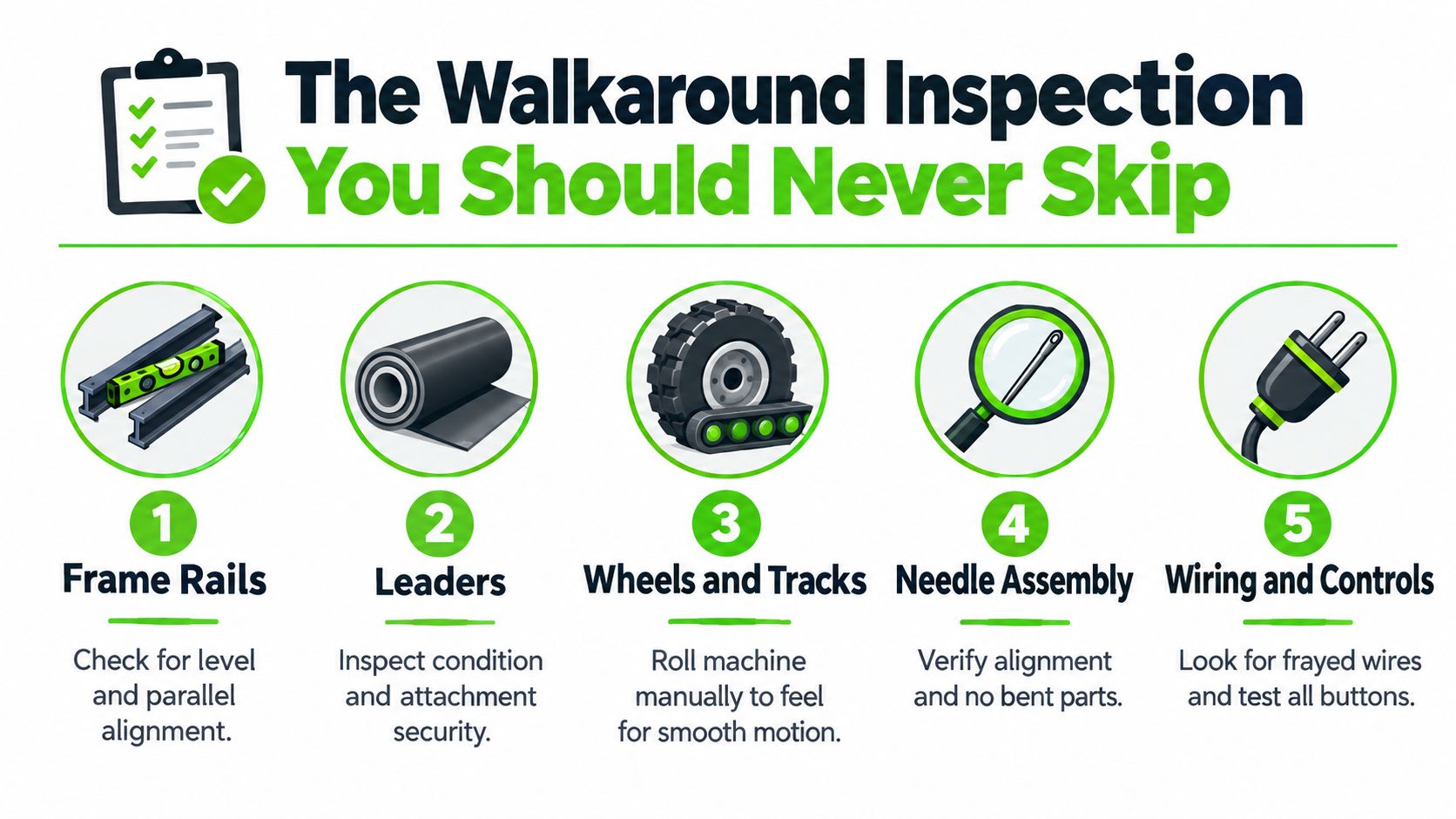
Move from the frame up through the working parts:
- Rails and frame: Check for level and parallel alignment, rust, loose or stripped bolts, and signs that parts have been assembled with mismatched hardware.
- Leaders and rollers: Look for tears, warping, loose attachment points, and roller bars that don't turn as expected. Inspect the side clamps as well.
- Carriage and tracks: Push the head slowly along the entire frame, then repeat at a quilting pace. Feel for flat spots, hesitation, wobble, grinding, or clicking.
- Machine head: Examine the needle bar for excess play and check that the presser foot and hopping foot move smoothly. Inspect the bobbin assembly and tension controls for wear or damage.
- Motor and controls: Run the machine and listen for changes in pitch, rattling, or irregular humming. On computerized models, check that buttons respond and that needle-position sensing and stitch regulation operate as expected.
Don't stop at a cursory pass. A practical inspection calls for moving the carriage across the whole frame, checking mechanical movement, and testing computerized functions rather than assuming they work because the screen turns on (used long-arm inspection guidance).
Ask for maintenance records and original purchase paperwork, if available. Compare the included accessories with the manufacturer's parts list, and record missing or damaged items before discussing terms. Documentation won't prove that the machine is fault-free, but it can make the ownership history and the scope of the sale clearer.
Running the Stitch Test on a Real Quilt Sandwich
A motor that turns doesn't prove a long arm can produce consistent quilting. The meaningful test is a stitched sample made with the materials the buyer intends to use, because tension and stitch quality depend on the full combination of thread, needle, fabric, and batting.
Bring a quilt sandwich and ask to sew more than a straight line. Include curves, points, and direction changes. Start slowly, then move the carriage faster. Watch the needle and listen to the machine while quilting, then inspect both sides of the sample for skipped stitches, thread breaks, irregular stitch length, and tension bands.
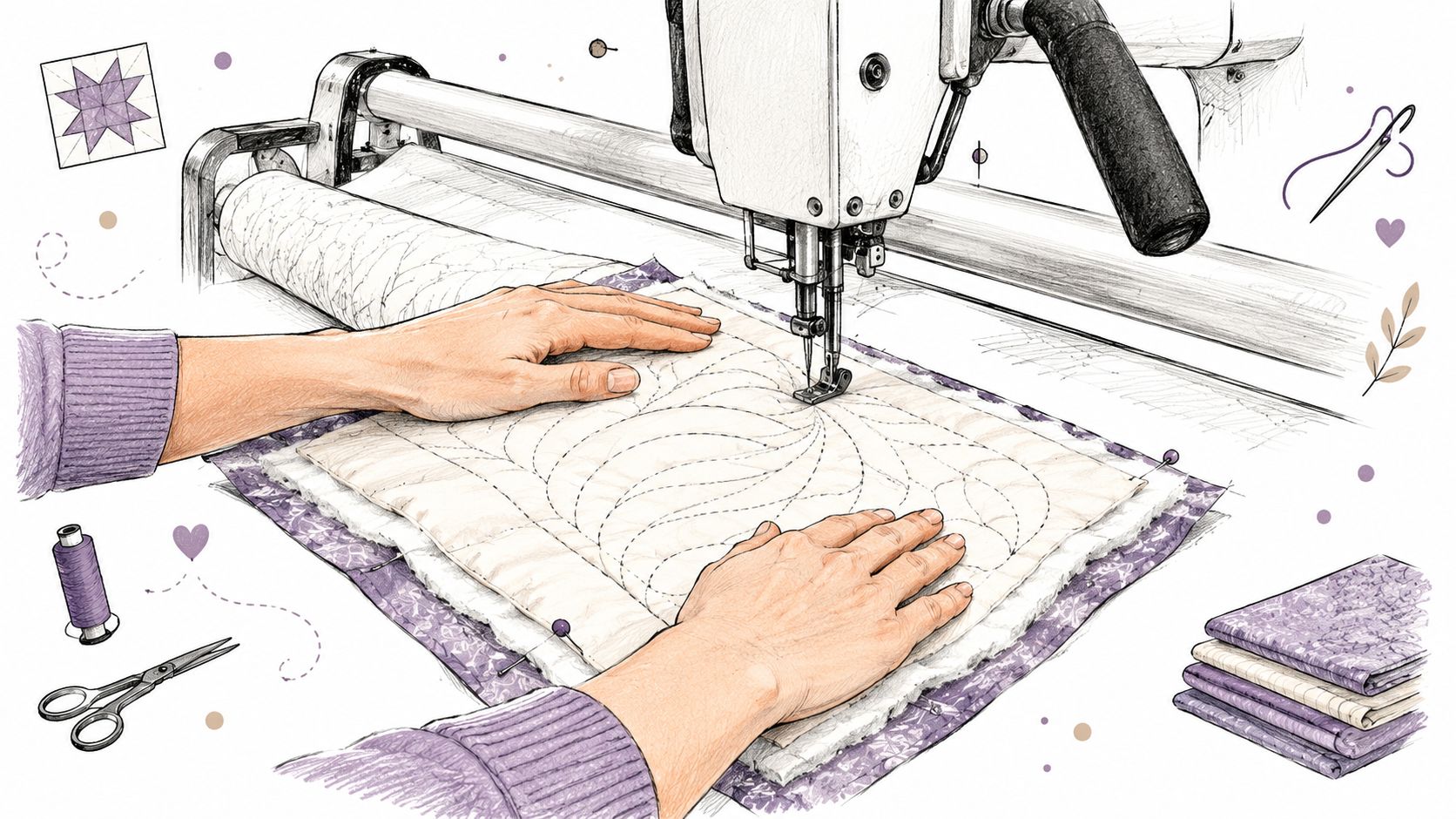
On a computerized machine, switch between regulation modes while sewing a line. Observe whether the machine responds promptly as the carriage changes speed; sluggish response can point to an issue with the sensors or regulation electronics. A separate test at the machine's highest speed, followed by a short line on a quilt sandwich, can help reveal track noise and stitch inconsistency that a short idle demonstration won't expose.
Record what happens while the machine is running. Note where a skipped stitch occurs, whether a tension band appears only when moving in a certain direction, and whether the regulator hesitates. That record gives the buyer something specific to discuss with the seller instead of relying on a vague impression that the sample “looked fine.”
A basic sewing-machine troubleshooting guide can help clarify the kinds of stitch and tension problems worth investigating. The test result doesn't need to be flawless on the first pass, but the buyer should understand any issue, its likely cause, and what would be needed to correct it before agreeing to the purchase.
Checking Software, Sensors, and Long-Term Support
A computerized long arm can offer features that make quilting more convenient, but those features also create questions a mechanical model may not raise. The machine can appear to work today and still be difficult to use later if its software, control screen, or replacement electronics are no longer supported.
Ask the seller for the installed software version and confirm whether any software license transfers with the machine. Check whether the control tablet or screen remains compatible with supported operating systems, and whether firmware updates are still available. A login, license, or file access tied to the previous owner can limit functionality even when the machine itself runs.
Then test the hardware behind the controls. Stitch-regulation sensors and encoders help the system track carriage movement; motor-control boards and related electronics translate commands into machine action. Verify each sensor and regulation mode during the stitch test, and ask what replacement parts cost and whether they're available. If a critical component fails, proprietary electronics can make an otherwise serviceable machine a difficult repair.
Support matters as much as the feature list. A computerized system earns its premium only if its controls, parts, and service remain usable.
Before buying, identify a technician who can work on that specific model, ideally within practical driving distance. Ask what the machine can still do if a computerized feature fails, and whether it can continue quilting in a manual mode. A working mechanical fallback may matter more to one buyer than an advanced feature matters to another.
This evaluation is about lifetime usability, not simply comparing asking prices. A used manual model may be a more dependable fit if local service and parts are easier to find, while a computerized machine can be a sensible choice when its software, sensors, and service path check out. Buyers comparing control options can review computerized longarm quilting features before deciding which functions they're willing to depend on.
Where Smart Buyers Actually Shop for Used Long Arms
Buying channels offer different levels of visibility and support. Private listings and estate sales may suit buyers who can inspect equipment confidently and accept more uncertainty. Resellers and authorized dealers may offer a more structured process, though the buyer still needs to ask what inspection, service, or return terms apply to the specific machine.
| Channel | Inspection Access | Service History | Return Window | Hands-On Time |
|---|---|---|---|---|
| Local classifieds | Depends on seller and setup | May be incomplete | Ask before paying | Possible if the machine is assembled |
| Online marketplace | Often limited before purchase | Varies by listing | Confirm the terms | Usually limited before delivery |
| Estate sale | Depends on access and timing | Often uncertain | Ask about sale conditions | May be brief |
| Machine-specific reseller | Ask what was inspected | Request available records | Confirm in writing | Often possible by appointment |
| Authorized dealer | Ask what inspection and service were completed | Request available documentation | Confirm terms for the sale | Often available in person |
The table is a starting point, not a guarantee. Any seller can provide incomplete records, and a dealer's involvement doesn't replace a test drive. The buyer should get the return policy, service commitments, included accessories, and any warranty details in writing before paying.
Long arms are large, heavy systems. A listing can show the head and frame, but it can't show how the carriage feels under the hand or whether the machine runs smoothly at the edges. Buyers weighing different secondhand channels may also find this overview of tiendas de segunda mano en Europa useful for thinking about the practical questions that come with secondhand purchases.
For buyers who want to assess the machine directly, an in-person showroom visit provides a chance to see the equipment, move the carriage, and ask about servicing and support before committing. B-Sew Inn is an authorized sewing, quilting, and embroidery machine dealer with retail stores in Tulsa and Oklahoma City, Oklahoma; Springfield, Missouri; Humble, Texas; and Fayetteville, Arkansas. Its product range includes machines and long-arm quilting equipment from brands it carries, along with related supplies and service.
Budgeting for Service, Accessories, and Trade-In Value
The asking price is only one part of the ownership budget. A preowned machine may need a professional inspection or service before regular use, and the buyer should ask when it was last serviced and what work was performed.
Long-arm maintenance guidance recommends cleaning the accessible bobbin area and oiling only the locations permitted by the machine manual at each bobbin change. It also recommends replacing the needle approximately every 8 hours and arranging professional service every 24 months or 10 million stitches (long-arm maintenance recommendations). Confirm the requirements for the specific model, then set aside funds for routine upkeep as well as any immediate service needs.
Build a practical worksheet before negotiating:
- Service and repair: Record the last service date, request available records, and budget for an inspection if the machine's condition or history is uncertain.
- Setup and accessories: Check whether the sale includes the required leaders and side clamps, and whether the workspace needs a suitable table or a more comfortable chair.
- Consumables: Account for needles, bobbins, oil permitted by the manual, and the thread used for quilting.
- Future upgrade: Ask whether the seller accepts trade-ins and how machine condition, serviceability, and software support affect a later upgrade.
A machine that remains in good serviceable condition may be easier to trade in later, but don't assume a particular resale value. Get the dealer's trade-in terms before counting a future upgrade toward today's budget. For broader care and repair planning, review sewing-machine maintenance and repair options.
B-Sew Inn is an authorized dealer that sells and services sewing, quilting, and embroidery machines, with long-arm equipment and related supplies available alongside in-person service, repair, machine mastery sessions, classes, and trade-ins. Visit B-Sew Inn to explore current options, then come to a store in Oklahoma, Missouri, Texas, or Arkansas to test a machine and discuss whether its workspace, condition, and support fit the way you quilt.

