
Welcome to the world of sewing, where the humble thread is the unsung hero holding every single creation together. Honestly, choosing the right one is what separates a good project from a great one, giving you durable seams and beautiful, professional-looking stitches that last. This guide is here to demystify the vast world of sewing threads, and we'll start with the most important rule I've learned over the years: match your thread fiber to your fabric.
Your Essential Guide to Choosing the Perfect Sewing Thread
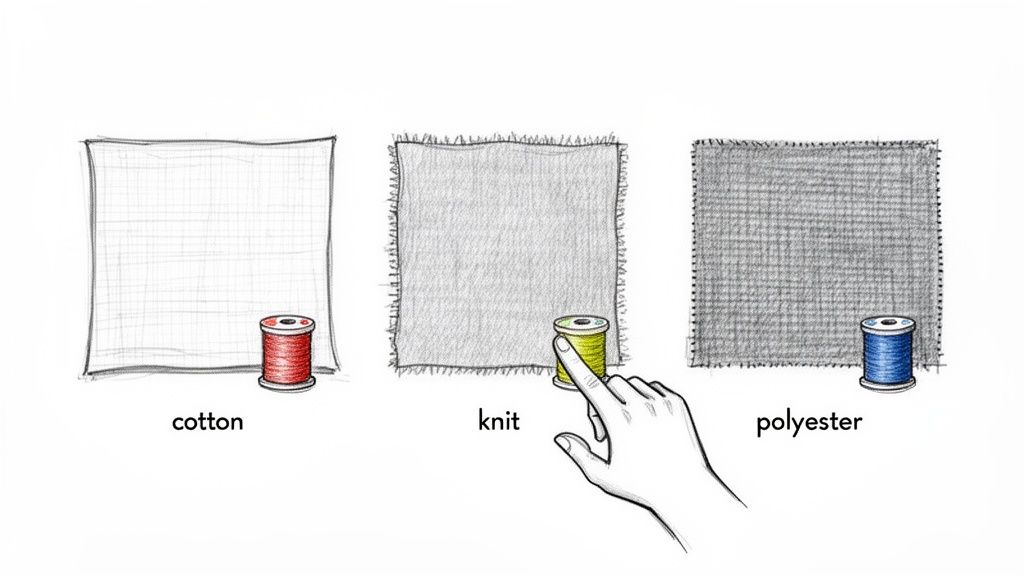
Think of it like a partnership. A flexible polyester thread will stretch and move right along with a knit fabric, preventing popped seams. A sturdy, crisp cotton thread is the perfect companion for woven cottons like quilting fabrics or poplin. Here at bsewinn.com, our goal is to empower crafters like you, not just with custom sewing machine designs, but with the practical know-how to truly master them.
Consider this guide your roadmap. We'll walk through the main thread families you'll come across, from classic natural fibers like cotton to synthetic workhorses like polyester. With tangible examples, you'll see how these choices play out in real-world projects you can replicate at home. Getting this core concept down is the first—and most critical—step to making sure your projects succeed.
We want you to feel totally confident every time you sit down to sew. With the help of our extensive resources, including a library of online classes and training videos, you’ll soon be able to:
- Pick the ideal thread for any project, no guesswork needed.
- Get those smooth, professional stitches you've been dreaming of.
- Bring your most ambitious creative ideas to life, one perfect seam at a time.
Natural vs. Synthetic: The Two Main Thread Families
When you get right down to it, sewing threads really fall into two big families: natural fibers and synthetics. Think of them as the classic original and the modern powerhouse.
Natural fibers, like good old cotton, are the threads our grandmothers used, and for good reason! Cotton is still a quilter's absolute best friend. Its soft, matte finish just melts into natural fabrics, and you can press your seams with a hot iron without a second thought—it won't melt. For example, when piecing a traditional patchwork quilt top, a 50 wt cotton thread is the perfect choice to create flat, crisp seams that blend seamlessly into the fabric.
Then you have the synthetics, the undisputed workhorses of modern sewing. All-purpose polyester is prized for its incredible strength, a little bit of give, and colors that stay bright wash after wash. A tangible example of its power is sewing a pair of leggings; a polyester thread will stretch with the jersey knit fabric, ensuring seams don’t pop during wear. And let’s not forget nylon, the heavyweight champion, known for its sheer strength and elasticity—perfect for tough jobs like upholstery.
It's no surprise that these synthetic superstars have taken over the sewing world. In fact, they now make up a staggering 80% of the market, mostly because they're so durable and play nicely with today's high-speed machines. For our B-Sew Inn crafters, this means you’re getting threads designed to perform flawlessly on your machine, every single time. You can learn more about the big picture from this report on the global sewing thread market and its trends.
So, which one is right for you? It really depends on the project sitting on your sewing table. Let's break down the key differences to make the choice a little clearer.
Natural vs. Synthetic Thread Comparison
| Feature | Natural Threads (e.g., Cotton) | Synthetic Threads (e.g., Polyester, Nylon) |
|---|---|---|
| Strength | Moderate strength. Can break under high tension. | Very strong and durable. Resists abrasion. |
| Elasticity | Low stretch. Provides stable, crisp seams. | Higher stretch and recovery. Ideal for knits and seams needing 'give'. |
| Heat Resistance | Excellent. Can be pressed with a very hot iron. | Can melt under high heat. Use a lower iron setting. |
| Appearance | Soft, matte finish that blends well with natural fabrics. | Can have a slight sheen. Holds color exceptionally well. |
| Moisture | Absorbs moisture. Can be prone to mildew if stored improperly. | Repels moisture. Resistant to mildew and rot. |
| Best For | Quilting, heirloom sewing, topstitching, projects using natural fabrics. | Garments (especially knits), upholstery, outdoor gear, heavy-duty projects. |
| Pros | Blends beautifully, high heat tolerance, environmentally friendly. | Extremely strong, colorfast, versatile, affordable. |
| Cons | Less strong, can shrink, prone to lint. | Can be slick, may melt, not as heat-resistant for pressing. |
Ultimately, neither family is "better"—they just have different jobs. Keeping both cotton and polyester in your stash means you’ll always have the perfect partner for whatever fabric comes your way.
Decoding Thread Weight: A Practical Guide
Have you ever looked at a spool of thread and felt a little lost staring at numbers like ‘40 wt’ or ‘50/3’? Let's clear that up. It's actually pretty simple once you get the hang of it.
Think of thread weight like you think about font size on a computer: the lower the number, the thicker and heavier the thread. The higher the number, the finer and lighter it is. This is probably the most important thing to get your head around when you're choosing a thread.
For a tangible example, if you're doing some bold, decorative topstitching on a pair of jeans, you'd reach for a heavy-duty 12 wt thread. But if you're doing delicate, invisible appliqué where you want the stitches to completely disappear into the fabric, a super-fine 100 wt thread is your best friend.
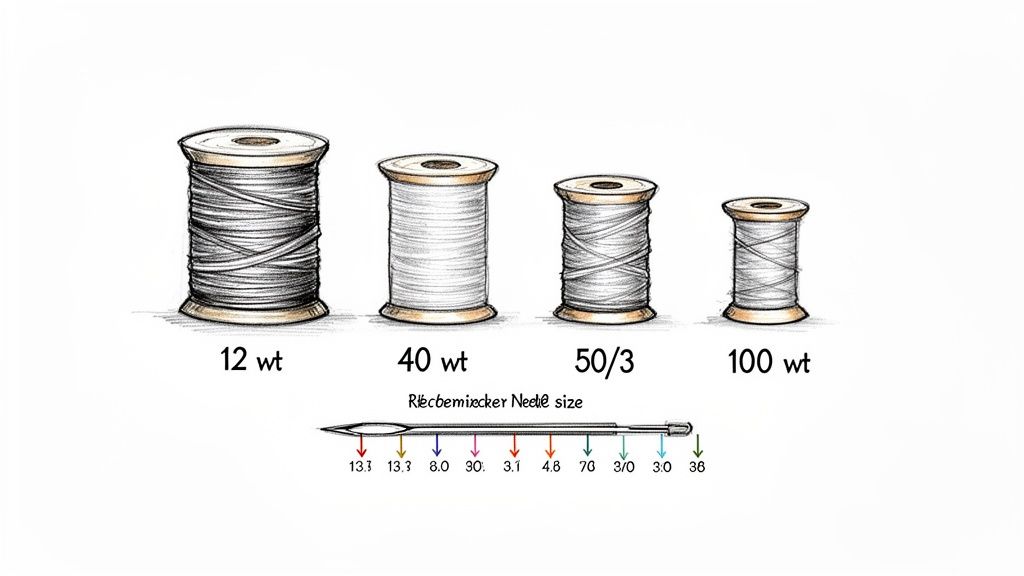
Picking the right weight does more than just look good—it's the key to everything from beautiful, even stitches to strong, seamless construction. One of the biggest mistakes I see people make is not matching their needle size to their thread weight. It's a recipe for skipped stitches, broken thread, and a whole lot of frustration.
Here at B-Sew Inn, we want you to feel totally confident reading any spool you pick up. To really dive deep into how thread weight, needle size, and fabric all work together, check out our detailed sewing thread size guide.
Taking Your Projects to the Next Level with Specialty Threads
Once you've got the basics down, it's time to play. This is where the real fun begins! Specialty threads are what let you add that extra bit of personality, function, and professional finish to your work. Think of them as the secret ingredients that make specific crafts, like embroidery or quilting, truly sing.
When it comes to machine embroidery, it’s all about that gorgeous sheen and pop of color. Rayon threads give you a brilliant, silky luster that’s hard to beat. If you're making something that will see a lot of wear and washing, though, polyester embroidery threads are your best friend—they offer a similar shine but with much better colorfastness and strength. Here at B-Sew Inn, we are committed to empowering crafters through extensive resources and training, helping you really get comfortable and creative with your materials.
Quilters know that the right thread can completely change the look of a quilt. Variegated threads are a blast to work with, creating beautiful, subtle color shifts all on their own. On the other hand, if you want your quilting stitches to blend in seamlessly for stitch-in-the-ditch work, a monofilament or "invisible" thread is the way to go. It gives you all that lovely texture without distracting from your piecing. And let's not forget sergers! They absolutely devour thread, so you'll need something smooth and strong to create those durable, stretchy seams that make knit garments look so professional.
How to Choose the Right Thread for Any Project
Alright, we've covered a lot of ground. Now, let's put it all into practice. When you're standing in front of that giant wall of thread, trying to pick the perfect one, it really boils down to two simple questions: What am I sewing with, and what am I making?
Think about your fabric's fiber content first. Then, consider how the finished item will be used. This little mental checklist makes the decision so much easier.
For instance, if you're sewing a cotton playdress for a toddler, a tangible project that needs to survive countless trips through the washer and dryer, a high-quality all-purpose polyester thread is your best friend—it's tough and durable. But for a decorative wall quilt that will never see the inside of a washing machine? You can go for a beautiful variegated cotton thread to add that extra visual punch.
It's all about matching the thread to the job. Sewing stretchy activewear? You'll need a thread with some give. Making outdoor cushions? Look for something with UV resistance.
To make it even clearer, here’s a handy decision tree that walks you through choosing the right specialty thread for your specific craft.
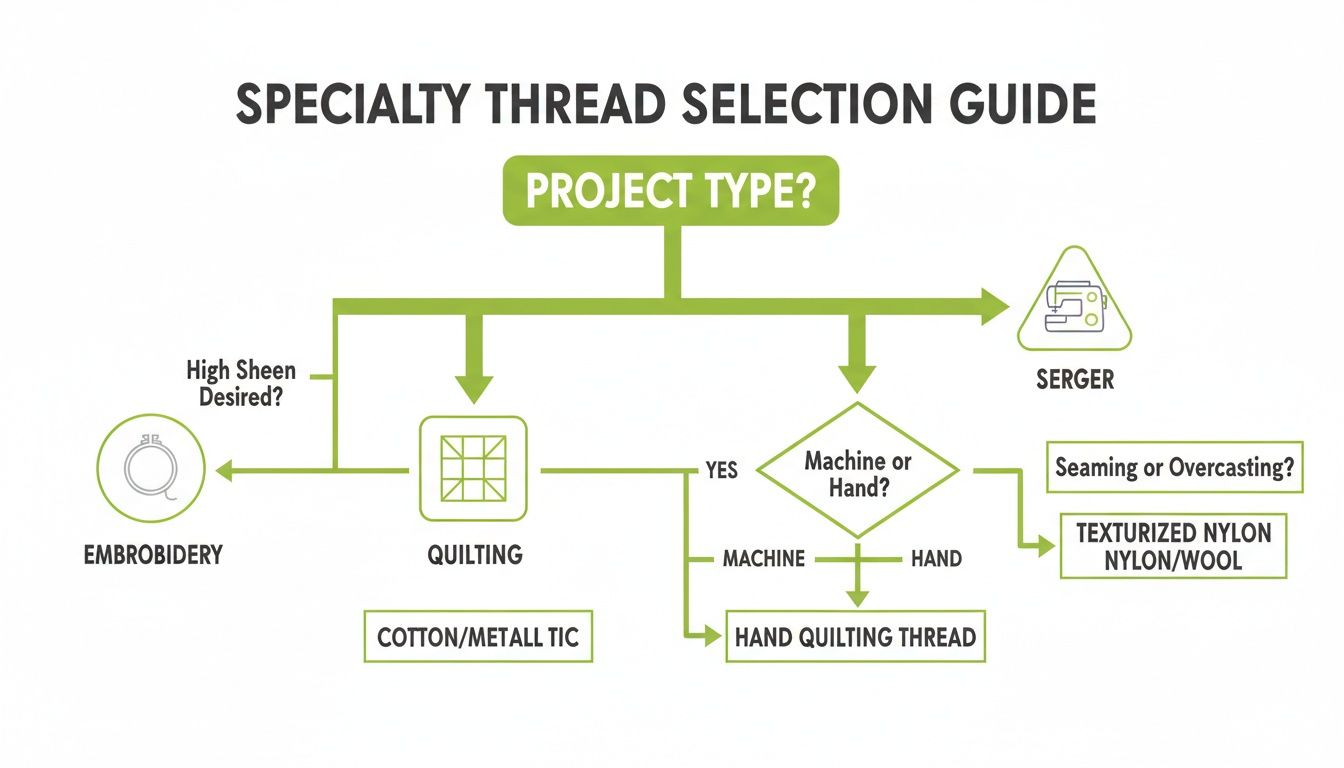
As the graphic shows, starting with your project type—whether it's embroidery, quilting, or serging—is the fastest way to narrow down your options. With a little guidance from B-Sew Inn's online classes and resources, you'll be making these choices like a pro, setting every project up for success.
And if you want to dive even deeper, check out our guide on the best threads for sewing.
Essential Tips for Storing and Caring for Your Thread
Think of your thread collection as a real investment in your craft—because it is! Taking good care of it means it will perform beautifully for years to come. The biggest enemies of thread are pretty simple: direct sunlight, dust, and humidity.
UV light is a sneaky culprit; it can weaken fibers and bleach out those gorgeous, vibrant colors you fell in love with. And dust? It might seem harmless, but it can work its way into your machine's tension discs and cause all sorts of frustrating stitch problems.
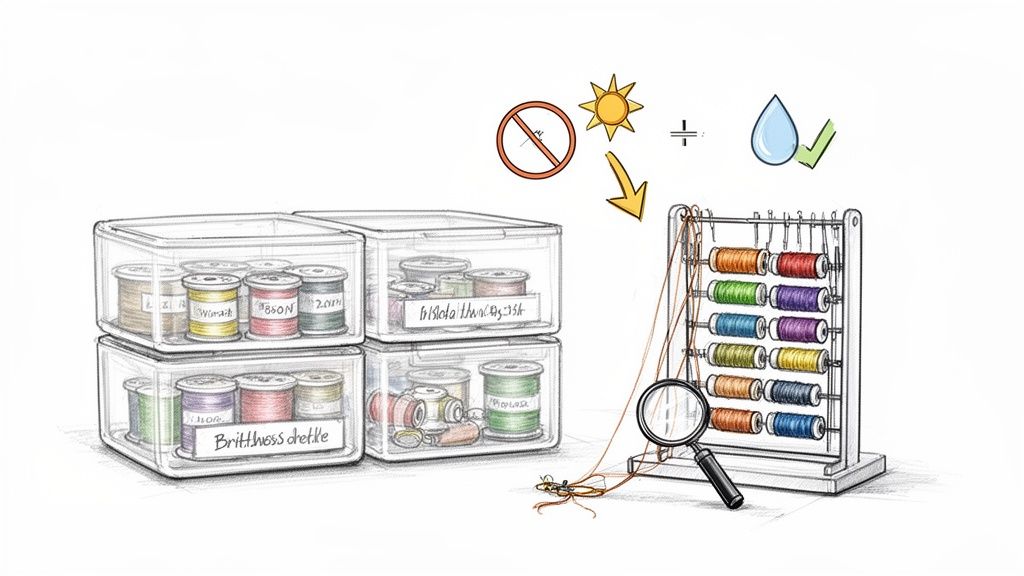
Luckily, keeping your different types of sewing threads organized and protected is easy. I'm a big fan of practical solutions like a clear Floriani Thread Storage Box. It keeps all your spools contained, clean, and visible so you can grab what you need at a glance. Thread racks are another fantastic option, especially if you like having your collection on display and within easy reach.
One last pro-tip: always test older thread before you start a new project. Just give it a firm tug. If it snaps easily, it's become brittle and isn't worth the headache. Using old, weak thread is a surefire way to end up with frustrating breaks and seams that just won't hold up. Toss it and grab a fresh spool—you'll thank yourself later
Got Questions? We’ve Got Answers.
Even after you’ve found the perfect thread, you’re bound to have a few questions. That's totally normal! Here are some of the most common ones we hear from our B-Sew Inn community, with answers to help you troubleshoot and sew with more confidence.
Why Does My Thread Keep Breaking?
This is probably the #1 question we get, and the fix is usually surprisingly simple. Before you do anything else, change your needle! A dull, bent, or wrong-sized needle is the culprit nine times out of ten. If that doesn't solve it, take a peek at your top tension—if it's cranked up too high, it can snap even the strongest thread.
Quilting vs. All-Purpose Thread: What’s the Real Difference?
It really just boils down to the material they're made of. All-purpose thread is almost always a sturdy, reliable polyester. It's got a little stretch and a lot of strength, making it great for garment construction.
Quilting thread, on the other hand, is typically 100% cotton. This is intentional! You want your thread to have the same properties as your cotton quilting fabrics. It also handles the high heat of an iron like a champ, which is a must-have for pressing quilt blocks.
How Should I Store My Thread?
Proper storage is a bigger deal than you might think for keeping your thread strong and lint-free. If you're looking for some great ideas for taming your stash, we recommend clear boxes or wall-mounted racks to keep spools visible and dust-free.
At B-Sew Inn, we truly believe that knowledge is the most important tool you can have in your sewing room. Bsewinn.com is committed to empowering crafters through its custom sewing machine designs, and we emphasize this support via extensive resources. Come explore our custom machine designs, check out our resources, and join our online classes to take your next project from good to gorgeous. https://www.bsewinn.com

