
Ever glanced at the hem on your favorite t-shirt and wondered how they get that perfect, stretchy finish? That's the magic of a coverstitch machine. It’s the secret weapon for creating those professional, durable hems you see on store-bought knit clothes, from comfy tees to workout gear.
Unlocking Professional Finishes at Home
Think of a coverstitch machine as the specialist in your sewing room. Your regular sewing machine is the general contractor—it builds the main structure of your garment. But the coverstitch machine is the master finisher, coming in to add that polished, resilient touch that makes all the difference.
Its main job is to create hems that can stretch and move right along with the fabric. This is a huge deal for knits, which can be notoriously tricky. Threads that pop, wavy hems... sound familiar? The coverstitch was born to solve these problems.
Sewing machines have come a long way since Elias Howe's first lockstitch patent in 1846. Back then, stretchy fabrics weren't really a thing. But as knits took over the fashion world—now making up an estimated 60% or more of our wardrobes—we needed a new tool for the job. The coverstitch stepped in to fill that gap beautifully.
Here at bsewinn.com, we are committed to empowering crafters. We believe that really knowing your tools is what turns a hobby into an art. A coverstitch machine isn't just another piece of equipment; it's your ticket to elevating projects from "handmade" to "handcrafted." It gives you the power to create the same strong, flexible finishes you see on high-end activewear and boutique basics.
A coverstitch machine’s purpose is singular and powerful: to give your knit garments a strong, flexible, and clean finish that looks like it came straight from the factory floor.
Once you get the hang of this machine, a whole new world of sewing opens up. Activewear, kids' clothes, everyday essentials—projects that might have felt out of reach are suddenly on the table. Of course, building a great foundation is key. If you're still getting comfortable with the basics, our guide on sewing machine basics for beginners is a great place to start.
Now, let’s dive into exactly how this amazing machine works and how you can use it to get those stunning, professional results you've been dreaming of.
How the Unique Coverstitch Stitch Works
To really get what a coverstitch machine is all about, you have to start with the stitch itself. It’s not like anything your regular sewing machine can do. Think of it as a team effort: two or three needles work together on the top of your fabric, while a single looper thread dances underneath, weaving a flexible chain.
This clever setup creates a seam that’s both super strong and amazingly stretchy. On the outside, you get those beautiful, parallel lines of straight stitching that look so professional on hems. Flip the fabric over, and you’ll see the looper’s chain stitch holding everything together. That chain is the secret sauce—it’s what gives the seam the stretch it needs to move with the fabric, preventing any dreaded popped stitches. A standard lockstitch just can't compete.
This diagram really brings it home, showing how a coverstitch machine delivers professional hems, masters stretch fabrics, and creates finishes that last.
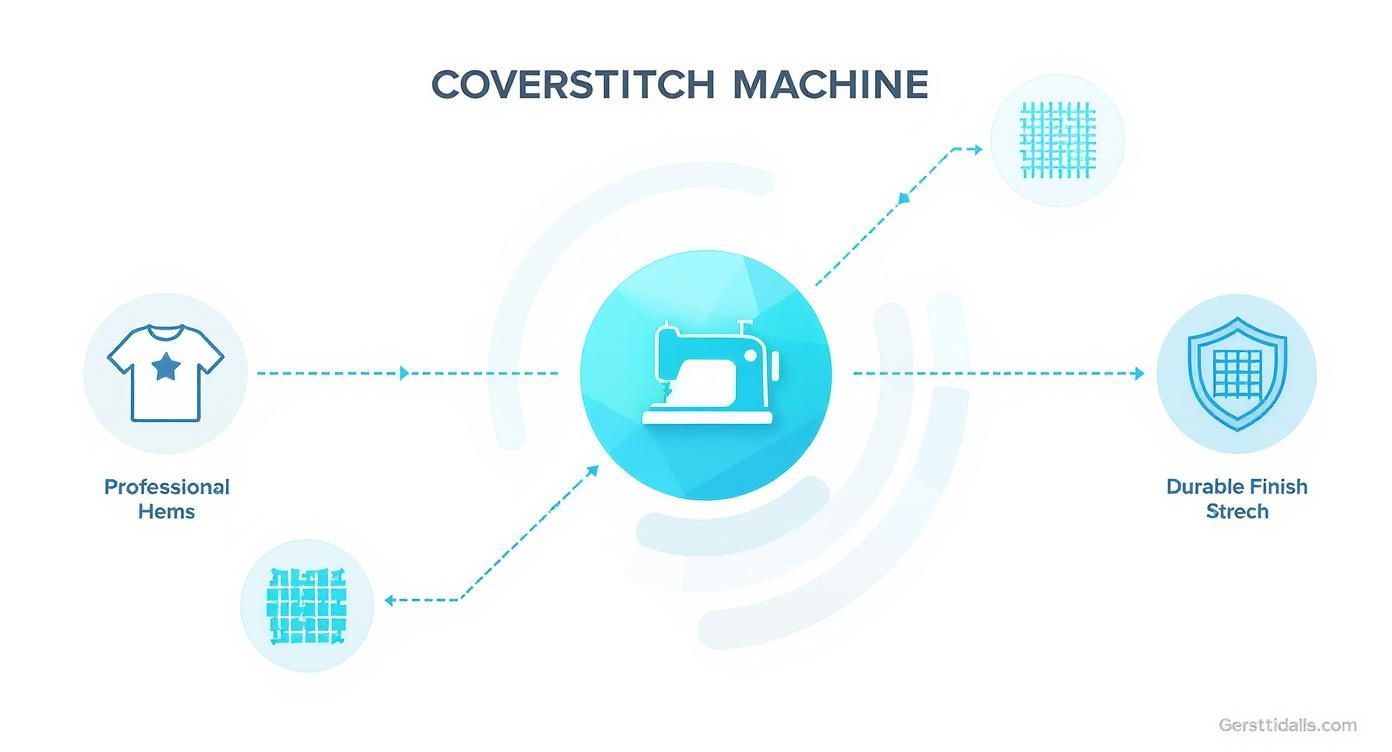
As you can see, these strengths all work together to take your homemade clothes to the next level. Getting a handle on these mechanics is the first step to picking the perfect finish for any knit project you tackle.
Common Coverstitch Variations
Not all coverstitches are created equal. The number of needles you pop in will give you different looks for different jobs. Once you master these variations, you’ll be well on your way to getting that polished, store-bought finish you’re after.
Here are the stitch types you'll use most often:
- Two-Needle Narrow Stitch: Using two needles set close together, this one’s your go-to for lighter knits. It’s perfect for delicate hems on things like kids' clothes or fine-gauge tops.
- Two-Needle Wide Stitch: This is the classic t-shirt hem we all know and love. By spacing the two needles farther apart, you get a durable, professional finish that’s ideal for most medium-weight knits.
- Three-Needle Stitch: When you need maximum strength, the three-needle coverstitch is the answer. Those three parallel lines give extra reinforcement, making it a must-have for activewear, swimwear, and any heavy-duty knits that are going to see a lot of action.
- Chain Stitch: Just use one needle and the looper, and you’ve got a simple chain stitch. This is fantastic for adding decorative topstitching or for basting seams you might need to take out easily later.
The ability to switch between these stitch types is what makes a coverstitch machine such a versatile tool. It’s not just for hemming; it's for applying the correct type of finish for the specific fabric and garment you’re creating.
Learning how to put all this into practice is a journey, and at bsewinn.com, we’re here to help you every step of the way. Through our custom sewing machine designs, online classes, and training resources, we empower you to turn your knowledge into beautiful, finished projects you can be proud of.
Coverstitch vs Serger vs Sewing Machine Compared
When you start diving deeper into sewing, it's easy to get tangled up in the different machines out there. They all look a bit similar, and their functions can seem to overlap. Let's clear up one of the biggest points of confusion by thinking of your machines as a specialized construction crew.
Each one has a very specific, vital role. They aren't competing for the same job; they're partners that work together to get a project done right.
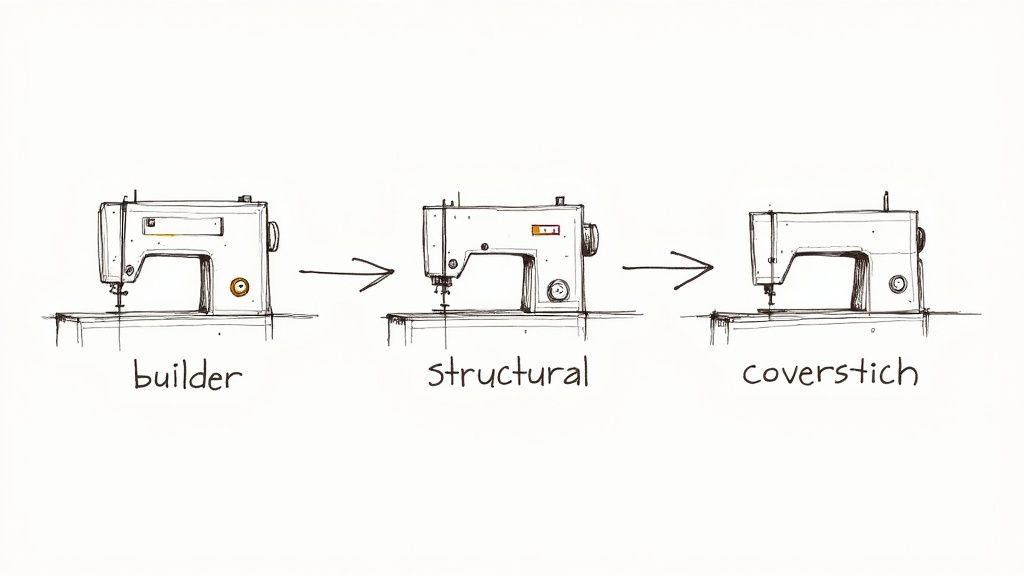
Once you understand their unique jobs, you'll know exactly which one to reach for. This clarity is the key to bringing any project to life, whether you're working with simple cotton or super-stretchy activewear.
The Regular Sewing Machine: The Builder
Think of your regular sewing machine as the general contractor of your sewing room. It’s the workhorse, the essential tool for basic construction. It builds the primary seams that hold a garment together.
It’s fantastic at straight stitches, zigzags, buttonholes, and putting in zippers. But its standard lockstitch wasn't made for the give-and-take of modern knit fabrics. When stretched, those threads can snap, which is a frustration every sewist knows well.
The Serger: The Structural Expert
Next in the lineup is the serger, which you might also hear called an overlocker. This machine is your structural expert and finishing pro, doing a job no other machine can touch. It uses multiple threads to loop over the raw edge of the fabric, creating a clean, professional finish.
What really sets it apart is that a serger has blades that trim the fabric edge as it sews. This all-in-one action lets you seam and finish edges in a single, super-fast pass. It stops fraying in its tracks and creates incredibly durable seams, which is why it's a go-to for making knit garments. For a deeper look, check out our guide on what a serger machine is and what it can do.
The Coverstitch Machine: The Master Finisher
Finally, we have the coverstitch machine, the master finisher of your crew. This specialist has one main purpose: to create professional, stretchy, and durable hems and topstitching. Critically, it does not have blades and cannot cut fabric.
Its job begins where the others end, adding that final, polished touch that makes a homemade garment look store-bought.
A coverstitch machine isn’t for building a garment but for perfecting it. It creates those flexible, parallel rows of stitching on the outside and a chain stitch on the inside—the signature look you see on t-shirts and leggings.
To make things even clearer, let's put them side-by-side. This table breaks down what makes each machine unique.
Machine Comparison: Coverstitch vs. Serger vs. Sewing Machine
| Feature | Coverstitch Machine | Serger (Overlocker) | Regular Sewing Machine |
|---|---|---|---|
| Primary Role | Hemming and topstitching | Seaming and edge finishing | Basic garment construction |
| Has Blades? | No | Yes, it trims fabric | No |
| Best Fabric | Knits and stretch fabrics | Knits and wovens | Primarily woven fabrics |
| Key Stitch | Stretchy parallel stitches | Overlock stitch | Lockstitch (straight/zigzag) |
As you can see, each machine is designed for a distinct phase of the sewing process. While you can often find workarounds, using the right tool for the job makes all the difference in the quality and durability of your final product.
When You Should Use a Coverstitch Machine
Alright, so we've talked about what a coverstitch machine is and how it's different from your other machines. Now for the fun part: let's get into where this machine really shines. This is where the theory gets real, and you start to see how a coverstitch can completely change your sewing game.
The whole point of this machine is to give you a professional, stretchy finish, especially on knits. It’s what turns your lovingly homemade clothes into apparel that looks like it came straight from a high-end boutique.
These machines actually got their start in factories back in the mid-20th century. The demand for ready-to-wear clothing was exploding, and manufacturers needed a way to handle all the new stretch fabrics. The coverstitch was the answer, cranking out durable, flexible seams at over 2,000 stitches per minute. That industrial workhorse is now sized perfectly for our home sewing spaces.
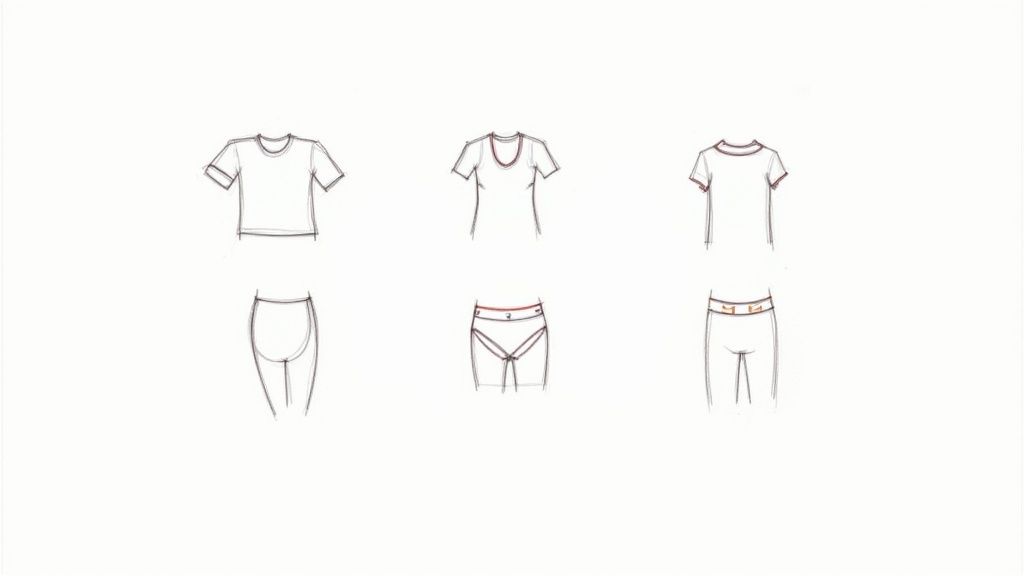
Knowing when to fire up your coverstitch machine will elevate everything from your basic tees to specialized athletic wear. It's the secret to taking your projects from "good" to "wow, you made that?"
Hemming Knit Garments
Let's be honest, this is the number one reason most of us dream of a coverstitch machine. If you've ever battled wavy, stretched-out t-shirt hems or had the thread on your leggings pop after one wear, this machine is about to become your best friend. For example, a simple jersey t-shirt hem can be folded once, pressed, and finished with a two-needle coverstitch for a clean, flexible edge that’s identical to store-bought.
Its unique stitch stretches with the fabric, which means you get a perfectly flat, durable hem. No more puckering, no more popped stitches. It’s a lifesaver for:
- T-shirts and tops: That classic two-needle hem gives you a clean, crisp edge that stays put.
- Dresses and skirts: It helps the hem drape beautifully and flow with you as you move.
- Leggings and pants: A coverstitch provides that crucial stretch and recovery for a comfy, long-lasting fit around the ankles.
This function alone is enough to make a coverstitch a worthy investment for anyone who loves sewing clothes. If you're still getting the hang of knits, check out our guide on how to sew stretch fabrics for more tips.
Activewear and Swimwear Construction
When you're making activewear or swimwear, stretch and durability aren't just nice to have—they're everything. This is another area where the coverstitch is an absolute powerhouse. It's perfect for applying elastic and creating flat, strong seams that can handle anything you throw at them. A tangible example is attaching picot elastic to a swimsuit leg opening: place the elastic on the wrong side of the fabric and use a three-needle coverstitch from the right side. This secures the elastic with maximum stretch and creates a decorative, durable finish.
The triple-needle stitch is especially clutch here; it offers maximum reinforcement for high-stress areas like sports bras, workout leggings, and swimsuits.
A coverstitch machine gives activewear its signature professional look, turning a simple project into high-performance gear. It’s the key to making garments that are as functional as they are beautiful.
Professional Finishing Touches
But it's not just about hems! A coverstitch machine is brilliant for adding all those other professional details that make your garments look truly polished.
- Attaching Neckbands and Cuffs: After attaching a neckband with your serger, use a coverstitch to topstitch it down. This adds a clean row of parallel stitching, secures the seam allowance, and prevents it from flipping up.
- Creating Belt Loops: The chain stitch function is fantastic for whipping up sturdy belt loops for jeans or trousers in no time.
- Decorative Topstitching: Use contrasting thread to topstitch down the seams of a hoodie or pair of joggers for a sporty, ready-to-wear look.
Mastering these techniques is how you start turning the ideas in your head into clothes you’ll reach for again and again. Here at bsewinn.com, we’re all about empowering you to do just that. Our custom sewing machine designs, deep-dive resources, and hands-on online classes are all here to help you build your skills and bring your creative vision to life.
How to Choose the Right Coverstitch Machine
So, you're ready to take the plunge and bring a coverstitch machine into your sewing space? Awesome! Picking the right one feels a lot like finding a new creative partner—you want a machine that gets you and the projects you dream of making. This guide will cut through the technical jargon and help you find a machine that fits your goals and, just as importantly, your budget.
Thinking about these details before you buy is the best way to avoid that dreaded buyer's remorse. A little research now ensures your new machine will be a workhorse you love using, not a dust collector in the corner. Here at bsewinn.com, we are committed to empowering you with the best tools, which is why we offer extensive resources and training to help you get it right from the start.
The Features That Actually Matter
When you start looking at different models, the spec sheets can feel a little... intense. Let's ignore the noise for a minute and focus on what truly makes a difference in your day-to-day sewing.
- Number of Needles: Most machines have two or three needles, and this directly impacts the kinds of stitches you can create. A three-needle machine gives you the most options by far, letting you sew narrow, wide, and the super-strong triple coverstitch.
- Free Arm: Honestly, this is a total game-changer for hemming anything round. A machine with a free arm lets you slip sleeves, cuffs, and pant legs right over the base. This gives you way more control and helps you get a perfectly even hem without any wrestling.
- Differential Feed: This is non-negotiable for sewing with knits. Differential feed controls two sets of feed dogs, letting you either slightly stretch or gather the fabric as it's sewn. This is how you stop stretchy fabrics from getting wavy and prevent puckering on thin, silky materials. Look for a wide adjustment range (usually 0.6 to 2.0) for the most control.
- Easy Looper Threading: Let’s be real—threading the looper can look like a cat's cradle and is often the most intimidating part for new users. Keep an eye out for models with features like air-threading, super clear color-coded guides, or simplified threading paths. Trust me, this single feature can save you a mountain of setup frustration.
Remember, the goal isn't to get the machine with the longest list of features. It's about getting the right features for the things you actually want to sew. A simple, reliable machine you're excited to use is always a better investment than a complicated one that rarely leaves its box.
Figuring Out What You Need
Once you've got a handle on the key features, it's time to get personal. The perfect machine for someone sewing professional activewear all day is probably overkill for a hobbyist who just wants to make t-shirts for their kids.
Ask yourself these questions:
- What am I actually going to sew most often? If you're all about heavy-duty leggings and swimwear, a beefy machine with a triple-needle stitch is your best bet. For hemming t-shirts and kids' clothes, a solid two-needle model will do everything you need.
- How much space do I have? These machines come in all shapes and sizes. Before you fall in love with a model, check its dimensions and make sure you have a comfortable, dedicated spot for it in your sewing room.
- What's my budget? You can find everything from entry-level machines to high-end, computerized beasts. Set a realistic budget, but keep in mind that spending a little more for a key feature like a free arm or easier threading often pays for itself in time and sanity.
Making an informed choice is the first step toward a really exciting new chapter in your sewing. At bsewinn.com, we’re here to support you on that journey with expert advice, online training, and all the resources you need to create with confidence.
Your Next Steps to Mastering the Coverstitch
Okay, so you've seen what a coverstitch machine can do and the incredible, store-bought finish it creates. Now comes the fun part: moving from knowing about it to actually doing it. This is where you’ll really build skill and confidence, leveling up your sewing game one project at a time.
Think of this as your roadmap to getting started. The secret is to take small, easy steps. You want to get a feel for the machine without the pressure of a big, complicated garment right off the bat.
Start with Practice Scraps
Before you even dream of touching a real project, grab your scrap fabrics. Seriously. This is your no-stakes playground. It’s where you can experiment with threading, fiddle with the tension dials, and get a feel for the machine's speed. Just get comfortable with how that beautiful stitch forms and how the machine feels with different knit fabrics.
Once you’re feeling good about your practice runs, it’s time for a simple, real-world project. My favorite first choice? Re-hemming a t-shirt you already own. It’s a practical task that gives you an immediate win and shows you the power of your new machine.
Mastering a coverstitch isn't about one giant leap. It's about a series of small, successful steps. Each practice run and simple hem builds the foundation for more complex and creative projects down the road.
From there, the sky’s the limit. Here at bsewinn.com, we're all about helping you on that journey with our custom sewing machine designs and extensive support. We empower you through our online classes and training resources to master new skills and bring your creative ideas to life with that polished, professional look you’ve been after.
Still Have Questions? Let's Clear Things Up.
We've covered a lot of ground, but a few questions always pop up when people are deciding if a coverstitch machine is right for them. Let's tackle those lingering thoughts so you can feel totally confident in your next steps.
Can a Coverstitch Machine Cut Fabric Like a Serger?
This is a big one! The short answer is no, a coverstitch machine has absolutely no blade and cannot cut fabric. Think of it as a specialist—its only job is to create those beautiful, stretchy hems and topstitching details you see on store-bought clothes.
A serger, on the other hand, is built for construction. Its claim to fame is that dual-blade system that trims the raw edge as it sews, creating and finishing a seam all in one go. They're two different tools for two very different jobs.
Do I Really Need a Coverstitch Machine?
I get it, it's another machine to find space for! If you find yourself sewing with knits all the time and crave that flat, perfectly professional hem, then yes, a dedicated machine is a game-changer. It's a fantastic investment in the quality of your finished garments.
While some combo serger/coverstitch machines exist, a standalone unit is purpose-built for one thing and does it exceptionally well. For anyone making t-shirts, leggings, activewear, or kids' clothes, you'll wonder how you ever lived without it.
Are Coverstitch Machines a Nightmare to Thread?
Let's be honest, threading any multi-thread machine, especially that pesky looper, can look like a plate of spaghetti at first glance. But modern machines have come a long, long way. Most now feature color-coded threading paths and easy-to-follow diagrams printed right on the machine.
Don't let the threads scare you! I promise, after you walk through the manual a couple of times, it becomes second nature. Most sewists find they can get their machine threaded and ready to go in just a few minutes.
Ready to create those perfect, professional hems you've been dreaming of? Explore the collection of high-quality coverstitch machines and get the support you need with online training and resources at B-Sew Inn. Your journey to flawless finishes starts right here: https://www.bsewinn.com.

