

A knit dress is nearly finished. The seams look neat, but the hem ripples when it's stretched, or the topstitching doesn't quite resemble the clean finish found on ready-to-wear clothing. The regular sewing machine can manage a twin-needle hem, and the serger can assemble the garment, but switching between workarounds can turn the final stage into the slowest part of the project.
That's where a serger coverstitch machine, also called a combination or combo machine, deserves a closer look. It can provide overlock construction and coverstitch hemming in one platform, but its value depends on how often the sewing workflow changes between those jobs. A dedicated serger, a standalone coverstitch machine, and a combo model each solve a different ownership problem.
| Sewing priority | Most suitable machine type | Why it fits |
|---|---|---|
| Seam construction and raw-edge finishing | Standalone serger | Trims, stitches, and overcasts in one operation |
| Stretch hems and visible parallel topstitching | Standalone coverstitch machine | Creates hems without cutting the fabric |
| Both functions in limited space | Combo serger coverstitch machine | Combines overlock and coverstitch capability |
| Occasional knit hems | Regular sewing machine with twin needle | Covers a basic need with more setup and less consistency |
Table of Contents
- Why You Need More Than One Machine for Professional Results
- Understanding the Core Difference Between Sergers and Coverstitch Machines
- Stitch Quality and Fabric Behavior Explained
- Evaluating Standalone Units Versus Combo Machines
- Buying Guidance for Hobbyists and Small Businesses
- Essential Operation Tips and Maintenance Routines
- Visit B-Sew Inn to Test Machines Before You Buy
Why You Need More Than One Machine for Professional Results
A sewist working on a collection of knit tops may finish the shoulder seams beautifully, only to stop at the hem. The serger has created a flexible edge finish, but it isn't the same as the parallel rows of stitching visible on a commercial T-shirt. A twin needle can approximate that appearance, yet the process may require careful tension adjustments, stabilizing, and testing on scraps before the hem behaves.
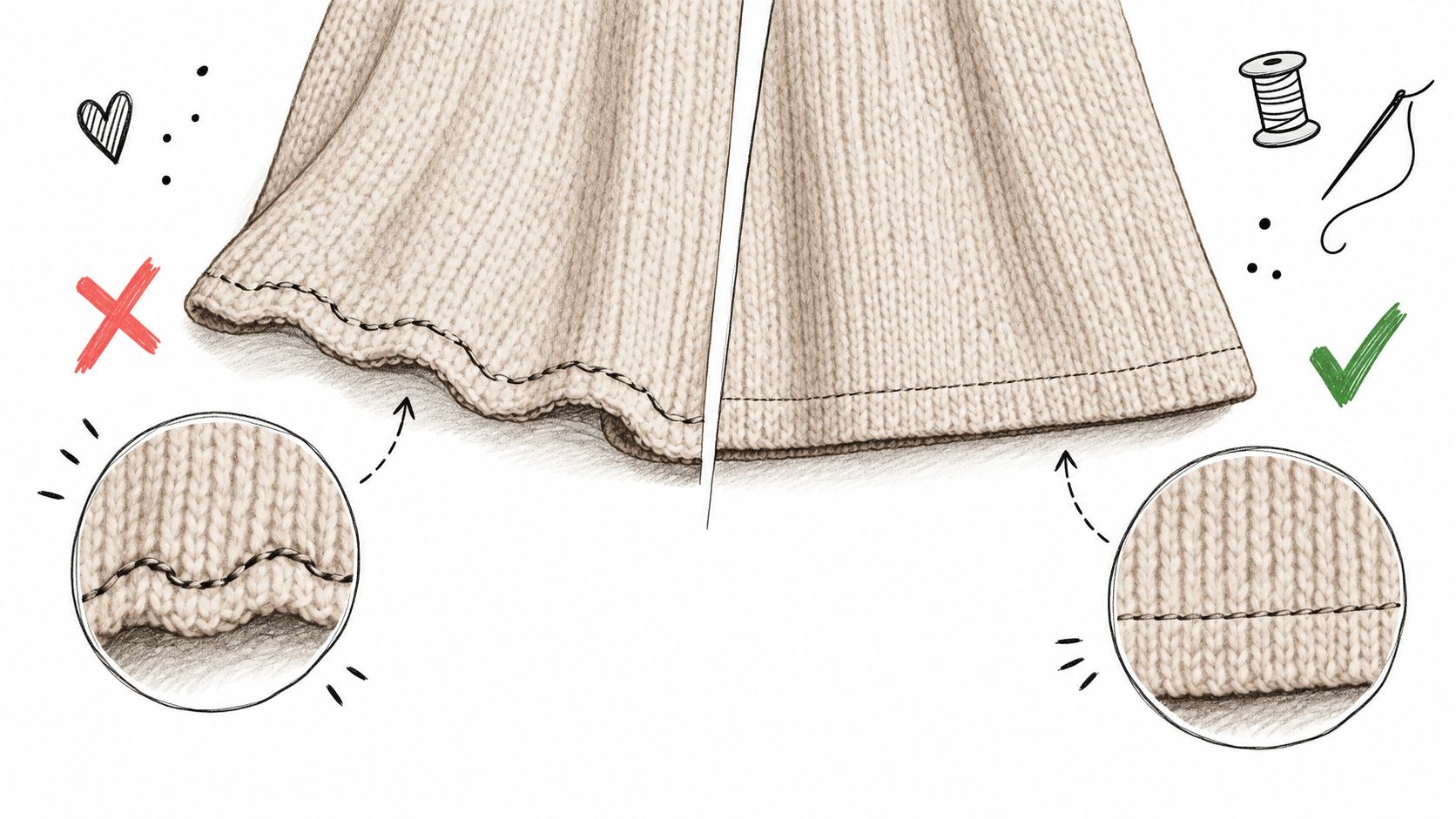
The problem isn't a lack of sewing skill. Edge finishing and hemming are different operations. A serger is built to work along a raw edge, while a coverstitch machine is built to secure a folded hem with visible stitching on the garment's exterior. Trying to make one tool perform the other's job can produce an acceptable result, but it often adds handling, setup, or fabric distortion.
The two finishing jobs
A serger can trim the seam allowance, stitch the seam, and wrap thread around the raw edge to reduce fraying. That combination makes it useful for garment construction, especially when the fabric needs a flexible seam. It can also produce decorative edge treatments, rolled edges, and flatlocking effects, depending on the machine and setup.
A coverstitch machine doesn't replace that construction role. It creates parallel rows on top of the fabric and a looper-created chain structure underneath, making it suitable for hems, neckbands, cuffs, and decorative seaming. Since it doesn't cut fabric, it can sew away from a raw edge, a practical difference when adding a visible finish to an already assembled garment.
Practical rule: Choose the machine according to the operation that repeatedly slows down the project, not according to the longest feature list.
The history of the machines reflects those different purposes. Overlock technology is tied to industrial garment manufacturing, with the first patent for an overlocking mechanism filed in 1881 by the Merrow Machine Company in the United States, as described in this history of serger development. EBSCO places home-sewer access in the late 1960s, while the Baby Lock EF-205 appeared in 1967, so the technology has industrial roots more than 140 years old and a home-sewing history of roughly 55 to 60 years.
Understanding the Core Difference Between Sergers and Coverstitch Machines
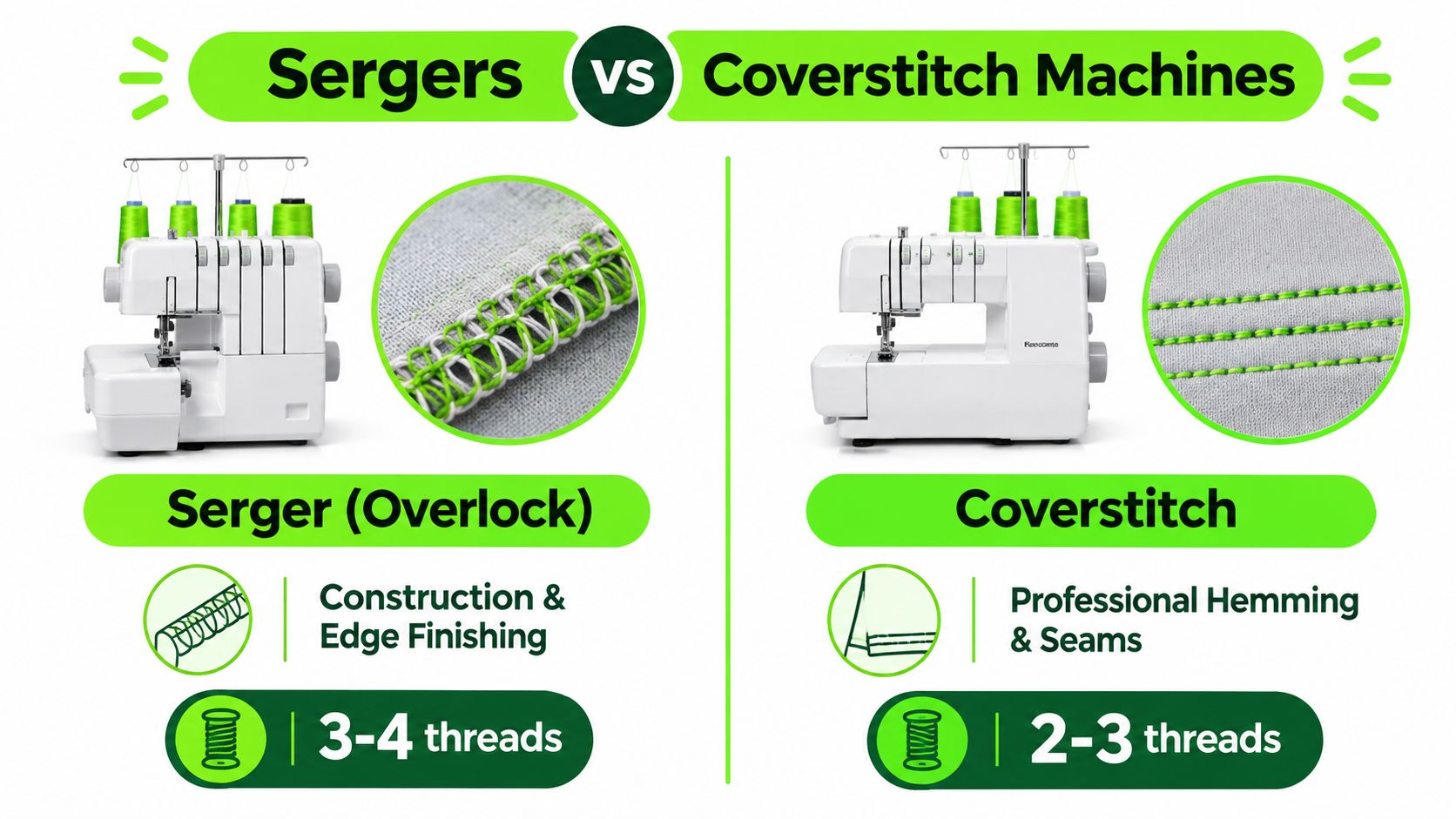
A serger, or overlock machine, manages the edge of fabric as it forms a seam. Built-in blades trim excess material, loopers and needles create the stitch, and the thread wraps the edge to help control fraying. The machine can therefore perform three actions in one pass, trimming, joining, and overcasting the fabric edge, as documented in this serger and coverstitch comparison.
A coverstitch machine approaches the fabric differently. It doesn't use trimming blades for the sewing operation, and its main purpose is to secure a folded hem or create decorative rows. The needle threads appear as parallel lines on the right side, while the looper forms the underside structure that lets the hem move with a knit garment.
A mechanical comparison
Sergers generally use 3 to 8 threads, two loopers, and integrated blades. Coverstitch machines typically use 1 to 3 threads, 2 to 3 needles, and a single looper. Those configurations aren't interchangeable, because each machine directs thread around the fabric for a specific type of finish.
| Feature | Serger or overlock | Coverstitch |
|---|---|---|
| Main job | Seam construction and edge finishing | Hemming and decorative seaming |
| Fabric cutting | Built-in blades trim the edge | Doesn't cut fabric |
| Typical thread arrangement | 3 to 8 threads, two loopers | 1 to 3 threads, 2 to 3 needles, one looper |
| Best-known result | Wrapped, flexible seam edge | Parallel topstitching with a chain-like underside |
| Best placement | Along a raw edge | On folded hems or within the garment |
The distinction becomes especially important for knit garments. A serger can construct a stretchy seam, but its blade and edge-guided operation aren't intended to create the classic coverstitched hem. A coverstitch can hem a T-shirt, but it isn't an efficient replacement for joining the garment's main seams or controlling raw edges.
For a plain-language overview of the overlock machine's role, the B-Sew Inn serger guide provides a useful reference. The purchase decision becomes clearer once the intended seam location is identified. If the task begins with a raw edge, think serger. If the garment is already assembled and needs a flexible folded hem, think coverstitch.
Stitch Quality and Fabric Behavior Explained
The visible stitch is only part of the decision. Fabric behavior often determines whether a machine feels easy to use or frustrating. Lightweight knits, ribbing, athletic fabrics, and unstable jersey can stretch, ripple, or tunnel when the feed system isn't balanced with the fabric.
A serger's cutting action is valuable for clean construction, but it requires control. If the fabric stretches as it approaches the blade, the finished edge can become wavy or the seam allowance can distort. Differential feed helps address that behavior because the front and rear feed dogs can move at different speeds, controlling stretching and puckering in knit fabrics, as explained in this technical overview of differential feed.
Why the coverstitch looks different
A coverstitch sits on the surface rather than trimming the edge. The folded hem stays intact as the machine places parallel lines across it, and the underside looper structure provides flexibility for movement. That makes the stitch especially useful on T-shirt hems, sleeve cuffs, neckbands, and activewear openings.
The machine's lack of cutting is an advantage in this setting. The operator can begin stitching at a planned point on the garment instead of following a raw edge, which opens possibilities for decorative lines and reinforcement. It also means the hem must be prepared accurately before sewing, because the machine won't remove uneven fabric or correct an inconsistent fold.
| Fabric situation | Potential issue | Useful response |
|---|---|---|
| Lightweight jersey | Wavy edge or stretched hem | Test differential feed and presser-foot pressure |
| Rib knit | Uneven recovery after sewing | Support the fabric without pulling it |
| Stable cotton knit | Twin-needle tunneling or inconsistent rows | Test a coverstitch for repeatable hemming |
| Woven fabric with a raw edge | Fraying and seam bulk | Use the serger's edge-finishing capability |
A coverstitch isn't automatically easier on every fabric. It excels when the project calls for a folded, flexible finish, but it still needs correct needles, thread, fabric support, and handling. The B-Sew Inn coverstitch guide can help sewists understand the stitch before comparing machines in person.
Evaluating Standalone Units Versus Combo Machines
The central buying question isn't whether a combo machine can perform both functions. A capable combo unit can switch between overlock and coverstitch modes. The more useful question is whether the space and purchase savings outweigh the interruption caused by switching modes.
Standalone machines keep each operation ready. A serger can remain threaded for construction while a coverstitch machine stays prepared for hems. That arrangement reduces repeated setup and makes batch sewing more fluid. It also requires two work surfaces, two storage locations, and a larger total investment.
Where a combo makes sense
A combo machine is often the practical choice for a sewist with limited room who wants access to both stitch families. One machine can occupy a smaller footprint than two machines, and one purchase may be easier to justify when both capabilities are needed but neither is used continuously.
The trade-off appears at the changeover. Depending on the model, the operator may need to rethread loopers or needles, change the presser foot, reposition machine settings, and test the stitch before returning to the project. Independent guidance on stretch-fabric handling also reinforces the importance of testing settings rather than assuming the same configuration will suit every operation, as shown in this guide to sewing stretch fabrics.
A combo machine saves space every day, but its mode change costs attention every time the workflow changes.
Consider the project pattern rather than the theoretical capability:
- Many short alternations: Separate machines are more convenient when construction and hemming alternate repeatedly.
- Long production runs: A combo can work well when several seams are completed first, followed by a dedicated hemming session.
- Occasional use: A combo avoids storing a second machine that may sit unused.
- Frequent coverstitch work: A standalone coverstitch machine keeps the hemming setup available and reduces conversion friction.
- Small sewing room: A combo may be the better spatial buy if the owner can group tasks by mode.
A combo isn't a compromise in every situation. It becomes a compromise when the user changes modes constantly and expected the machine to behave like two permanently threaded units. A standalone pair is often more satisfying for batch production, while a serger coverstitch machine can be financially and spatially sensible for a home sewist with a mixed but manageable workflow.
Buying Guidance for Hobbyists and Small Businesses
The right purchase follows the garments being made. A hobbyist who mostly works with woven cotton, linen, or home décor fabric may gain more from a reliable serger than from paying for coverstitch capability that rarely gets used. A sewist who produces knit tops, leggings, cuffs, or stretch dresses will evaluate the same machine differently because the hem is a recurring production step.
Match the machine to the project mix
Choose a standalone serger first when raw-edge control and seam construction are the main needs. It can finish woven edges, create flexible knit seams, and reduce the number of separate passes required for construction. A regular sewing machine with a twin needle can cover occasional decorative hems, although the result may require more testing and careful handling.
Consider a dedicated coverstitch machine when professional-looking knit hems are central to the sewing routine. It earns its place when the same hem treatment appears across many garments, particularly when consistency matters more than having one machine perform every possible task.
Consider a combo machine when both functions matter, floor or table space is restricted, and projects can be organized in batches. The financial advantage is not just the number of stitches included. It comes from avoiding a second machine purchase and fitting both functions into the available sewing area, provided the owner accepts the conversion process.
Small apparel businesses should assess repeatability before chasing maximum feature count. A machine that produces a clean hem after a predictable setup supports consistent production. A model that technically performs the task but requires frequent troubleshooting may create hidden labor in sampling, rethreading, and quality checking.
Ask practical questions before paying
The serger buying guide from B-Sew Inn is a useful starting point, but the most important answers come from the actual sewing routine:
- Which fabric appears in most upcoming projects?
- Does the workflow require edge finishing, hemming, or both?
- Will the machine switch modes occasionally or throughout every garment?
- Is there room for two machines that can remain threaded?
- Will service, lessons, and replacement notions be easy to access?
For an educator or small seller, machine access can also affect teaching and fulfillment. A combo unit may simplify a compact studio, while dedicated machines can make demonstrations and repeat orders faster. Neither choice is universally superior. The better financial decision is the one that removes the most recurring friction from the work the owner sells or enjoys.
Essential Operation Tips and Maintenance Routines
A precise machine still needs a disciplined setup. Sergers and coverstitch machines collect lint and thread fragments around the feed dogs, needle area, loopers, and, on a serger, the knife assembly. Cleaning those areas with the tools recommended by the manufacturer helps prevent debris from interfering with fabric movement and stitch formation.
Build a repeatable setup
Threading accuracy comes first. Follow the machine's marked path, raise the presser foot when the instructions call for it, and check that each thread is seated correctly before changing tension. On a combo model, keep a written or photographed setup reference for each mode. That small record can make conversion less error-prone.
Differential feed deserves deliberate testing. Adjusting the front and rear feed dogs at different rates can help limit stretching or puckering, but the correct setting depends on the fabric and stitch. Test on a scrap containing the same layers and direction of stretch as the garment, then change one setting at a time.
- Use suitable needles: Match the needle type and size to the fabric and thread recommendations in the manual.
- Choose dependable thread: Consistent thread reduces avoidable breakage, loops, and tension variation.
- Support the fabric: Let the feed dogs move the material without pulling from the front or dragging from behind.
- Record successful settings: Note thread, needle, differential feed, stitch length, and presser-foot adjustments for repeat projects.
For tension problems, start with threading rather than immediately turning every dial. A missed guide, incorrectly seated thread, or partially threaded looper can mimic a tension fault. The B-Sew Inn tension-adjustment guide offers a practical troubleshooting reference.
Service protects the investment
Oil only where the manufacturer's instructions permit it. Some modern machines are designed to operate without user oiling, while others specify lubrication points and intervals. When skipped stitches, unusual noise, recurring thread breaks, or persistent uneven hems remain after correct threading and cleaning, a professional service appointment is safer than forcing the machine through more projects.
Visit B-Sew Inn to Test Machines Before You Buy
Specifications can't show how easily a machine handles a particular rib knit or how disruptive a mode change feels. A hands-on test reveals whether the threading path, presser-foot lift, controls, workspace, and fabric feeding suit the person who'll use the machine.
B-Sew Inn is an authorized sewing, quilting, and embroidery machine dealer with retail stores in Tulsa, Oklahoma City, Springfield, Humble, and Fayetteville, plus an online store. The retailer sells and services machines from Baby Lock, Bernina, Bernette, Brother, and Janome, along with sergers, coverstitch machines, thread, needles, notions, cabinets, cutting tables, and other sewing supplies. Customers can bring fabric swatches, compare a serged seam with a coverstitched hem, and ask about in-person machine mastery sessions, classes, service, repair, and trade-ins.
A short demonstration can answer the questions that online descriptions leave open. Can the operator thread it comfortably? Does the combo conversion fit the intended workflow? Does the hem remain smooth on the actual knit fabric? The store team can help match those observations to currently available equipment.
The online store is another place to browse before traveling, while an in-person visit provides the hands-on test that matters before a significant machine purchase.
B-Sew Inn offers machine sales, service, repair, trade-ins, supplies, and in-person classes for sewists comparing serger and coverstitch options. Browse B-Sew Inn, bring project fabric to a nearby store, and test the machine setup before choosing the platform that fits the sewing room and workflow.

