

Standing in front of a wall of sewing machines can rattle even a confident shopper. One machine has a tiny screen, another has a stack of stitch icons, and a third looks almost plain enough to be cheap, until the price tag says otherwise. That is the wrong moment to think in brand loyalty. The better move is to think like a dealer associate and ask what the machine has to do, how often it will be used, where it will live, who will service it, and how much room there is in the budget for needles, feet, bobbins, and repairs.
| Buyer need | Best category | Why it earns the spot | What usually changes the decision |
|---|---|---|---|
| First garments, curtains, simple mending | Mechanical or basic computerized | Clean straight stitching and easy setup matter more than novelty | Feed quality, bobbin access, and tension that behaves |
| Garments with stretch fabrics and buttonholes | Computerized sewing machine | More stitch options and convenience features help finish projects cleanly | Presser-foot pressure, stretch stitches, and buttonhole consistency |
| Quilts larger than lap size | Quilting machine, or a spacious computerized model | Throat space and stability matter more than a long stitch menu | Workspace, vibration, and how the machine handles thick layers |
| Knitwear and fast seam finishing | Serger or coverstitch machine | Speed and seam finishing change the whole workflow | Differential feed, stitch length, and edge control |
| Monograms, labels, and decorative motifs | Embroidery or multi-needle machine | The project needs hooping and design handling, not just sewing | Hoop size, design workflow, and threading convenience |
Table of Contents
- Standing in Front of the Wall of Machines
- The Five Machine Categories Worth Knowing
- Matching Machine Type to Your Real Projects
- Skill Level and the Right Time to Move Up
- Why You Should Try the Machine Before You Buy
- Features, Budget, Warranty, and Service That Actually Matter
- Financing, Trade-Ins, and the Real Cost Over Time
- Your Next Step Toward the Right Machine
Standing in Front of the Wall of Machines
A first-time buyer usually stares at that wall and assumes the most expensive box must be the smartest choice. That is rarely true. Most modern machines can sew a decent basic seam, and the key difference is fit, not magic.
A good machine recommendation starts with the project, not the price tag. The history of sewing machines makes that obvious, because the category grew from experimental devices into household tools that people used for everyday work, not novelty. Early milestones, from Thomas Saint's workable patent in 1790 to Isaac Singer's rigid-arm machine in 1851, led to mass production and a consumer market that prized reliability, not showmanship, and by 1860 more than 110,000 sewing machines had been produced in the United States alone MoAH sewing machine history.
Practical rule: If two machines both sew the fabric cleanly, the better machine is the one that makes the buyer more willing to sit down and sew again tomorrow.
That is why the best sewing machine recommendations always come back to five questions. What does the buyer make most often? How often will the machine run? Will it live in a dedicated room or get hauled to a dining table? Who will service it after the sale? And what does the full ownership cost look like, not just the shelf price?
A buyer who is making curtains a few times a year does not need the same setup as someone piecing quilts every week. A garment sewist who wants neat buttonholes and stretch stitches has different needs than a hobby embroiderer. The shortlist comes from those differences, and the reasoning matters just as much as the machine itself. For a practical starting point, see how to choose a sewing machine.
The Five Machine Categories Worth Knowing
The categories that matter are easy to understand once they are tied to projects instead of part numbers. Mechanical machines are the workhorses for simple seams, curtains, and first garments. They usually feel direct, repairable, and familiar.
Computerized sewing machines add buttons, memory, and a broader stitch library. They help when the work includes stretch fabrics, decorative stitches, or regular buttonholes. Quilting machines, including long-arm and mid-arm setups, are about throat space and frame support more than decorative extras. Sergers and coverstitch machines are for seam finishing, knitwear, and clean hems. Embroidery and multi-needle machines are for monograms, labels, and design work that needs hooping and repeatability.
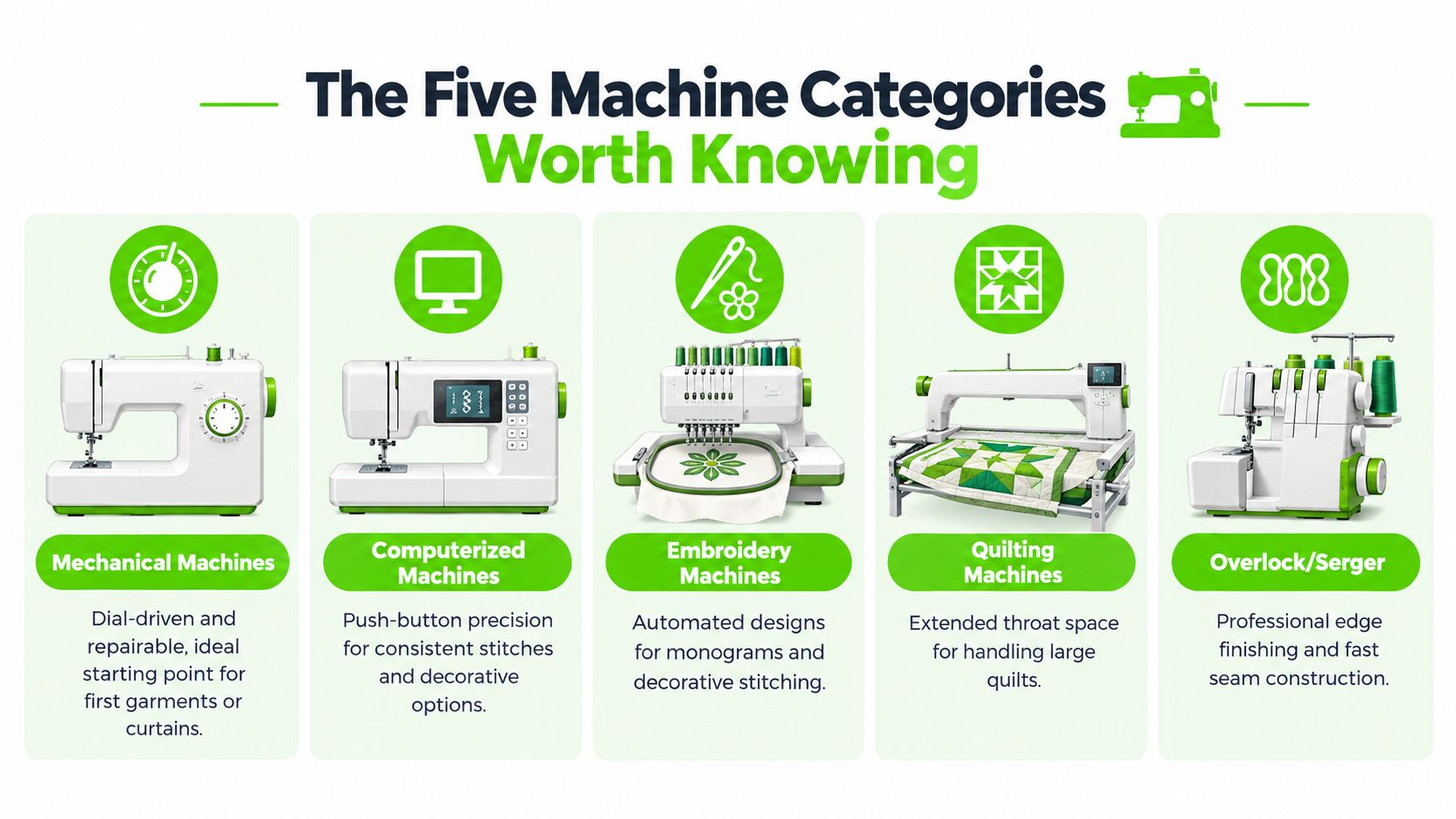
Overlap exists, and that's where buyers get confused. A computerized sewing machine can handle light decorative work, and a sturdy mechanical machine can hem denim without drama. The mistake is assuming one machine category should do every job equally well.
Where the categories blend
A quilter who also makes garments often starts with one strong computerized sewing machine, then adds a larger quilting setup later when the quilt tops get bigger. A knitwear maker usually gets more practical value from a serger before buying a second sewing machine. And a home sewist who wants occasional embroidery does not need to jump straight to the most complex option in the room.
The right category is the one that matches the buyer's main output. Everything else is just feature noise. For a closer look at seam finishing and overlock work, what a serger does is worth reading before making a decision.
Matching Machine Type to Your Real Projects
A machine should earn its place on a project-by-project basis. A first pair of pants, a baby quilt, and a monogrammed tote each stress different parts of the machine, and buying for the wrong one creates frustration fast.
| Project | Recommended Category | Key Feature | Skill Milestone |
|---|---|---|---|
| First pair of pants or skirt | Computerized sewing machine | Buttonholes and stretch stitches | Ready to move from straight seams into garments |
| Home curtains and cushions | Mechanical or computerized sewing machine | Straight stitch consistency and fabric handling | Comfortable with layout, hems, and topstitching |
| Baby quilt | Quilting machine, or a roomy computerized model | Throat space and stable stitching | Moving from small patchwork to layered projects |
| Knit t-shirt | Serger | Thread trimming and seam finishing | Ready to sew stretch fabrics without puckering |
| Monogrammed tote or quilt label | Embroidery machine | Hoop control and design placement | Ready to add decorative personalization |
A pants maker should care about buttonholes and stretch stitches long before stitch count. A curtain maker needs feed consistency and enough table support to keep the fabric under control. The wrong choice shows up as puckered seams, ragged finishing, and projects that stall halfway through.
A quilt piecer can get a lot done on a solid computerized machine, but once the layers get larger and heavier, throat space starts calling the shots.
That is why the skill milestone matters. A new sewist usually needs a machine that encourages clean habits. An intermediate garment maker benefits from repeatable settings, especially if the same hem or seam gets used over and over. An advanced quilter often outgrows a home machine because of workspace, not because the stitches suddenly become poor.
For buyers comparing quilting and embroidery paths, sewing machines for quilting and embroidery is a useful way to separate the two.
Skill Level and the Right Time to Move Up
The right time to upgrade is when the current machine slows the work, not when a shiny feature list becomes tempting. Beginners do best with a straightforward machine that feeds fabric well, makes bobbin changes simple, and doesn't punish mistakes. Intermediate sewists need more repeatability and a wider stitch library, especially once garments and knits enter the mix.
Beginner, intermediate, and advanced thresholds
A first quilt is usually the moment a buyer learns whether the machine is helping or fighting. If the feed is sloppy or the tension is touchy, frustration shows up quickly. A first lined jacket adds more pressure because seam accuracy, presser-foot control, and the ability to keep layers aligned all matter at once.
Advanced quilters tend to outgrow throat space before stitch quality. That is an important distinction. The machine can still sew beautifully, but the body mechanics of pushing a large quilt around a cramped bed make the work inefficient and tiring.
Embroidery and multi-needle buyers are different. They are not really “moving up” in the usual sense. They are choosing a machine because the projects demand hooping, thread changes, or repeat design work from day one.
Here is the clean rule: upgrade when the machine becomes the bottleneck. If the sewist is spending time wrestling the tool instead of finishing the project, the category is wrong. For broader background on how machines are tested across fabrics and load conditions, the practical performance focus described in expert testing is the right mindset, especially when a project moves from cotton to denim or layered quilt work expert-tested sewing machine methods.
Why You Should Try the Machine Before You Buy
A sewing machine touches the body every time it's used, so the feel test matters more than the brochure. Spec sheets won't tell a buyer whether the foot pedal responds naturally, whether the handwheel feels smooth, or whether the buttonhole lever sits where the hand expects it.
The in-store visit is essential for any serious purchase. A floor model, demo unit, or loaner program turns guesswork into evidence. The best dealers know that the body notices what the page cannot show.
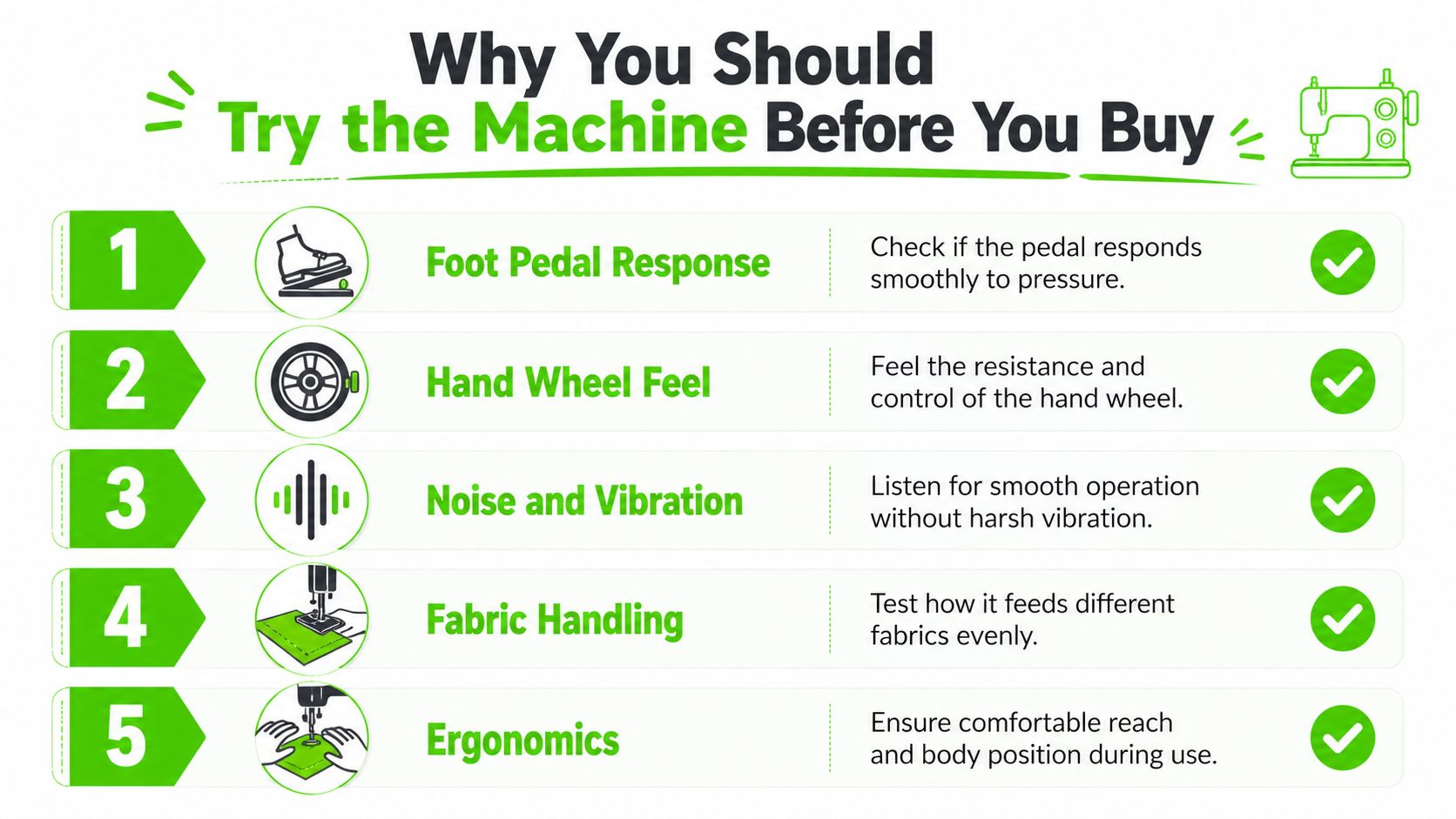
A smart test-drive checklist
- Foot pedal response: Press gently and then firmly, and check whether speed changes feel smooth or jumpy.
- Handwheel feel: Turn it slowly and notice whether the resistance is controlled or awkward.
- Noise and vibration: Run the machine under load and listen for harsh vibration that would get old fast.
- Fabric handling: Sew a straight line on quilting cotton, then try a buttonhole on shirting if the machine allows it.
- Ergonomics: Lift the machine, change the needle, wind a bobbin, and check whether the reach feels natural.
Practical rule: If the machine is uncomfortable in a ten-minute test, it won't feel better after three hours.
B-Sew Inn's stores in Oklahoma, Missouri, Texas, and Arkansas make that kind of test possible in person, which is a real advantage over buying blind. The machine that disappears in the buyer's hands is usually the right one. For a deeper buying checklist, sewing machine buying guide is the logical next stop.
Features, Budget, Warranty, and Service That Actually Matter
Useful features are the ones that change the project. Extra stitch menus only matter if the buyer uses them. Automatic thread cutters make sense on heavy-use machines. A knee lift helps when quilting gets serious. Extension tables pay off the first time a larger quilt is spread out and supported.
Separate real value from filler
Some features look impressive but do little for an average home sewist. A USB port is only useful when the embroidery workflow needs design transfer. A huge stitch count means very little if the buyer only uses straight stitch, zigzag, and a buttonhole. The better question is whether the feature saves time, improves accuracy, or makes a hard project easier to finish.
Budget should cover the machine and the things that make it usable. That means scissors, bobbins, needles, the right feet, and sometimes a second spool pin for twin-needle work. The total cost of ownership is where a cheap machine can get expensive fast.
| Criterion | Why It Matters | What to Ask the Dealer |
|---|---|---|
| Stitch options | Only useful if they match the buyer's projects | Which stitches will actually get used on the planned work? |
| Presser-foot pressure | Helps control puckering and stretching | Does the model adjust pressure for fine fabrics and knits? |
| Service support | Determines how painful ownership becomes after a problem | Who services the brand locally, and how long does turnaround usually take? |
| Accessories | Controls the real cost of ownership | Which feet, bobbins, and tables are included, and which are extra? |
| Warranty terms | Signals manufacturer confidence | What is covered, and what paperwork is required? |
Warranty matters, but the local service department matters more. A strong dealer relationship can shorten downtime and keep a machine earning its keep. Consumers also note that adjustable presser foot pressure helps with fine fabrics and knits, which makes it one of the first features worth comparing across models Consumer Reports sewing machine buying guide.
For repair expectations and service planning, cost of sewing machine repair is the kind of reading that saves regret later.
Financing, Trade-Ins, and the Real Cost Over Time
A lower monthly payment can hide a more expensive machine. That's why financing should be judged by the full term, not just the monthly number. A promotional plan can make sense on a serious machine purchase, but only if the buyer understands the payment schedule and stays current.
Trade-ins need the same honest lens. A working machine with service history and usable parts is worth more than a non-runner that needs immediate attention. Machines that were maintained well usually have a clearer resale path, which is why service records matter.
A simple three-part cost check
- Start with the purchase price.
- Subtract any fair trade-in credit.
- Add three years of upkeep, including needles, bobbins, routine service, and at least one major repair if the machine is computerized.
That worksheet is boring, and it works. It keeps buyers from comparing a premium quilting model to a mid-range garment machine based only on sticker price. It also shows which machine is cheaper to live with.
For buyers financing a machine as part of a side business or studio setup, equipment funding for small businesses can be a useful place to understand the broader lending options before signing anything. The point is not to chase the easiest payment. It's to buy a machine that stays useful long enough to justify the money.
| Cost Line Item | Machine A, Quilting | Machine B, Computerized Garment |
|---|---|---|
| Purchase price | Higher upfront cost | Lower upfront cost |
| Trade-in credit | Depends on condition and brand support | Depends on condition and brand support |
| Needles and bobbins | Ongoing supply cost | Ongoing supply cost |
| Routine service | Planned maintenance | Planned maintenance |
| Major repair | Possible within several years | Possible within several years |
Your Next Step Toward the Right Machine
The fastest way to make a bad choice is to order the cheapest model that looks close enough on paper. A sewing machine is one of the few tools where the pedal feel, handwheel resistance, and needle visibility matter every time it's used. Those details don't show up in a product photo.
The smarter move is simple. Bring two pieces of fabric and the current project to a dealer, then run the same seam on three machines in the same category. Ask about throat plate size, bobbin class, service turnaround time, and whether loaners are available during repairs.
That test tells the truth faster than any spec sheet. It also exposes whether the machine fits the body and the work. If the first session feels right, schedule the visit this week and keep the decision moving.
B-Sew Inn carries sewing, quilting, embroidery, serger, and longarm options, plus the accessories and service support that make a machine useful after the sale. Visit B-Sew Inn to browse the current collection, then come in and test a few machines in person before you commit.

