
So, what exactly is a serger used for, anyway? In a nutshell, it's a special kind of sewing machine that does three things at once: it sews a seam, trims the extra fabric, and finishes the raw edge—all in one lightning-fast pass. It's the secret weapon for giving your handmade clothes that durable, store-bought finish that just won't fray.
Your Quick Guide to the Serger
Think of your regular sewing machine as the architect of your project. It's carefully laying the foundation and putting up the walls with precise, strong stitches. The serger? It's the expert finishing crew that comes in right after. It installs those perfectly clean edges, making sure every seam is secure, tidy, and looks like it came straight from a high-end boutique.
Here at bsewinn.com, our custom sewing machine designs are all about empowering crafters like you. We provide the tools and the know-how to take your projects to the next level. Through our extensive resources, including online classes and dedicated training, we're committed to helping you master machines like the serger, turning your "homemade" items into truly "handcrafted" treasures.
What a Serger Actually Does
The real magic of a serger is its incredible multitasking ability. Once you get your head around how it performs three key jobs at the same time, you'll see why it's such a game-changer in the sewing room.
It all happens in one fluid motion:
- Seaming: It stitches fabric pieces together with a strong, stretchy seam that's absolutely perfect for knits and other fabrics with a bit of give.
- Trimming: Just before it stitches, a tiny built-in blade cleanly slices away the excess seam allowance, leaving a perfectly uniform edge. No more wonky, uneven seams!
- Finishing: As it sews, it wraps the raw edge of the fabric in a cocoon of thread. This creates what's called an "overlock" stitch, which completely stops fraying in its tracks.
This all-in-one process is ridiculously efficient. A serger can seriously slash your sewing time—by up to 50% on things like hems and seams. That simple t-shirt hem that might take you 10 minutes on a regular machine? You can knock it out in five minutes flat on a serger. For example, when creating a basic knit t-shirt, you can use the serger to construct the shoulder seams, side seams, and attach the sleeves in a fraction of the time it would take on a standard machine.
A Serger's Three Core Functions at a Glance
| Function | What It Does | Why It Matters |
|---|---|---|
| Sewing the Seam | Uses multiple threads (usually 3 or 4) to create a flexible, strong seam. | This is ideal for knit fabrics that need to stretch without popping stitches. |
| Trimming the Edge | A built-in knife cuts the fabric edge right before the needles stitch. | Guarantees a clean, perfectly straight edge every time, with no extra work. |
| Overlocking the Edge | Wraps the newly trimmed edge in thread, encasing it completely. | This makes the seam incredibly durable and stops fraying for good. |
Seeing it laid out like that makes it clear just how much work a serger is doing with every single stitch. It's a true powerhouse.
A serger isn’t just about going fast; it's about achieving a level of quality and durability that’s really tough to get with a standard sewing machine. It’s what gives your projects that polished, professional look and feel.
If you’re just starting to explore the world of sergers, picking the right one is everything. To help you out, we put together a guide on the best serger machine for beginners to help you find a model that's a perfect fit for your sewing journey.
Serger vs. Sewing Machine: Understanding the Real Difference
I hear this question all the time: "Is a serger just a faster, more complicated sewing machine?" It's a fair question, but the truth is they're completely different tools built for very different jobs. Think of them less as competitors and more as partners in crime for creating truly professional-looking garments.
To really get it, let's step into the kitchen for a second. Your regular sewing machine is your trusty chef's knife. It's the indispensable tool you reach for again and again for versatile, precise work—think installing zippers, sewing buttonholes, or adding perfect topstitching. It creates a lockstitch, where the top thread from the needle and the bottom thread from the bobbin lock together right in the middle of the fabric. This stitch is strong, stable, and the backbone of garment construction.
Now, the serger? That’s your specialized food processor. It’s built for one thing: getting a specific job done with incredible speed and efficiency. Instead of that simple lockstitch, a serger uses an overlock stitch. This involves multiple threads (3 or 4, typically) that loop all the way around the raw edge of your fabric. As it stitches, a tiny blade trims the excess seam allowance, giving you a clean, stretchy, fray-proof finish in a single pass. It's the secret to that "store-bought" look.
Feature Showdown: Serger vs. Sewing Machine
Because their core functions are so different, each machine shines in its own way. Your sewing machine gives you incredible control and a huge library of stitches for both construction and decoration. A serger, on the other hand, delivers pure speed and a flawless edge finish, especially when you're wrestling with stretchy or slippery fabrics.
Here’s a quick breakdown of what sets them apart:
| Feature | Serger (Overlock Machine) | Regular Sewing Machine |
|---|---|---|
| Primary Stitch | Overlock stitch (loops around the edge) | Lockstitch (two threads lock in the middle) |
| Number of Threads | 2, 3, or 4 threads working together | 2 threads (one top, one bobbin) |
| Speed | Extremely fast, up to 1,700 stitches per minute | Slower, more controlled speed |
| Best For | Finishing seams, stretchy knits, rolled hems | Construction, topstitching, zippers, buttonholes |
| Blade | Built-in blade trims fabric as you sew | No blade; fabric must be trimmed separately |
| Fabric Handling | Excellent for knits, chiffon, and delicate fabrics | Versatile, but can struggle with some knits |
| Versatility | Specialized for seams, edges, and hems | Highly versatile for a wide range of tasks |
Basically, you can't do things like topstitch or install a zipper with a serger, but a regular sewing machine can't create that stretchy, perfectly finished edge that a serger can. They truly are designed to work hand-in-hand.
A sewing machine constructs your project piece by piece with precision. A serger finishes it with durability and a clean, commercial-quality edge. Using both gives you the best of both worlds.
At bsewinn.com, our custom sewing machine designs are meant to empower you with the right knowledge. Through our online classes and extensive training resources, we provide the support you need to understand not just how each machine works, but how they work together. It's about pairing the right tool to the right task to get stunning results every single time.
This little decision tree can help you figure out which machine to reach for based on what you’re trying to accomplish.
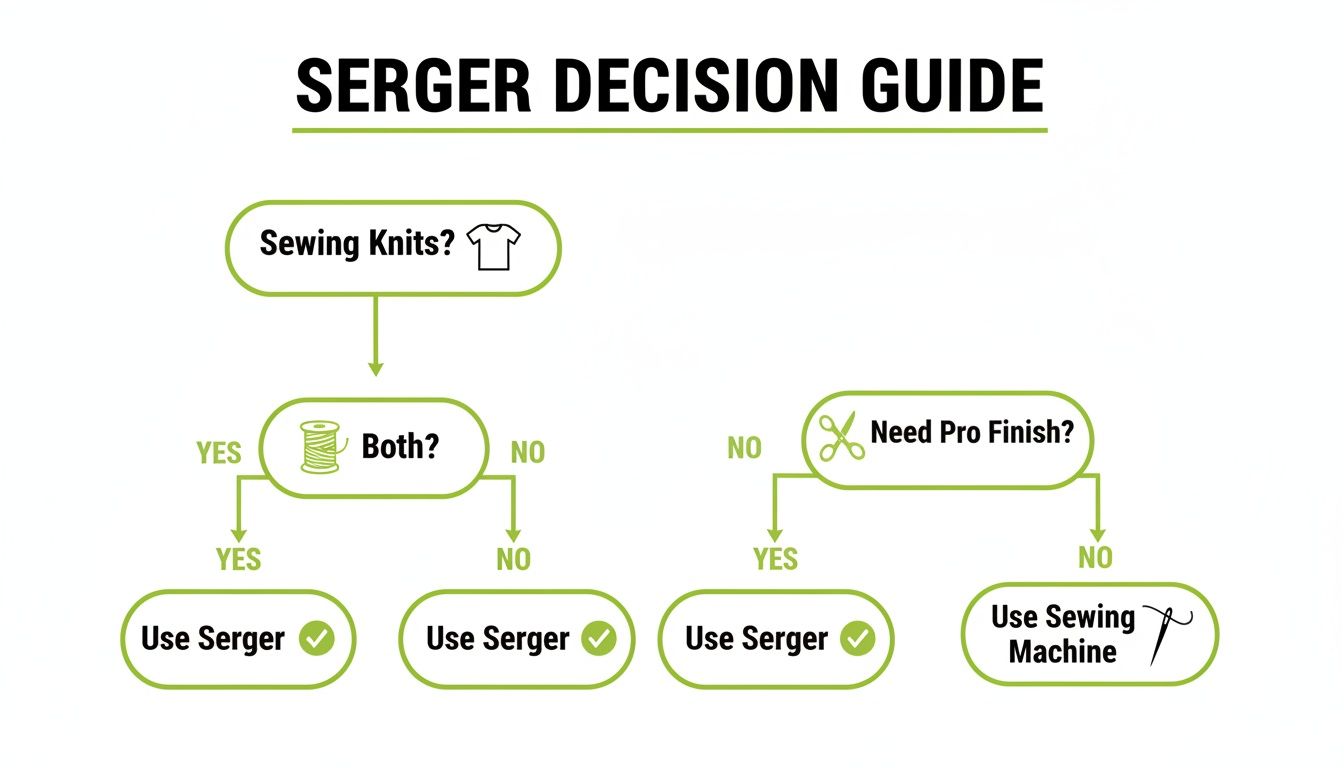
The main takeaway here is pretty simple: your fabric choice and the kind of finish you're aiming for will almost always tell you whether you need your serger, your sewing machine, or both.
Taming Knits and Stretchy Fabrics
If there’s one area where a serger goes from being just helpful to an absolute game-changer, it’s sewing with knits. Anyone who’s ever wrestled a t-shirt through a regular sewing machine knows the pain of wavy, stretched-out seams and puckered hems. This is where the serger steps in and shows off its real superpower.
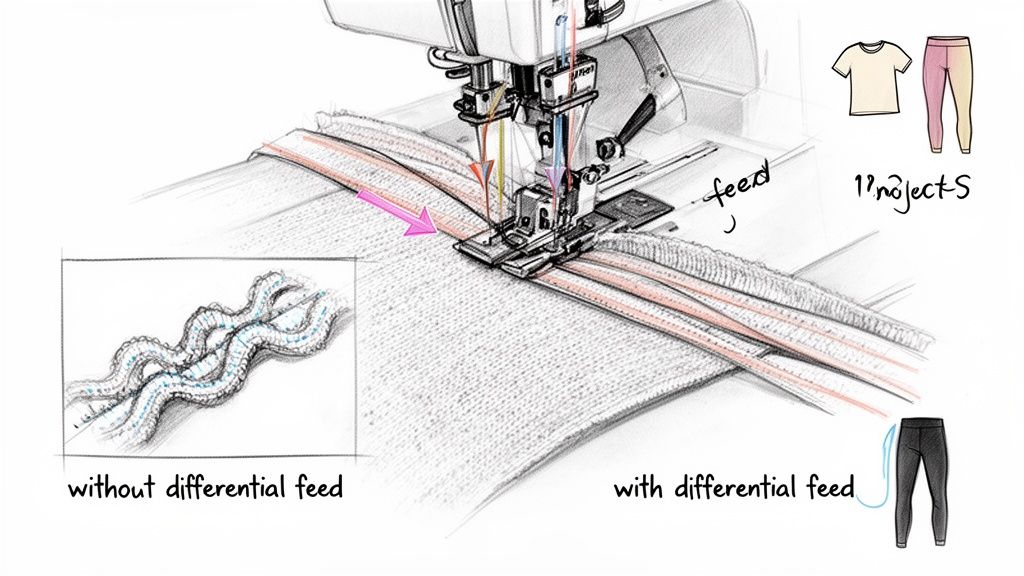
The secret sauce is a feature called differential feed. Honestly, if you want to understand what a serger is really used for, this is the single most important tool in its arsenal, especially for knits.
It sounds complicated, but the idea is simple. Imagine you have two separate sets of feed dogs—those little metal teeth that pull your fabric under the needle. With differential feed, you get to control the speed of each set independently.
The Magic of Differential Feed
Think of it like this: the feed dogs are two little conveyor belts moving your fabric. If you set the front conveyor belt to move faster than the back one, it ever-so-gently stretches the fabric as it gets stitched. If you make it move slower, it eases or slightly gathers the fabric.
This one simple adjustment is what gives you flawless seams on even the trickiest materials:
- For Stretchy Knits: You know how knits love to stretch out while you sew? By setting the front feed dogs just a little faster, you counteract that stretch, leaving you with a perfectly flat, stable seam instead of a wavy mess.
- For Slippery Fabrics: When you're working with slinky fabrics like chiffon or silk that tend to pucker, you can slow down the front feed dogs. This gently eases the fabric into the stitch, preventing those annoying ripples.
With differential feed, you’re not just sewing the fabric; you’re actively managing how it behaves. This control is what makes professional-looking activewear, t-shirts, and leggings achievable right at home.
This level of control opens up a whole world of projects that might have felt intimidating before. Suddenly, creating a wardrobe full of comfy, stylish knit garments feels totally doable and, dare I say, fun. The durable, flexible seams you get from a serger are perfect for activewear and everyday knits, and it’s all thanks to that differential feed preventing the stretching and puckering standard machines struggle with.
For those running a home sewing business, this isn't just a quality upgrade; it's a productivity boost. Studies have shown that sergers can significantly increase the output of garments compared to using a basic sewing machine. You can dive deeper into these trends by exploring more market insights about the sewing industry.
From Homemade to Handcrafted with B-Sew Inn
At bsewinn.com, we're committed to empowering crafters by putting professional-quality tools within reach. We love high-quality machines from brands like Baby Lock because their custom designs make features like differential feed intuitive and easy to master.
We truly believe that with the right machine and a little guidance, anyone can create beautiful, long-lasting knitwear. That’s why we offer extensive resources, from online classes to hands-on training, all designed to support you as you get the hang of your serger. Our goal is to give you the skills and confidence to turn piles of comfortable fabric into a polished, handcrafted wardrobe you’ll be proud to wear.
Unlocking Professional Finishing Techniques
Sure, a serger is a total champion for whipping up knit garments, but its real magic lies in the huge range of professional finishes it can create. Getting to know what a serger is really used for means looking past the basic seams and digging into the specific stitches that take a project from "homemade" to "handcrafted."
Mastering these techniques is what gives every single piece you make that durable, polished edge. This is where you start building real confidence, shifting from just sewing things together to making intentional design choices.
The Workhorse: 4-Thread Overlock
The 4-thread overlock is, without a doubt, the most common and versatile stitch in your serger’s arsenal. It uses two needles and two loopers, and the result is a strong, secure, and stretchy seam that’s an absolute dream for garment construction. Think of it as your go-to for putting together t-shirts, leggings, and swimwear. Crafters can replicate this by using a 4-thread overlock to construct a pair of knit pajama pants, creating durable seams that will withstand wear and washing.
The Finisher: 3-Thread Overlock
When your main goal is just to clean up a raw edge and stop it from fraying, the 3-thread overlock is your best friend. Using one needle and two loopers, it creates a tidy finish that’s less bulky than its 4-thread cousin.
This makes it perfect for finishing the inside seams of woven garments like blouses or trousers before you sew them together on your regular machine. You get a neat, professional-looking interior that holds up over time. It’s also brilliant for finishing the edges of custom projects. For instance, after you explore custom fabric printing services to create a unique textile, a serger is the key to giving it that perfect, professional finish.
The Artist: Rolled Hem
For a truly delicate, high-end look, nothing beats the rolled hem. This stitch, usually done with 2 or 3 threads, makes the serger tightly roll the fabric edge under and wrap it in a dense layer of thread. It’s pure elegance.
It's the perfect decorative edge for lightweight and sheer fabrics like chiffon, organza, and silk. You’ll see it all the time on:
- The hems of formal gowns and flowy skirts
- The edges of beautiful scarves and cloth napkins
- Delicate ruffles and flounces
A great starter project is creating a set of cloth napkins from a lightweight cotton voile. Using the rolled hem setting on your serger, you can quickly create a beautiful, finished edge that looks store-bought.
Mastering these different stitches unlocks a new level of creative control. It’s about knowing not just how to serge a seam, but choosing the right finish to complement your fabric and elevate your final design.
Many newer sergers have even more tricks up their sleeves, like the ability to do different kinds of coverstitches. If you're curious about that, definitely check out our guide on how to get a coverstitch on a serger.
Beyond Seams: Creative and Decorative Serger Uses
Sure, a serger is the undisputed champ for creating strong, clean seams, but that's just scratching the surface of what this machine can do. Once you start exploring what a serger is used for beyond basic construction, you'll find it's an incredible artistic tool. It’s time to stop thinking of your serger as just a utility player and see it for the creative powerhouse it truly is.
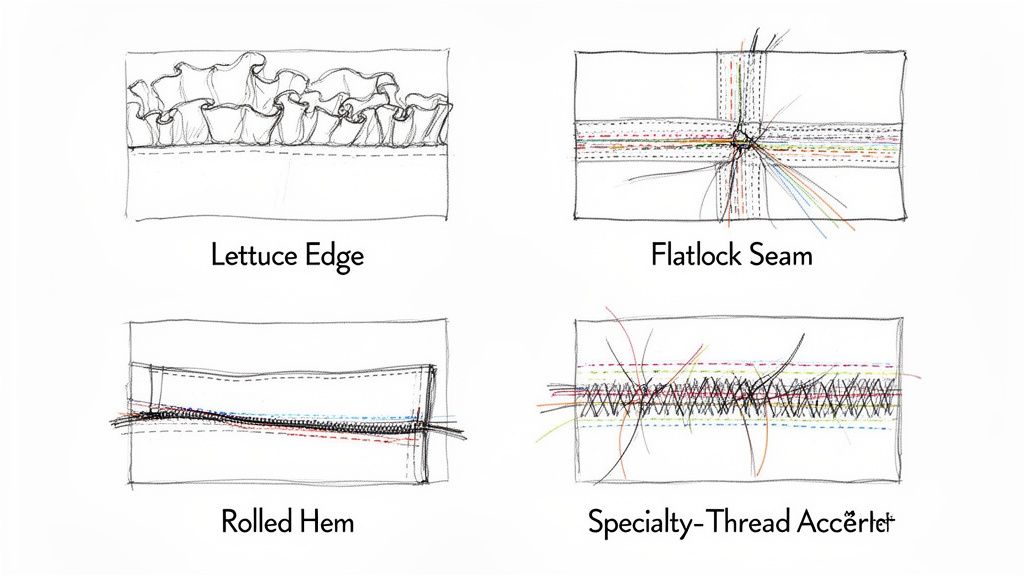
Many of these decorative tricks are surprisingly simple to master and can instantly elevate a garment or home decor project from homemade to high-end. They turn plain edges into eye-catching features and add a kind of texture you just can't get with a regular sewing machine.
Adding Flair with Specialty Stitches
Let's dive into a few techniques that really show off a serger's creative side. These stitches are perfect for adding that extra bit of personality and polish to your work.
- Lettuce Edge: This is one of my favorites for knit fabrics. By adjusting your differential feed and stitch length, you can create a charming, wavy "lettuce edge." It's a playful finish that's absolutely perfect for the hems of t-shirts, little girls' dresses, and flowy sleeves.
- Flatlock Stitch: This versatile stitch creates a seam that can be pulled flat, revealing a decorative "ladder" of thread between the two fabric pieces. You'll see it a lot on activewear, but it's also a fantastic way to piece together quilt blocks or create visible, decorative seams on any garment.
- Specialty Threads: Don't be afraid to experiment here! Try loading your loopers with thicker decorative threads like woolly nylon, pearl cotton, or even fine ribbon. This adds an immediate pop of color and texture, turning a simple finished edge into a beautiful design element. A great project to try is making decorative tea towels by finishing the edges with a rolled hem using a colorful, thick pearl cotton thread in the loopers.
A Quilter's Secret Weapon
Yep, even quilters are discovering just how handy a serger can be in their studio. A serger is brilliant for piecing quilt tops because it creates a perfectly flat, strong, and fray-free seam allowance. This makes the whole quilting process much smoother since there's less bulk to stitch over later on.
The ability to produce decorative finishes like rolled hems, lettuce edges, and even pintucks is what elevates a craft from simply made to truly artisanal.
For both decorative work and quilting, these techniques are total game-changers. In fact, industry stats show that a growing percentage of US quilters now own a serger to help achieve these professional results. You can find more details in this in-depth sewing machine market report.
At bsewinn.com, we're passionate about helping you tap into this kind of creativity. Our custom sewing machine designs, comprehensive online classes, and extensive training resources are all geared toward helping you master these techniques. We believe every crafter deserves the support they need to add beautiful, artisanal touches to every single project they create.
Your Serger Questions Answered
Stepping into the world of serging can feel like learning a new language, and it's totally normal to have a few questions. Let's tackle some of the most common ones I hear, so you can get started on the right foot with total confidence.
Is a Serger Difficult to Thread?
I get this one all the time. While older models definitely earned a tricky reputation, I promise you, modern sergers have come a long way. Many of the machines we love at bsewinn.com, especially the Baby Lock models, have completely changed the game with features like air-threading and super clear, color-coded paths. What used to be a headache is now a simple task once you get the hang of it.
For a really detailed walkthrough, check out our guide on how to thread a serger. It breaks down the whole process step-by-step.
Can a Serger Replace My Sewing Machine?
Think of a serger as a specialized partner to your sewing machine, not a replacement. It's an absolute rockstar at sewing seams, finishing edges, and handling knits like a dream. But it can't do essential tasks like topstitching, installing a zipper, or making buttonholes.
For truly complete, professional-looking projects, you’ll want both machines in your creative space. They're a team!
What Kind of Thread Should I Use?
Because a serger is running multiple threads at such high speeds, it’s much more economical to buy large cones of high-quality serger thread. This type of thread is designed to prevent lint buildup and ensures your stitches are perfectly smooth. Plus, you get way more bang for your buck compared to standard spools.
Using the right machine for the right job is everything. Grab your serger for constructing knit garments, cleaning up raw seams, and making beautiful decorative hems. Then, switch to your sewing machine for topstitching, zippers, and buttonholes. They really do work best together.
At bsewinn.com, our whole mission is to support your creative journey with the best custom machine designs, accessories, and education out there. Take a look through our collection and find the perfect tools to bring your vision to life. https://www.bsewinn.com

