

A coordinated bundle is sitting on the shelf, waiting for a project that uses it well. It could become a useful home accent, a thoughtful gift, or the beginning of a full quilt, but the pattern needs to respect the fabric's actual shape. A fat quarter is a quilting precut that typically measures about 18 inches by 22 inches in the United States. It's made by cutting a half-yard of fabric in half again, so four fat quarters equal roughly one yard. That broader rectangle is more useful than a traditional quarter-yard strip, which is typically about 9 inches by 44 inches, because it accommodates wider pattern pieces and small projects more efficiently.
The eight patterns for fat quarters below are organized by finished use and commitment level. Each project includes practical guidance on size, fabric quantity, skill, cutting strategy, timeline, variations, and the sewing equipment or notions that make the work easier. B-Sew Inn supports the full process with machines, quilting tools, thread, stabilizer, in-person classes, stores, and service.
Table of Contents
- 1. Layer Cake and Fat Quarter Charm Quilts
- 2. Table Runners From Fat Quarters
- 3. Patchwork Pillows and Pillow Covers
- 4. Quilted Tote Bags and Project Bags
- 5. Hexagon and English Paper-Pieced Patchwork
- 6. Appliqué Projects, Fusible and Hand-Sewn
- 7. Fat Quarter Bundles for Baby Quilts and Nursery Projects
- 8. Scrappy Charm Quilts and Stash-Busting Projects
- 8-Project Comparison: Fat Quarter Patterns
- Choose Your Next Fat-Quarter Project
1. Layer Cake and Fat Quarter Charm Quilts
Precut-friendly quilts make a strong starting point because the fabric selection is already coordinated. Layer Cakes use 10-inch squares, charm packs use 5-inch squares, jelly rolls use 2.5-inch strips, and fat-quarter patterns work from the larger 18-inch by 22-inch rectangle. The best designs use simple squares, strips, or half-square triangles, so the quilter spends less time turning yardage into usable pieces.
A simple four-patch quilt can use a curated group of fat quarters with a contrasting background. Strip-pieced designs work especially well when each print needs to appear repeatedly without extensive individual cutting. A jelly-roll race quilt offers a different route, using precut strips rather than fat quarters, while charm quilts reduce the cutting commitment even further. The key is to confirm that the pattern was written for the precut format being used, since a pattern labeled “fat-quarter-friendly” may still require careful directional placement.
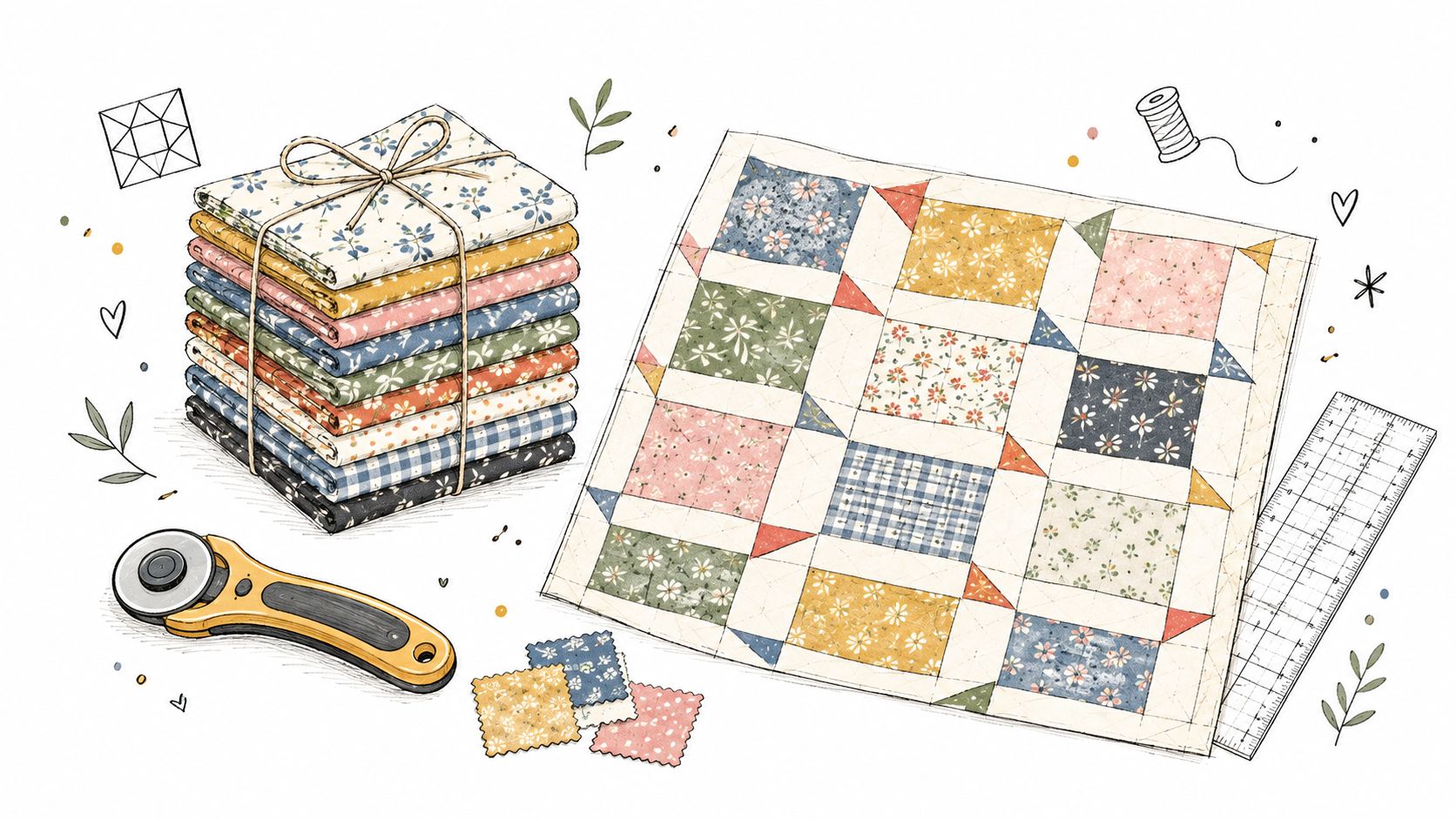
Planning the cut
A beginner can approach a small throw with basic rotary-cutting and chain-piecing skills. A larger quilt demands more sorting, pressing, and layout time, even when the blocks are simple. Patterns that use the full width of the fat quarter tend to show its efficiency, while patterns that need long, narrow strips may produce more offcuts.
- Cutting tools: A sharp rotary cutter, self-healing mat, and quilting ruler help maintain accurate sub-cuts.
- Seam control: A quarter-inch foot keeps pieced units consistent, while a walking foot helps prevent shifting during quilting.
- Skill support: Beginner quilting classes at B-Sew Inn can cover piecing, pressing, and the basic techniques used in these patterns.
For pattern inspiration, the beginner guide to jelly-roll quilt patterns can help a quilter decide whether strips, squares, or fat quarters best match the available stash. B-Sew Inn stores also give shoppers a chance to examine precut bundles and test machines before committing to a larger quilt.
2. Table Runners From Fat Quarters
A table runner is a manageable way to bring quilted texture to a dining table, sideboard, or console. Many patterns finish at about 12 to 16 inches wide and 36 to 54 inches long, using 4 to 8 fat quarters for piecing and backing. Treat those figures as planning ranges only. The pattern's cutting list determines the actual fabric requirement.
Choose the construction by the finish you want and the time available. Strip piecing produces a quick, graphic runner, especially with alternating prints and sashing or background fabric. Four-patch and nine-patch layouts provide more piecing practice. Chevron and triangle designs create stronger movement, but directional prints require deliberate placement and accurate point matching. For seasonal décor, appliqué leaves, stars, or holiday motifs can feature one distinctive fat quarter against a quieter background.
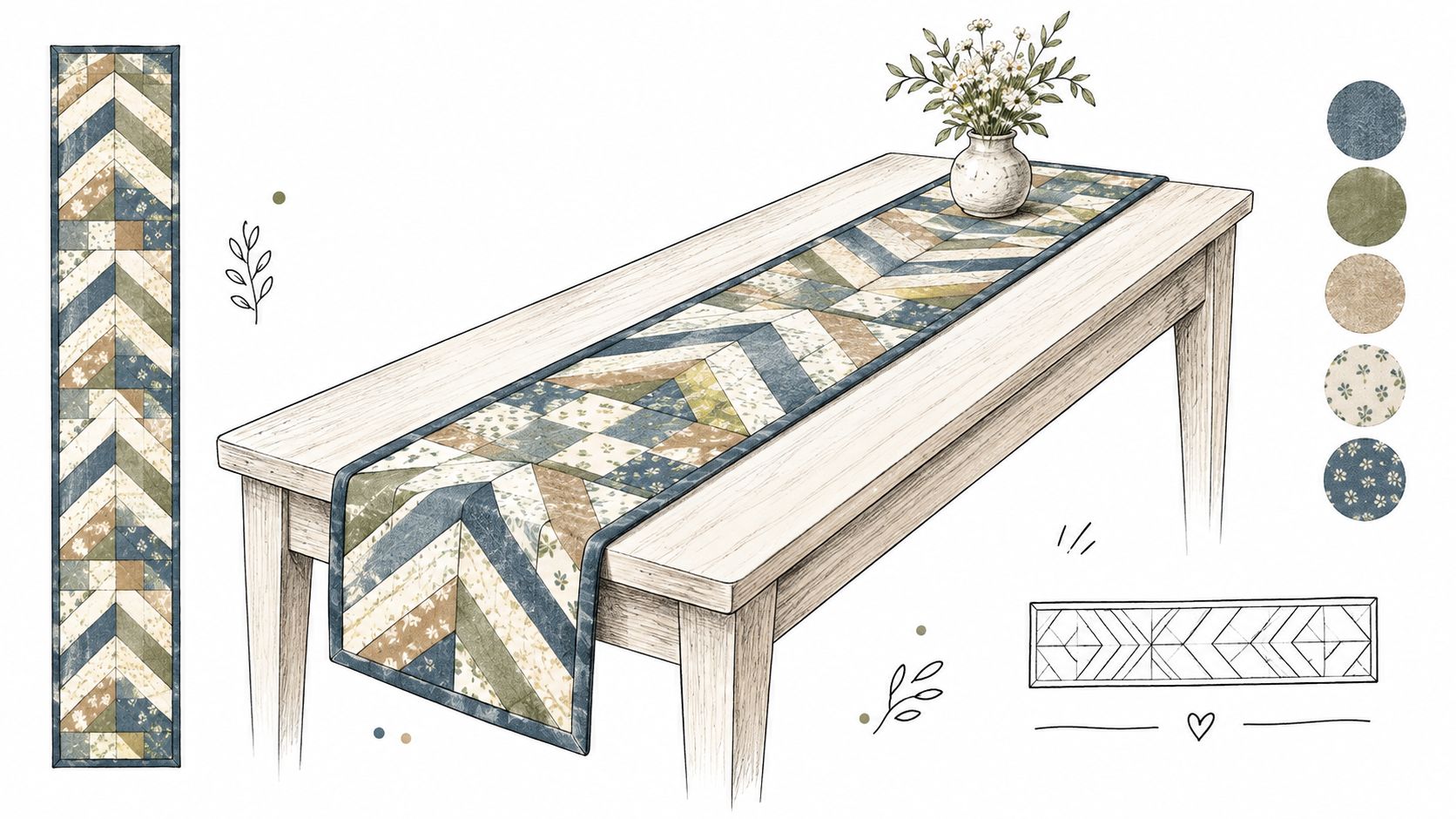
Match the method to the commitment
A confident beginner can often piece the top in one short making session. Quilting and binding set the overall timeline. Narrow sections can distort more readily than broad quilt units, so press carefully and stabilize areas that will receive repeated handling.
Machine setup: Use a quarter-inch foot for consistent joins. B-Sew Inn carries compatible feet for Baby Lock, Bernina, Bernette, Brother, and Janome models. A walking foot helps keep the runner's layers aligned and limits puckering along its length.
Fabric and finish: Prewash and press the fat quarters if the runner will be washed regularly or shrinkage could affect alignment. Coordinating quilting thread makes simple straight lines look deliberate. A runner also makes a useful class project, and an in-person table-runner class at a B-Sew Inn location can give focused practice with narrow-format binding, which often feels awkward on a first attempt.
3. Patchwork Pillows and Pillow Covers
Patchwork pillows turn a small amount of fabric into useful home décor. A cover may finish as a 14- to 20-inch square or rectangular form, depending on the insert and pattern. One fat quarter can become a focal panel, while several can support a four-patch, nine-patch, half-square triangle, or strip-pieced design.
The finished use should guide the construction. An envelope back avoids zipper insertion and works well for a first cover. A zippered closure offers a neater, more polished finish but demands careful seam allowances and zipper placement. A pieced front with a thin batting layer adds subtle quilted texture without requiring the construction of a complete quilt sandwich.
Let the print lead
Large-scale prints benefit from broad, uncomplicated pieces. Small prints can tolerate more subdivision, but excessive seams create bulk where several blocks meet. Half-square triangles produce chevrons and geometric layouts, while modern minimalist designs can combine a featured fat quarter with solids and negative space.
Construction rule: Pressing seams consistently matters more than pressing them in one universally correct direction. The goal is a flat, manageable front with reduced bulk at intersections.
A quarter-inch foot supports accurate visible seaming, and quality thread from B-Sew Inn's thread collection helps maintain a clean line of stitching. When appliqué is added to the pillow front, stabilizer behind the appliqué pieces can reduce fraying and shifting. A small batting layer also gives the front enough body for decorative quilting.
For a pillow intended as a gift, professional finishing makes a noticeable difference. An in-person B-Sew Inn class can cover zipper insertion, invisible closures, edge treatment, and the sequence that keeps a cover square. A sewist who already owns a machine can also bring questions about presser feet, tension, or thread selection to the store.
4. Quilted Tote Bags and Project Bags
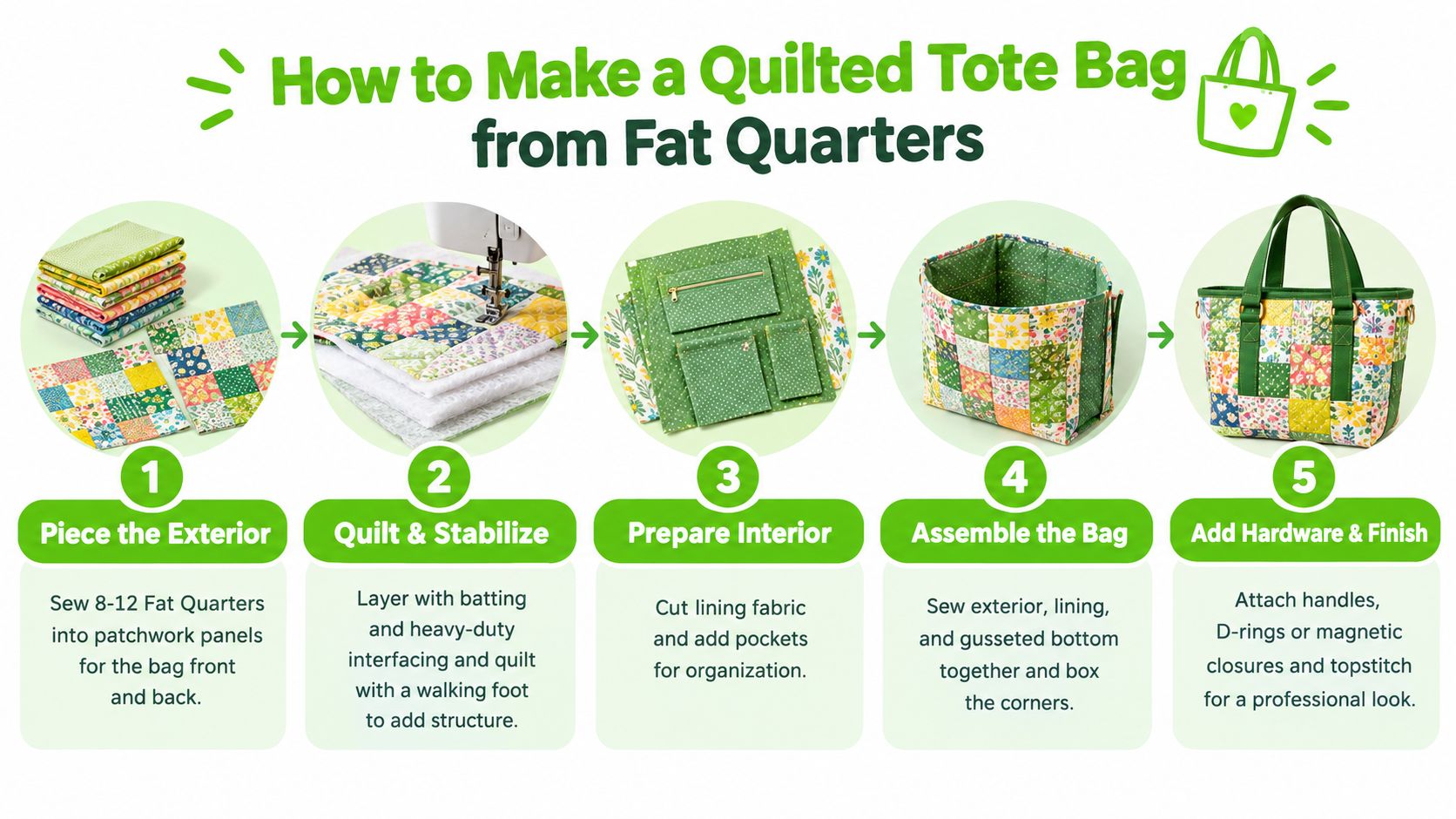
A quilted tote earns its place in a sewing room, class, or craft table because it carries supplies while showing off fat-quarter prints. A practical finished size is 12 to 16 inches wide and 12 to 18 inches tall. Gussets, pockets, handles, and closures determine the final fabric needs, so check whether the pattern also calls for lining, interfacing, straps, or binding.
For a first bag, use strip-pieced panels or a simple patchwork exterior. Half-square triangles add movement, while a solid lining keeps attention on the piecing. A project bag with dividers, pockets, drawstring closures, or D-rings suits a more experienced maker. Every added feature increases cutting, alignment, and pressing work.
Match the bag to the commitment
Choose the finished use first. A soft tote can move quickly from cutting to assembly. A structured project bag takes longer because stabilizer, hardware, gussets, and multiple layers must be tested and aligned. Plan a shorter timeline for a simple tote and reserve additional sessions for a pocketed design.
Quilt the exterior before assembling the bag. A walking foot helps control batting, patchwork, and stabilizer together. The walking-foot guide from B-Sew Inn explains the setup and handling principles.
- Cutting: Keep large prints in broad pieces, and plan directional motifs before cutting. Strip sets reduce waste and speed repeat units.
- Machine setup: Use a heavy-duty needle and topstitching thread for visible seams and reinforced handles.
- Layer test: Sew a scrap with the selected stabilizer before cutting the full project. A stiff layer gives shape but can make turning and stitching harder.
- Finishing: A serger can finish interior seams where the pattern permits. Press between stages, especially around gussets and handles.
- Support: An in-person structured-sewing or bag-making class can demonstrate hardware, gussets, and turning techniques. B-Sew Inn staff can also help match presser feet, thread, and stabilizer to the project.
A simple tote works well for a focused weekend project. A larger project bag rewards slower construction and deliberate pressing.
5. Hexagon and English Paper-Pieced Patchwork
English paper piecing suits quilters who want precise work in portable stages. Wrap fabric around paper templates, then hand-sew hexagons, diamonds, tumblers, or mosaic units. A fat quarter can yield many small pieces, but the cutting plan must allow for print direction, seam allowance, and each template's orientation.
Choose the finished use before selecting a pattern. A grandmother's flower garden arrangement can become a wall hanging or quilt. Hexagon pillow fronts limit the commitment, while diamond medallions create a more design-focused display. Scrap mosaics offer abundant colour variation, though sorting templates, prepared fabric, and completed units requires a dependable system.
EPP rewards patience rather than speed. Prepare pieces at a cutting table, sew them while travelling or relaxing, and assemble larger sections later. Positioning each fabric piece on its paper template also gives better control of directional prints.
- Skill and timeline: Hand piecing is approachable for careful beginners, but a larger quilt becomes a multi-session project. A pillow front or small wall hanging provides a shorter test.
- Thread and needles: Fine cotton or hand-stitching thread reduces bulk. Milliners or betweens support precise hand piecing.
- Cutting strategy: A small rotary cutter and ruler help produce repeatable pieces around the templates. Label groups by colour or block before sewing.
- Comfort: An in-person hand-piecing class can demonstrate comfortable needle handling and help reduce hand strain.
Prewash and press fat quarters if distortion or future laundering may affect the result. If machine-sewn precision suits your schedule better, compare the workflow in this foundation paper piecing guide before cutting hand-sewn templates. The methods differ in execution, but both use paper-supported accuracy, making the comparison useful when choosing between portable handwork and faster machine construction.
6. Appliqué Projects, Fusible and Hand-Sewn
Appliqué turns fat quarters into layered motifs, pictorial panels, and seasonal wall hangings. Choose the method according to the finish and time available: fusible appliqué suits clear shapes and quicker assembly, while hand-sewn edges offer a softer, more traditional result.
A small wall hanging may need only a few fabric pieces and a short project window. A larger pictorial quilt can combine animals, plants, or other subjects, but each added shape increases tracing, labeling, pressing, and stitching work. Plan the finished use first, then match the design to the available fabric and commitment level.
Choose the method before cutting
Fusible-web appliqué holds shapes in place for raw-edge stitching. Zigzag, satin, blanket, and decorative stitches can secure the perimeter, while needle-turn appliqué folds the edge under during hand sewing. Layered designs need a clear placement order, especially where one motif overlaps another.
Make a sample with the actual fabric, fusible web, thread, and iron setting. The test shows whether the web leaves the project too stiff, whether the fabric shifts, and whether the chosen stitch covers the edge cleanly. Fine fusible webbing can help with curves and narrow points, but small details still require careful cutting.
- Skill and timeline: A beginner can start with a small wall hanging or pillow front. A pictorial quilt becomes a longer, multi-session project.
- Stabilizer: Use fusible web, tear-away, or water-soluble stabilizer according to the construction method and stitch density.
- Thread: Coordinating thread recedes into the edge; contrasting thread makes the outline part of the design.
- Cutting: Small rotary tools and specialty scissors improve control around curves. Label pieces by layer before pressing.
- Hand work: Small needles and thin thread suit needle-turn and decorative hand stitching.
For hand-sewn construction, this hand-sewn appliqué guide from B-Sew Inn provides a technique reference. A class can help with design transfer, stabilization, and stitch selection. Choose fusible appliqué for a faster, structured finish, or hand sewing when portability and a softer edge matter more than speed.
7. Fat Quarter Bundles for Baby Quilts and Nursery Projects
Baby quilts combine practical scale with meaningful gifting. Compact quilt patterns often finish around 35 to 45 inches by 40 to 50 inches and may use 8 to 12 fat quarters, although the pattern's cutting chart remains the deciding authority. Coordinated bundles can also support a changing-pad cover or wall hanging, provided each project is planned separately rather than assuming every remaining piece will fit.
Simple square patchwork and strip-pieced designs keep seam intersections manageable. Nine-patch blocks add rhythm without demanding complex geometry, while whole-cloth quilting places more attention on the fabric and quilting design. Soft geometric prints, gentle florals, and simple animal motifs can create a calm nursery palette without relying on a strictly themed color scheme.
Plan for washing and repeated use
Prewash and preshrink the fabric with a gentle detergent when the finished quilt will be laundered frequently. A soft, high-quality thread supports durable seams, and cotton batting designed for baby quilts provides a familiar natural option. The quilt should remain comfortable and washable, with quilting lines that hold the layers together without creating an overly stiff result.
Gift-making priority: A baby quilt should be planned around secure construction, washable materials, and dependable binding before decorative complexity.
A B-Sew Inn class can demonstrate binding methods designed to withstand repeated laundering. The quilt-binding tutorial is also useful when evaluating whether a pattern's finishing method matches the intended use. For broader nursery planning, designing the perfect nursery can provide complementary décor context, while the quilt itself remains a sewing project with its own safety and care requirements.
8. Scrappy Charm Quilts and Stash-Busting Projects
Scrappy projects start with what is already on hand: fat quarters, remnants, and fabrics saved for a suitable pattern. Plan 12–16 fat quarters for a 50×60-inch throw, allow 2–3 weeks for layout and piecing, and cut 5-inch squares when mixed sources need a common starting point. Four-patch blocks, string piecing, liberated blocks, and rows of half-square triangles let the design grow as you sew.
This format suits quilters who enjoy flexible decisions. Beginners can also use it to practise piecing without protecting a perfectly matched bundle. The trade-off is that improvisation needs boundaries. A clear color plan and repeatable pressing method prevent visual noise and help blocks keep their shape.
Build a usable scrap system
Begin by sorting fabric into color families, then separate light, medium, and dark prints within each group. This creates cohesion without forcing a strict palette. Choose one background family if the stash is especially varied, or let contrast become the main design feature.
- Cutting strategy: A rotary cutter, ruler, and mat keep 5-inch squares, strips, or block units consistent across different fabric sources.
- Layout control: Arrange pieces on a design wall before sewing. Photograph promising sections so you can recreate the order after taking them down.
- Seam consistency: Press every unit the same way, open or to one side, and trim blocks before joining rows.
- Machine setup: Use a reliable quarter-inch foot for piecing and a walking foot for straight-line quilting. A neutral thread blends mixed prints; contrasting thread makes quilting lines more visible.
Scrappy quilts can finish as throws, lap quilts, cushions, or smaller utility projects. Reduce the block count for a shorter commitment, or add rows when the stash supports a larger finish. Slight variation adds character, while inconsistent unit sizes make assembly difficult.
A design-focused B-Sew Inn class can help quilters assess color, scale, contrast, and composition before cutting valued fabric. Stash-based sewing also supports sustainability and upcycling by using available material instead of purchasing a complete new collection.
8-Project Comparison: Fat Quarter Patterns
| Project | Complexity 🔄 | Resources & Time ⚡ | Expected Outcomes 📊 | Ideal Use Cases | Key Advantages ⭐ | Tips 💡 |
|---|---|---|---|---|---|---|
| Layer Cake and Fat Quarter Charm Quilts | Low–Medium; structured piecing (squares, HSTs) | Precut Layer Cakes/FQs; 2–4 weeks typical | Coordinated lap/throw quilts (40"–70"); polished, consistent results | Beginners, quick gifts, using coordinated collections | Minimizes cutting and waste; design efficiency | Use a rotary cutter, walking foot, and accurate 1/4" seam |
| Table Runners from Fat Quarters | Low; narrow-format piecing | 4–12 FQs; 1–3 weeks; less batting/binding | High-impact narrow décor (12"–16"×36"–54") | Seasonal décor, gifts, stash-testing color combos | Fast finish, low fabric cost, showcases directional prints | Prewash fabrics; use 1/4" foot and walking foot for quilting |
| Patchwork Pillows and Pillow Covers | Low–Medium; small-scale precision, optional closures | 2–6 FQs; hours per pillow | Decorative pillows (12"–20") as accent pieces | Home décor, gift sets, technique testing | Low material cost; quick; good for experimenting | Press seams, consider thin batting, use quality thread |
| Quilted Tote Bags and Project Bags | Medium–High; piecing + quilting + hardware | 8–12 FQs + interfacing & hardware; higher time investment | Structured, usable bags (12"–16" wide) with professional look | Organizers, craft-show items, durable gifts | Functional, customizable, showcases advanced skills | Use heavy interfacing, quality hardware, walking foot and serger |
| Hexagon & English Paper-Pieced Patchwork | High; hand-sewn precision with templates | Fat Quarter strips/scraps + templates; months for large work | Heirloom-quality, precision mosaics; portable WIP | Meditative/portable projects, heirlooms, detailed color planning | Exceptional precision; excellent for scraps; very portable | Use fine needles/thread, pre-cut templates, join EPP groups |
| Appliqué Projects (Fusible & Hand) | Low–High; method-dependent (fusible easy, needle-turn advanced) | 4–10 FQs; fusible web/stabilizer; variable time | Pictorial wallhangings, pillows, dimensional designs | Storytelling quilts, feature-print showcases, mixed techniques | High creative freedom; less reliant on precise piecing | Pre-test fusible web, choose stabilizer, use fine topstitch thread |
| Fat Quarter Bundles for Baby Quilts & Nursery | Low; simple, safety-focused piecing | 8–12 FQs; prewash required; 2–6 weeks | Baby quilts (35"–45"×40"–50") and coordinated nursery items | Gifts, nursery décor, beginner-friendly projects | Strong gift appeal; coordinated palettes; manageable size | Prewash all fabrics, use hypoallergenic batting, keep seams simple |
| Scrappy Charm Quilts & Stash-Busting | Low–Medium; improvisational decision-making | Uses existing stash; time varies by size | Unique, energetic quilts (45"–70"+); unpredictable results | Stash-busting, experimental design, sustainable sewing | Cost-effective, creative freedom, celebrates variety | Sort stash by color family, use neutral thread, audition on a design wall |
Choose Your Next Fat-Quarter Project
The right project depends less on having a perfect bundle than on matching the fabric to the finished use. A table runner or patchwork pillow offers a quick, visible finish with a manageable amount of piecing. These projects are useful when the fabric selection is limited, when a gift is needed soon, or when a quilter wants to test a new presser foot, thread, quilting motif, or appliqué technique without committing to a full quilt.
A tote or project bag raises the construction level. The exterior may begin as a simple patchwork panel, but stabilizer, lining, handles, pockets, gussets, and hardware introduce additional decisions. A serger can help finish appropriate interior seams, while a walking foot can make quilted bag panels easier to control. This is a strong choice for sewists who want a practical result and broader garment or bag-making skills.
English paper piecing works best when portability and handwork matter more than speed. Hexagons, diamonds, and mosaic units can be prepared in stages, making the method suitable for travel or short periods of sewing. Appliqué is the better choice when the design begins with an image, motif, or story rather than a repeated block arrangement. Fusible web offers a direct machine-sewn route, while hand-sewn appliqué rewards patience and careful needlework.
A baby quilt is a thoughtful gift project when the fabric is washable, the construction is secure, and the design won't become difficult to launder. A scrappy quilt offers the most freedom, but it still benefits from color sorting, consistent block sizes, and a layout plan. A larger quilt may call for more sustained cutting, piecing, pressing, quilting, and binding time. For a queen top, planning commonly falls around 36 to 50 fat quarters, with 44 often cited as a common recommendation, according to Simply Quilting's fat-quarter pattern guidance. That estimate is not a substitute for the specific pattern's cutting chart, especially when directional prints or large motifs affect yield.
Across all eight projects, a few habits protect both fabric and confidence:
- Prepare thoughtfully: Prewash and press when the finished item will be washed or when distortion could affect accuracy.
- Verify the geometry: Check the pattern's finished measurements and usable cut dimensions before opening the rotary cutter.
- Protect direction: Mark directional prints and decide which way motifs should face before cutting.
- Label pieces: Keep cut units, rows, and block components organized as soon as they leave the fabric.
- Test first: Sew a small test square before committing to the full project, especially when combining stabilizer, batting, specialty thread, or a new stitch.
- Plan the finish: Binding, quilting, closures, and seam finishing can take as much thought as the pieced front.
B-Sew Inn can help with the practical choices behind the pattern. The store carries sewing, quilting, and embroidery machines from Baby Lock, Bernina, Bernette, Brother, and Janome, along with sergers, longarm quilting machines, embroidery designs, thread, stabilizer, notions, cabinets, and cutting tables. Quilters can browse relevant cutting and quilting supplies, compare accessories, and ask about machine features before purchasing. A longarm owner working on a larger fat-quarter quilt may also explore quilting support such as Pro-Stitcher Lite for the Baby Lock Coronet on Villa Frame, when that setup matches the machine and frame requirements.
Readers can visit B-Sew Inn stores in Tulsa, Oklahoma City, Springfield, Humble, or Fayetteville to see and try machines in person. In-person machine mastery sessions, quilting and sewing classes, trade-ins, service, and repair provide support beyond the initial fabric purchase. Sewists planning a home project can also find inspiration in sewing your own duvet cover, especially when considering how patchwork skills can extend into useful home textiles.
Browse B-Sew Inn's machines, cutting tools, quilting notions, thread, and stabilizer at B-Sew Inn, then visit a nearby store to test equipment in person. The team can also help match a fat-quarter project to an in-person class, machine mastery session, or service appointment so the fabric choice leads to a finished project.

